


People with type 2 diabetes and screen-detected cognitive impairment use acute health care services more often: observations from the COG-ID study
- PMID: 30833988
- PMCID: PMC6387554
- DOI: 10.1186/s13098-019-0416-z
People with type 2 diabetes and screen-detected cognitive impairment use acute health care services more often: observations from the COG-ID study
Abstract
Background: Patients with type 2 diabetes have an increased risk of cognitive impairment which can lead to impaired diabetes self-management and an increased risk of diabetes-related complications. Routine screening for cognitive impairment in elderly patients with type 2 diabetes is therefore increasingly advocated. The aim of this study is to investigate whether people with type 2 diabetes and screen-detected cognitive impairment use acute health care services more often than patients not suspected of cognitive impairment.
Methods: People with type 2 diabetes ≥ 70 years were screened for cognitive impairment in primary care. Diagnoses in screen positives were established at a memory clinic. Information about acute health care use was collected for 2 years prior to and 2 years after screening and compared to screen negatives.
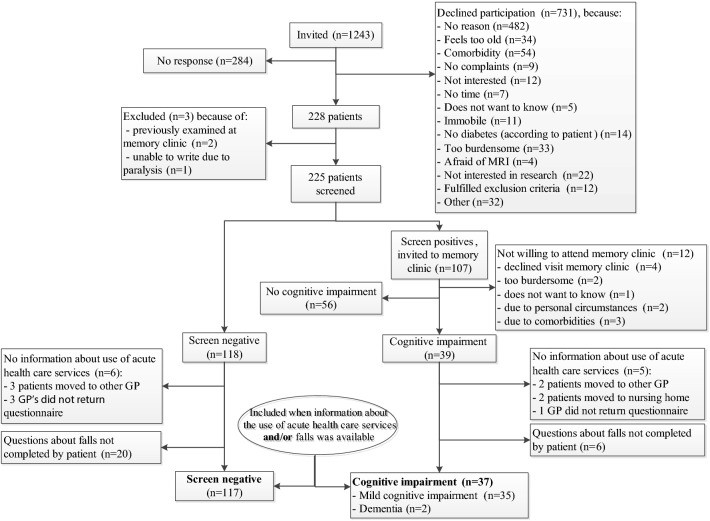
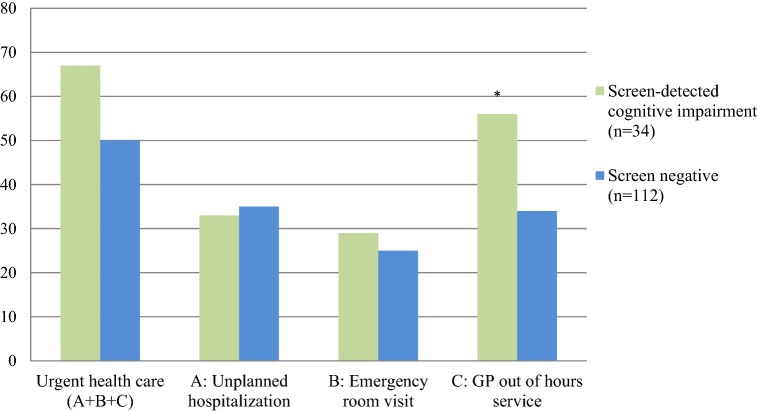
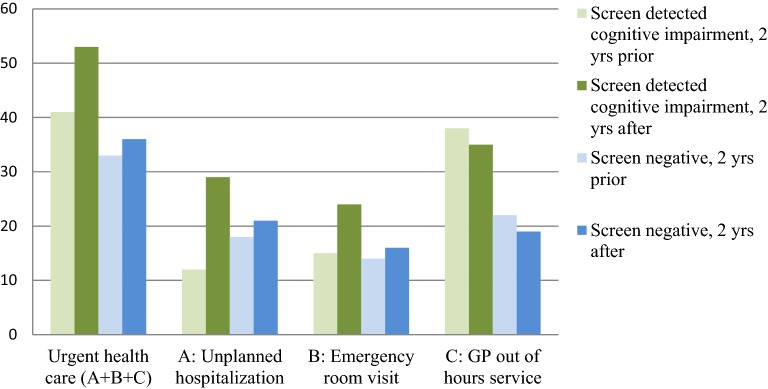
Results: 154 participants (38% female, mean age 76.7 ± 5.2 years, diabetes duration 8.7 ± 8.2 years) were included, 37 patients with cognitive impairment, 117 screen negatives. A higher percentage of participants with cognitive impairment compared to screen negative patients used acute health care services; this difference was significant for general practitioner's out of hours services (56% versus 34% used this service over 4 years, p = 0.02). The mean number of acute health care visits was also higher in those with cognitive impairment than in screen negatives (2.2 ± 2.8 versus 1.4 ± 2.2 visits in 4 years, p < 0.05; 1.4 ± 2.2 versus 0.7 ± 1.5 visits in 2 years after screening, p = 0.03). Factors that could have played a role in this increased risk of acute health care services use were a low educational level, the presence of depressive symptoms (CES-D score ≥ 16), self-reported problems in self-care and self-reported problems in usual activities.
Conclusions: People with type 2 diabetes and screen-detected cognitive impairment use acute health care services more often.
Keywords: Acute health care services; Cognitive impairment; Diabetes; Falls; General practice; Screening.
Figures
References
LinkOut - more resources
Full Text Sources
