


The Next Generation Blueprint of Computational Toxicology at the U.S. Environmental Protection Agency
- PMID: 30835285
- PMCID: PMC6542711
- DOI: 10.1093/toxsci/kfz058
The Next Generation Blueprint of Computational Toxicology at the U.S. Environmental Protection Agency
Abstract
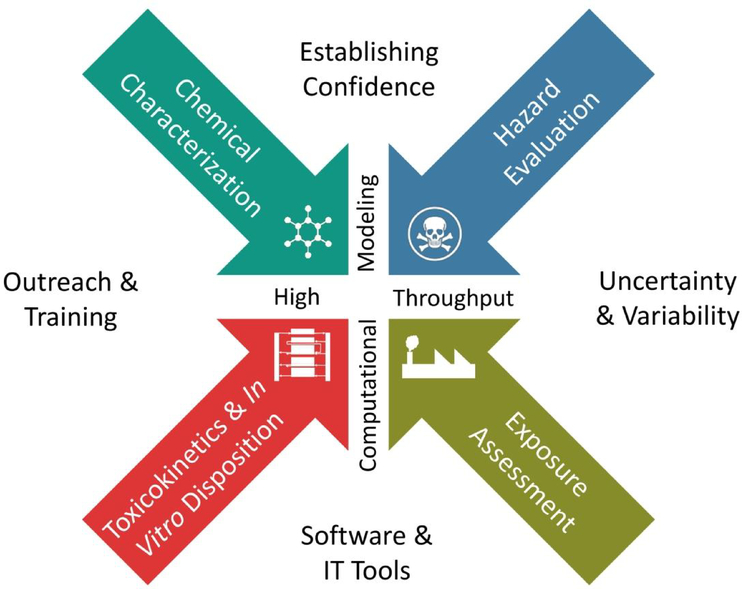
The U.S. Environmental Protection Agency (EPA) is faced with the challenge of efficiently and credibly evaluating chemical safety often with limited or no available toxicity data. The expanding number of chemicals found in commerce and the environment, coupled with time and resource requirements for traditional toxicity testing and exposure characterization, continue to underscore the need for new approaches. In 2005, EPA charted a new course to address this challenge by embracing computational toxicology (CompTox) and investing in the technologies and capabilities to push the field forward. The return on this investment has been demonstrated through results and applications across a range of human and environmental health problems, as well as initial application to regulatory decision-making within programs such as the EPA's Endocrine Disruptor Screening Program. The CompTox initiative at EPA is more than a decade old. This manuscript presents a blueprint to guide the strategic and operational direction over the next 5 years. The primary goal is to obtain broader acceptance of the CompTox approaches for application to higher tier regulatory decisions, such as chemical assessments. To achieve this goal, the blueprint expands and refines the use of high-throughput and computational modeling approaches to transform the components in chemical risk assessment, while systematically addressing key challenges that have hindered progress. In addition, the blueprint outlines additional investments in cross-cutting efforts to characterize uncertainty and variability, develop software and information technology tools, provide outreach and training, and establish scientific confidence for application to different public health and environmental regulatory decisions.
Keywords: ExpoCast; Tox21; ToxCast; cheminformatics; computational toxicology; exposure; high-throughput assays; predictive toxicology; risk assessment; toxicokinetics.
Published by Oxford University Press on behalf of the Society of Toxicology 2019.
Figures
References
-
- Ankley GT, Bennett RS, Erickson RJ, Hoff DJ, Hornung MW, Johnson RD, Mount DR, Nichols JW, Russom CL, Schmieder PK, et al. (2010). Adverse outcome pathways: a conceptual framework to support ecotoxicology research and risk assessment. Environ Toxicol Chem 29(3), 730–41. - PubMed
-
- Bell SM, Angrish MM, Wood CE, and Edwards SW (2016). Integrating Publicly Available Data to Generate Computationally Predicted Adverse Outcome Pathways for Fatty Liver. Toxicol Sci 150(2), 510–20. - PubMed
-
- Bhhatarai B, Wilson DM, Bartels MJ, Chaudhuri S, Price PS, and Carney EW (2015). Acute Toxicity Prediction in Multiple Species by Leveraging Mechanistic ToxCast Mitochondrial Inhibition Data and Simulation of Oral Bioavailability. Toxicol Sci 147(2), 386–96. - PubMed
Publication types
MeSH terms
Grants and funding
LinkOut - more resources
Full Text Sources
Research Materials
