


Directed acyclic graphs: An under-utilized tool for child maltreatment research
- PMID: 30836237
- PMCID: PMC6452862
- DOI: 10.1016/j.chiabu.2019.02.011
Directed acyclic graphs: An under-utilized tool for child maltreatment research
Abstract
Background: Child maltreatment research involves modeling complex relationships between multiple interrelated variables. Directed acyclic graphs (DAGs) are one tool child maltreatment researchers can use to think through relationships among the variables operative in a causal research question and to make decisions about the optimal analytic strategy to minimize potential sources of bias.
Objective: The purpose of this paper is to highlight the utility of DAGs for child maltreatment research and to provide a practical resource to facilitate and support the use of DAGs in child maltreatment research.
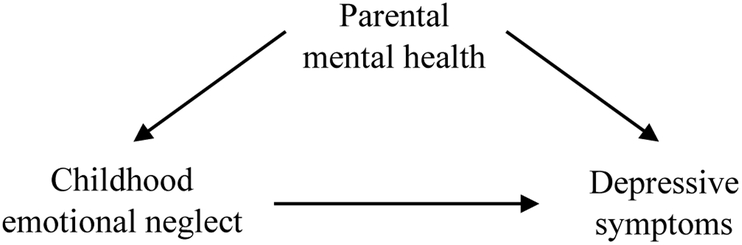
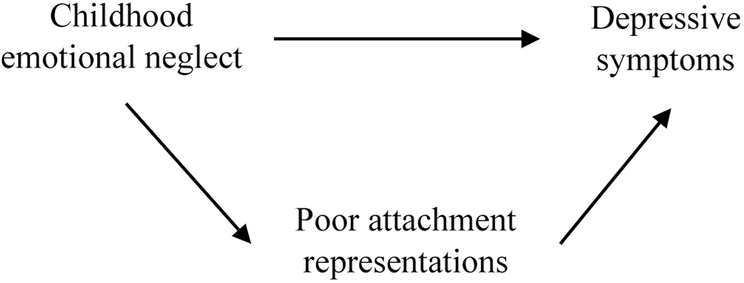
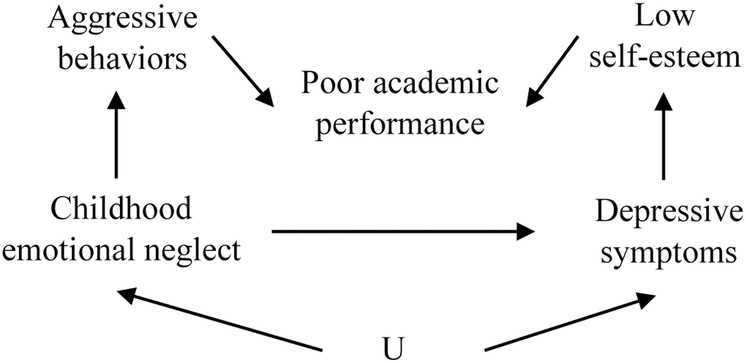
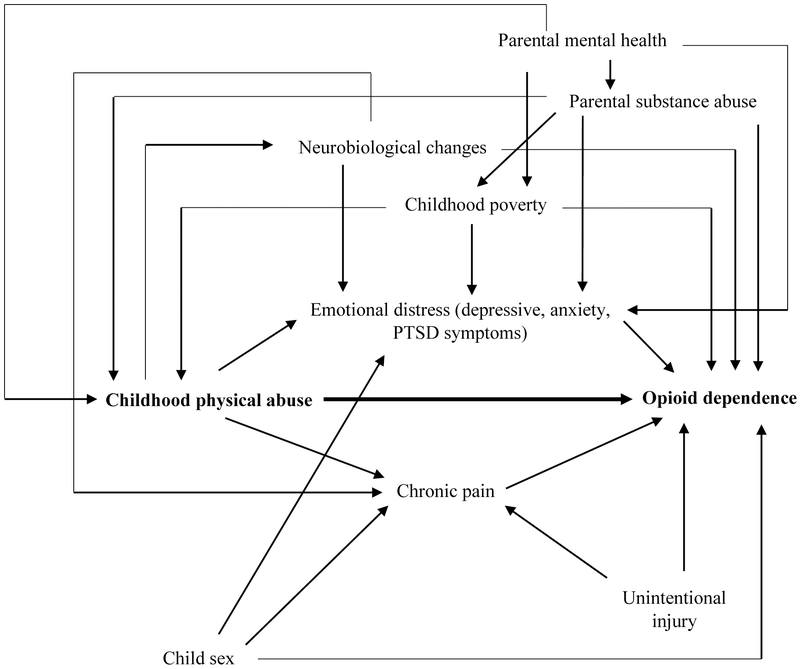
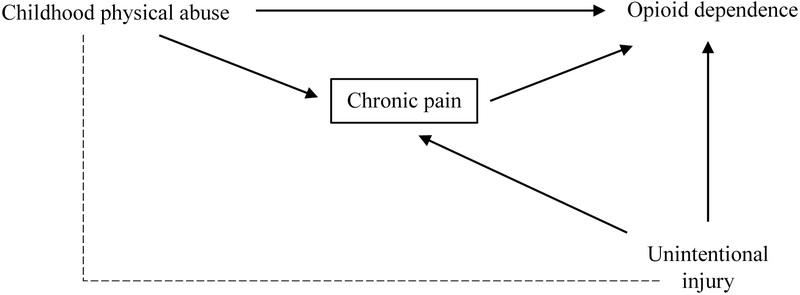
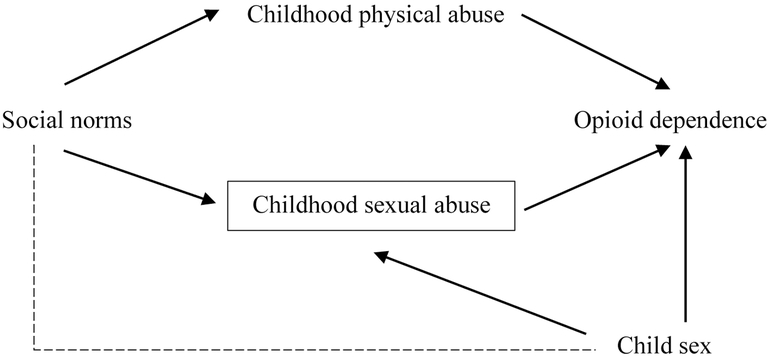
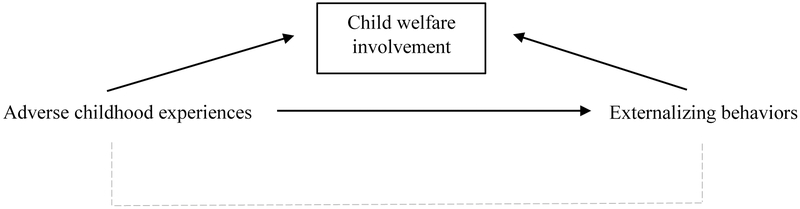
Results: We first provide an overview of DAG terminology and concepts relevant to child maltreatment research. We describe DAG construction and define specific types of variables within the context of DAGs including confounders, mediators, and colliders, detailing the manner in which each type of variable can be used to inform study design and analysis. We then describe four specific scenarios in which DAGs may yield valuable insights for child maltreatment research: (1) identifying covariates to include in multivariable models to adjust for confounding; (2) identifying unintended effects of adjusting for a mediator; (3) identifying unintended effects of adjusting for multiple types of maltreatment; and (4) identifying potential selection bias in data specific to children involved in the child welfare system.
Conclusions: Overall, DAGs have the potential to help strengthen and advance the child maltreatment research and practice agenda by increasing transparency about assumptions, illuminating potential sources of bias, and enhancing the interpretability of results for translation to evidence-based practice.
Keywords: Causal diagrams; Colliders; Confounding; Directed acyclic graphs; Methodology; Selection bias.
Copyright © 2019 Elsevier Ltd. All rights reserved.
Conflict of interest statement
Conflicts of interest:
The authors have no conflicts of interest to disclose.
Figures

References
-
- Daniel RM, Cousens SN, De Stavola BL, Kenward MG, & Sterne JAC (2013). Methods for dealing with time- dependent confounding. Stat Med, 32(9), 1584–1618. - PubMed
-
- Everson MD, Smith JB, Hussey JM, English D, Litrownik AJ, Dubowitz H, … Runyan DK (2008). Concordance between adolescent reports of childhood abuse and Child Protective Service determinations in an at-risk sample of young adolescents. Child Maltreat, 13(1), 14–26. - PubMed
-
- Finkelhor D, Turner HA, Shattuck A, & Hamby SL (2013). Violence, crime, and abuse exposure in a national sample of children and youth: An update. JAMA Pediatrics, 167(7), 614–621. - PubMed
-
- Fleischer NL, & Roux AVD (2008). Using directed acyclic graphs to guide analyses of neighbourhood health effects: An introduction. Journal of Epidemiology & Community Health, 62(9), 842–846. - PubMed
Publication types
MeSH terms
Grants and funding
LinkOut - more resources
Full Text Sources
Medical
