


Dimensions of Blue Carbon and emerging perspectives
- PMID: 30836882
- PMCID: PMC6451379
- DOI: 10.1098/rsbl.2018.0781
Dimensions of Blue Carbon and emerging perspectives
Abstract
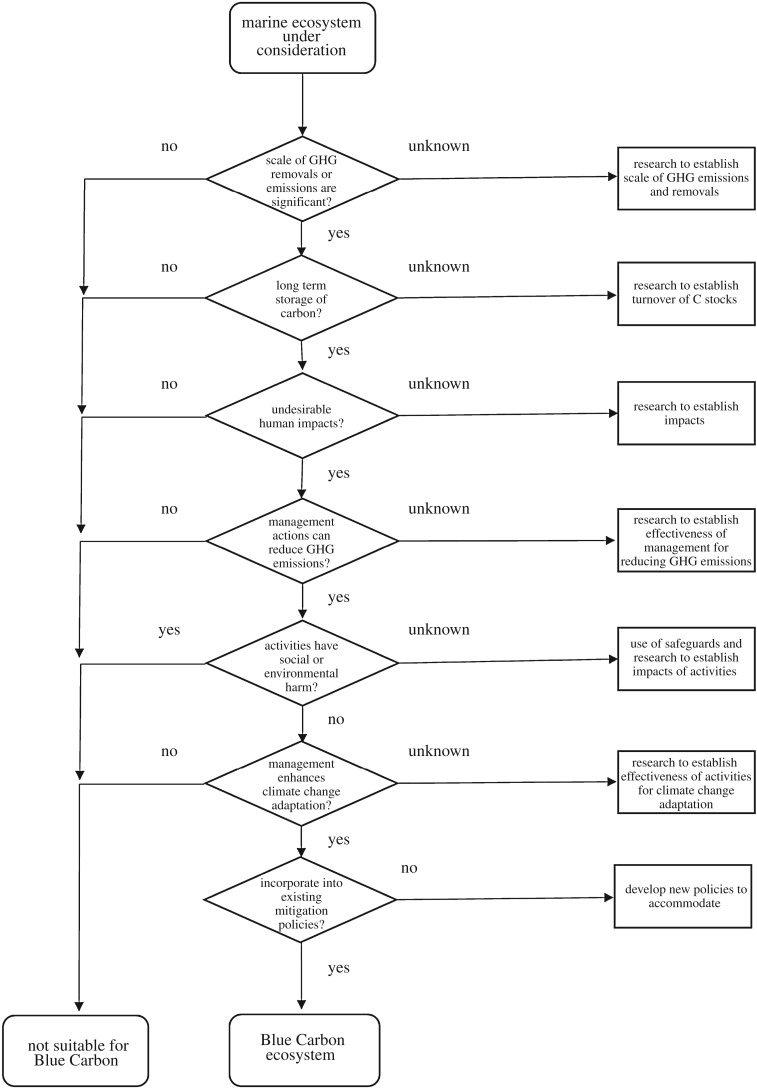
Blue Carbon is a term coined in 2009 to draw attention to the degradation of marine and coastal ecosystems and the need to conserve and restore them to mitigate climate change and for the other ecosystem services they provide. Blue Carbon has multiple meanings, which we aim to clarify here, which reflect the original descriptions of the concept including (1) all organic matter captured by marine organisms, and (2) how marine ecosystems could be managed to reduce greenhouse gas emissions and thereby contribute to climate change mitigation and conservation. The multifaceted nature of the Blue Carbon concept has led to unprecedented collaboration across disciplines, where scientists, conservationists and policy makers have interacted intensely to advance shared goals. Some coastal ecosystems (mangroves, tidal marshes and seagrass) are established Blue Carbon ecosystems as they often have high carbon stocks, support long-term carbon storage, offer the potential to manage greenhouse gas emissions and support other adaptation policies. Some marine ecosystems do not meet key criteria for inclusion within the Blue Carbon framework (e.g. fish, bivalves and coral reefs). Others have gaps in scientific understanding of carbon stocks or greenhouse gas fluxes, or currently there is limited potential for management or accounting for carbon sequestration (macroalgae and phytoplankton), but may be considered Blue Carbon ecosystems in the future, once these gaps are addressed.
Keywords: carbon sequestration; coastal wetlands; macroalgae; mangrove; saltmarsh; seagrass.
Conflict of interest statement
We declare no competing interests.
Figures
References
-
- Riley GA. 1944. The carbon metabolism and photosynthetic efficiency of the Earth as a whole. Am. Sci. 32, 129–134.
-
- Ciais P, et al. 2013. Carbon and other biogeochemical cycles. In Climate change 2013: the physical science basis. Contribution of Working Group I to the Fifth Assessment Report of the Intergovernmental Panel on Climate Change (ed. Stocker TF, et al.), pp. 465–570. Cambridge, UK: Cambridge University Press.
-
- Boysen-Jensen P. 1914. Studies concerning the organic matter of the sea bottom. Rep. Dan. Biol. Stn 22, 1–39.
-
- Duarte CM, Cebrián J. 1996. The fate of marine autotrophic production. Limnol. Oceanogr. 41, 1758–1766. (10.4319/lo.1996.41.8.1758) - DOI
Publication types
MeSH terms
Substances
Associated data
LinkOut - more resources
Full Text Sources
