


Hydrogen peroxide-based products alter inflammatory and tissue damage-related proteins in the gingival crevicular fluid of healthy volunteers: a randomized trial
- PMID: 30837573
- PMCID: PMC6400941
- DOI: 10.1038/s41598-019-40006-w
Hydrogen peroxide-based products alter inflammatory and tissue damage-related proteins in the gingival crevicular fluid of healthy volunteers: a randomized trial
Abstract
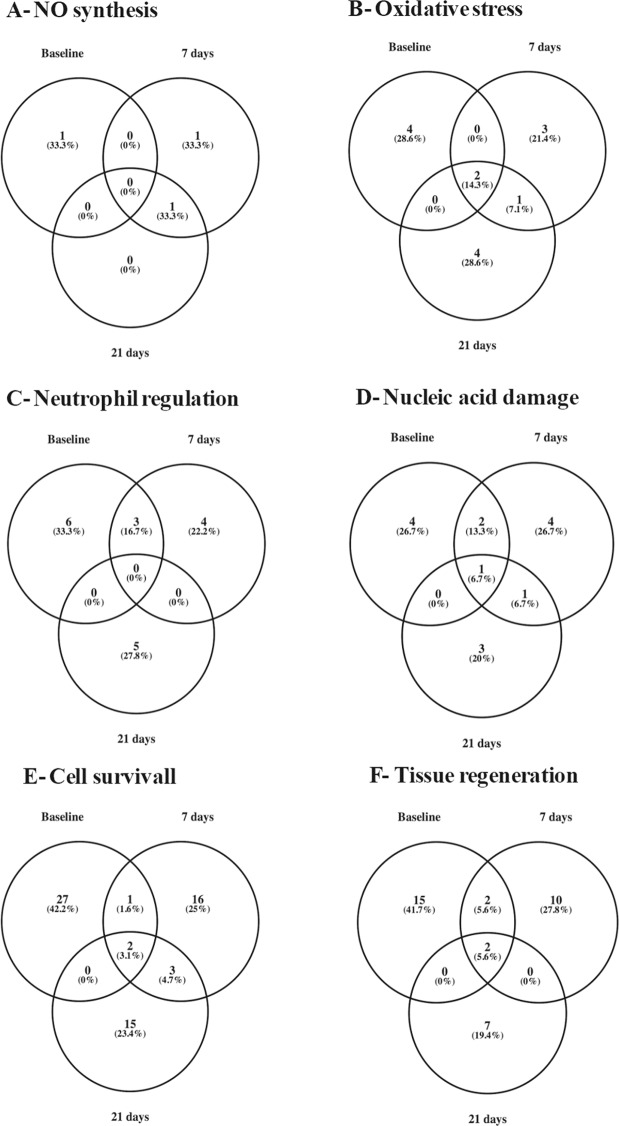
Hydrogen peroxide (H2O2)-based products are effective in tooth whitening; however, their safety is controversial as they may harm patient tissues/cells. These effects are suggested to be concentration-dependent; nonetheless, to date, there are no reports on H2O2-mediated oxidative damage in the gingival tissue, and neither whether this can be detected in gingival crevicular fluid (GCF) samples. We hypothesize that H2O2 whitening products may cause collateral oxidative tissue damage following in office application. Therefore, H2O2 and nitric oxide (NO) levels were investigated in GCF samples obtained from patients undergoing dental bleaching with H2O2 at different concentrations, in a randomized, double-blind, split-mouth clinical trial. A proteomic analysis of these samples was also performed. H2O2-based whitening products promoted inflammation which was detected in GCF samples and lasted for longer following 35% H2O2 bleaching. This included time-dependent changes in NO levels and in the abundance of proteins associated with NO synthesis, oxidative stress, neutrophil regulation, nucleic acid damage, cell survival and/or tissue regeneration. Overall, H2O2-based products used in office promote inflammation irrespective of their concentration. As the inflammation caused by 35% H2O2 is longer, patients may benefit better from using lower concentrations of this bleaching product, as they may result in less tissue damage.
Conflict of interest statement
The authors declare no competing interests.
Figures


References
-
- Aushill TM, Hellwig E, Schmidale S, Sculean A, Arweiler NB. Efficacity, side effects and patients’ acceptance of diferente bleaching techniques (OTC, in-office, at-home) Oper. Dent. 2005;30:156–163. - PubMed
-
- Basting RT, Amaral FL, Franca FM, Flório FM. Clinical comparative study of the effectiveness of and tooth sensitivity to 10% and 20% carbamide peroxide home-use and 35% and 38% hydrogen peroxide in-office bleaching materials containing desensitizing agents. Oper. Dent. 2012;37:464–473. doi: 10.2341/11-337-C. - DOI - PubMed
Publication types
MeSH terms
Substances
LinkOut - more resources
Full Text Sources
Research Materials
