


Health Benefits of Supplementing Nursery Pig Diets with Microalgae or Fish Oil
- PMID: 30841603
- PMCID: PMC6465993
- DOI: 10.3390/ani9030080
Health Benefits of Supplementing Nursery Pig Diets with Microalgae or Fish Oil
Abstract
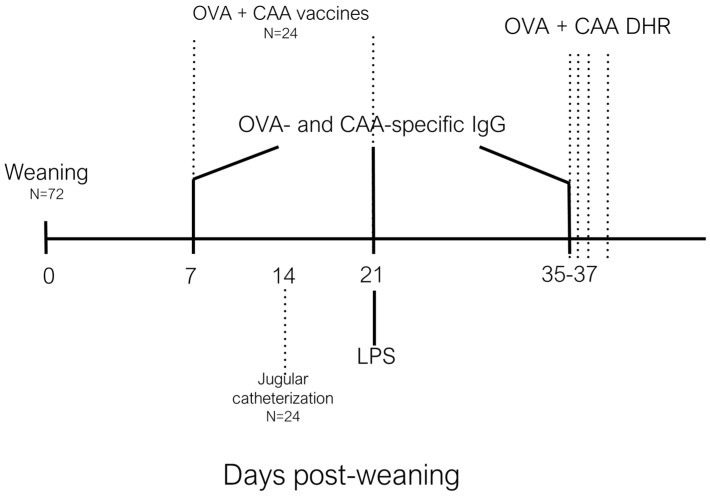
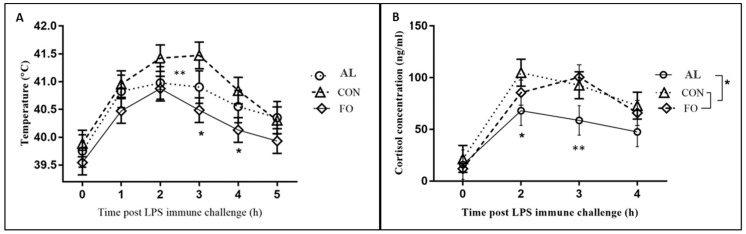
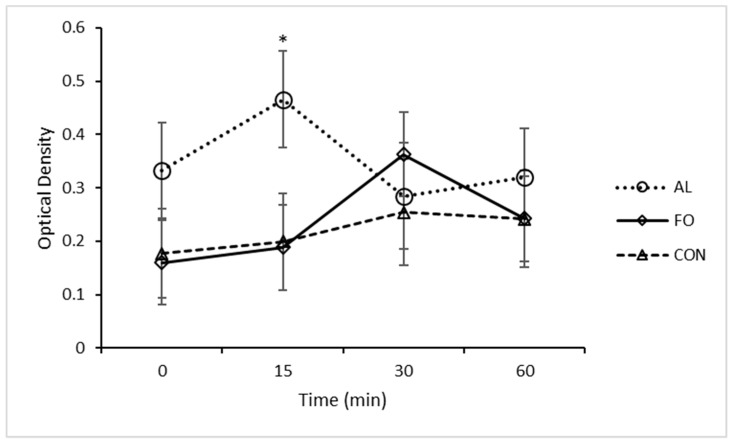
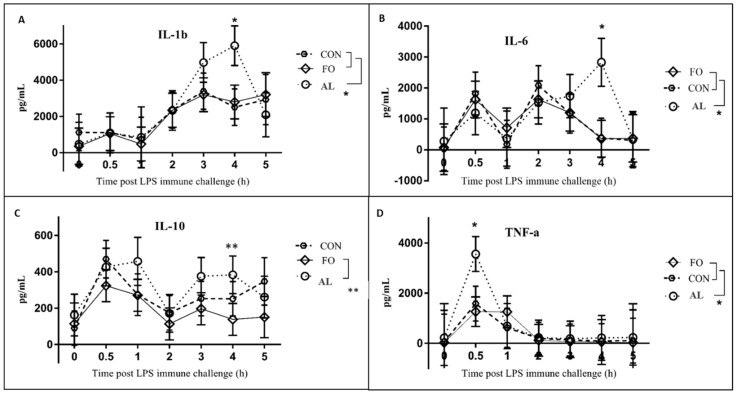
Weaning stress can negatively impact a pig's performance; dietary supplementation with omega-3 polyunsaturated fatty acids (n-3 PUFA) reduces inflammatory stress and promotes nursery pig's health and growth. Fish oil (FO) is a major source of n-3 PUFA; however, microalgae (AL) may provide an alternative source of n-3 PUFA. The aim of this study was to assess the health benefits of supplementing a plant protein-based nursery diet with 3.12% AL or 1.25% FO providing equal total n-3 PUFA compared to a control (CON) diet. Seventy-two pigs were fed experimental diets for three weeks (phases 1 and 2), followed by a common standard diet for three weeks (phase 3). Following phase 2, 8 pigs per treatment underwent a lipopolysaccharide (LPS) immune stress challenge to assess the acute-phase response and 8 pigs per treatment were vaccinated with novel antigens to assess acquired immunity. No significant differences in piglets' growth were observed, despite decreased feed intake in FO piglets compared to AL piglets in phase 3. AL supplementation tended to reduce, and FO supplementation significantly reduced the LPS-induced fever response. The AL pigs had significantly reduced cortisol responses, increased cytokine concentrations, and increased chromogranin A concentrations compared to FO and CON pigs following LPS challenge. Results suggest that AL or FO supplementation in nursery diets differentially modulate the acute-phase response, possibly due to different n-3 PUFA profiles between the two ingredients.
Keywords: acute-phase response; fish oil; immune response; lipopolysaccharide; microalgae; swine nutrition.
Conflict of interest statement
The authors declare no conflict of interest.
Figures
References
-
- Huber L.-A., Hooda S., Fisher-Heffernan R.E., Karrow N.A., De Lange C.F.M. Effect of reducing the ratio of omega-6-to-omega-3 fatty acids in diets of low protein quality on nursery pig growth performance and immune response. J. Anim. Sci. 2018;96:4348–4359. doi: 10.1093/jas/sky296. - DOI - PMC - PubMed
-
- National Research Council . Nutrient Requirements of Swine. 11th ed. The National Academic Press; Washington, DC, USA: 2012.
-
- Skinner L.D., Levesque C.L., Wey D., Rudar M., Zhu J., Hooda S., de Lange C.F.M. Impact of nursery feeding program on subsequent growth performance, carcass quality, meat quality, and physical and chemical body composition of growing-finishing pigs. J. Anim. Sci. 2014;92:1044–1054. doi: 10.2527/jas.2013-6743. - DOI - PubMed
Grants and funding
LinkOut - more resources
Full Text Sources
Research Materials
