


Maladaptive Rumination as a Transdiagnostic Mediator of Vulnerability and Outcome in Psychopathology
- PMID: 30841644
- PMCID: PMC6463018
- DOI: 10.3390/jcm8030314
Maladaptive Rumination as a Transdiagnostic Mediator of Vulnerability and Outcome in Psychopathology
Abstract
Background: Maladaptive rumination is a form of negative repetitive thinking which has attracted the interest of researchers, as it is considered a cognitive vulnerability to depression. Some of the original beliefs regarding rumination, in particular its exclusive link with depression, have been questioned in the light of research findings. At present, the very concept of rumination is still unclear, so research has been investigating this topic from different, and somewhat inconsistent, perspectives.
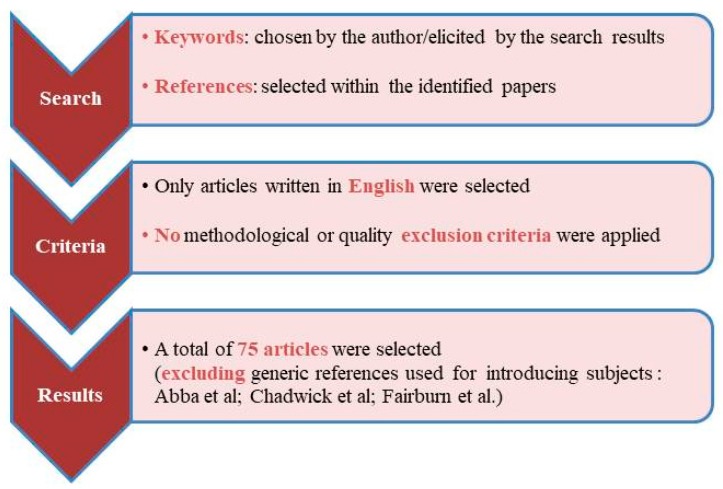
Methods: A literature review was performed in order to outline some core characteristics of rumination, explain its determinants, and discuss its possible role as a transdiagnostic mediator of vulnerability and outcome in psychopathology.
Results: Maladaptive rumination could be interpreted as a dysfunctional coping strategy strictly linked to emotion regulation and metacognition that may occur in several psychopathological conditions, such as psychosis, eating disorders, and alcohol dependence.
Conclusion: Evidence allows the interpretation of maladaptive rumination as a transdiagnostic mediator of vulnerability and outcome in psychopathology. Therefore, investigating it from a dimensional perspective may represent a valid research strategy.
Keywords: alcohol dependence; eating disorders; emotion regulation; metacognition; psychopathology; psychosis; rumination.
Conflict of interest statement
The author declares no conflict of interest.
Figures
References
Publication types
LinkOut - more resources
Full Text Sources
