


Tools used to assess the quality of peer review reports: a methodological systematic review
- PMID: 30841850
- PMCID: PMC6402095
- DOI: 10.1186/s12874-019-0688-x
Tools used to assess the quality of peer review reports: a methodological systematic review
Abstract
Background: A strong need exists for a validated tool that clearly defines peer review report quality in biomedical research, as it will allow evaluating interventions aimed at improving the peer review process in well-performed trials. We aim to identify and describe existing tools for assessing the quality of peer review reports in biomedical research.
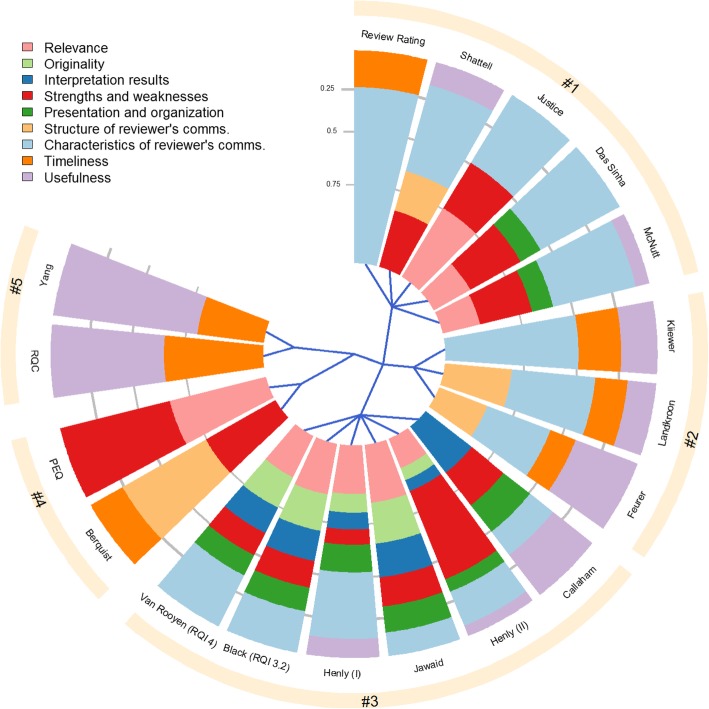
Methods: We conducted a methodological systematic review by searching PubMed, EMBASE (via Ovid) and The Cochrane Methodology Register (via The Cochrane Library) as well as Google® for all reports in English describing a tool for assessing the quality of a peer review report in biomedical research. Data extraction was performed in duplicate using a standardized data extraction form. We extracted information on the structure, development and validation of each tool. We also identified quality components across tools using a systematic multi-step approach and we investigated quality domain similarities among tools by performing hierarchical, complete-linkage clustering analysis.
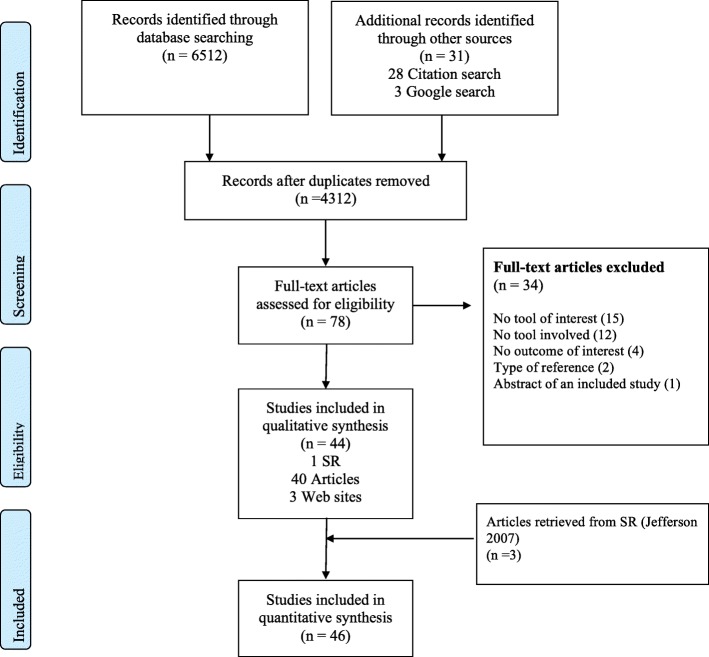
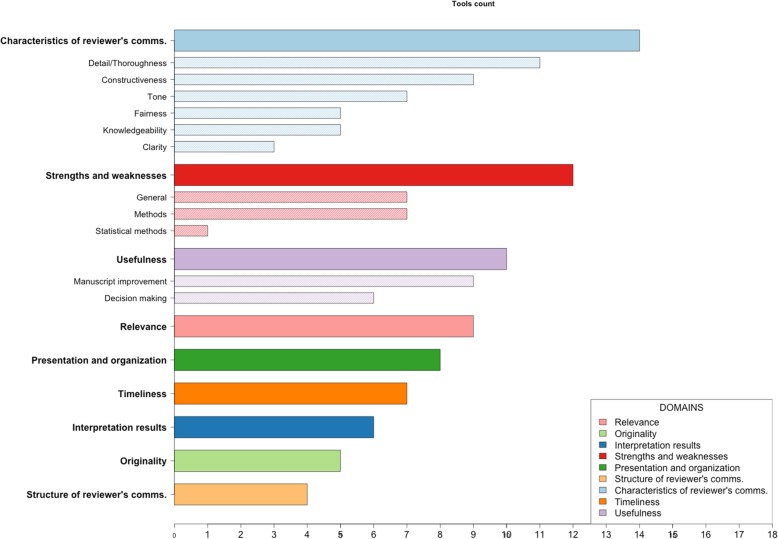
Results: We identified a total number of 24 tools: 23 scales and 1 checklist. Six tools consisted of a single item and 18 had several items ranging from 4 to 26. None of the tools reported a definition of 'quality'. Only 1 tool described the scale development and 10 provided measures of validity and reliability. Five tools were used as an outcome in a randomized controlled trial (RCT). Moreover, we classified the quality components of the 18 tools with more than one item into 9 main quality domains and 11 subdomains. The tools contained from two to seven quality domains. Some domains and subdomains were considered in most tools such as the detailed/thorough (11/18) nature of reviewer's comments. Others were rarely considered, such as whether or not the reviewer made comments on the statistical methods (1/18).
Conclusion: Several tools are available to assess the quality of peer review reports; however, the development and validation process is questionable and the concepts evaluated by these tools vary widely. The results from this study and from further investigations will inform the development of a new tool for assessing the quality of peer review reports in biomedical research.
Keywords: Methods; Peer review; Quality control; Report; Systematic review.
Conflict of interest statement
Ethics approval and consent to participate
Not required.
Consent for publication
Not applicable.
Competing interests
All authors have completed the ICMJE uniform disclosure form at
Publisher’s Note
Springer Nature remains neutral with regard to jurisdictional claims in published maps and institutional affiliations.
Figures
References
Publication types
MeSH terms
LinkOut - more resources
Full Text Sources
