


Genome-wide data from the Bubi of Bioko Island clarifies the Atlantic fringe of the Bantu dispersal
- PMID: 30841922
- PMCID: PMC6404284
- DOI: 10.1186/s12864-019-5529-0
Genome-wide data from the Bubi of Bioko Island clarifies the Atlantic fringe of the Bantu dispersal
Abstract
Background: Bioko is one of the few islands that exist around Africa, the most genetically diverse continent on the planet. The native Bantu-speaking inhabitants of Bioko, the Bubi, are believed to have colonized the island about 2000 years ago. Here, we sequenced the genome of thirteen Bubi individuals at high coverage and analysed their sequences in comparison to mainland populations from the Gulf of Guinea.
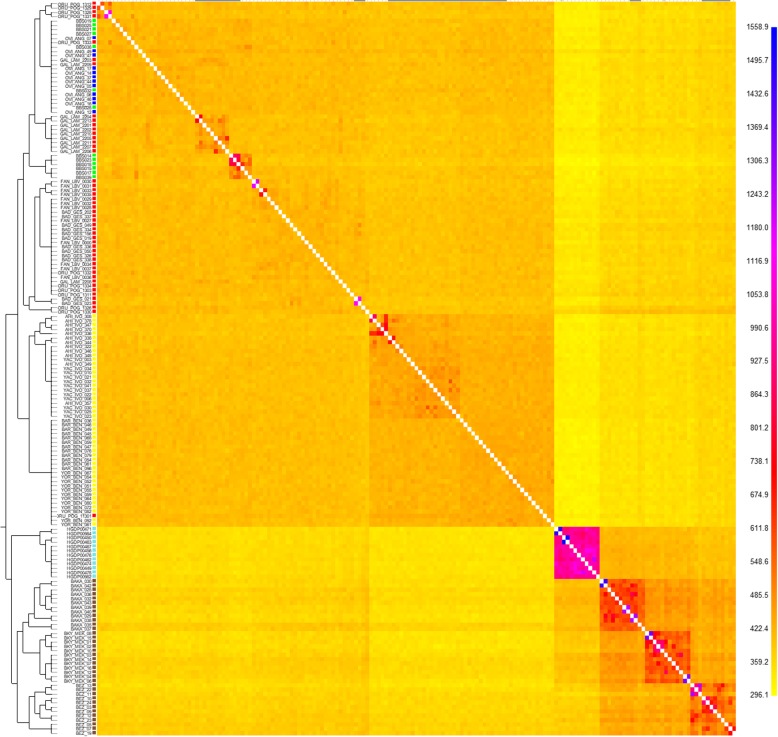
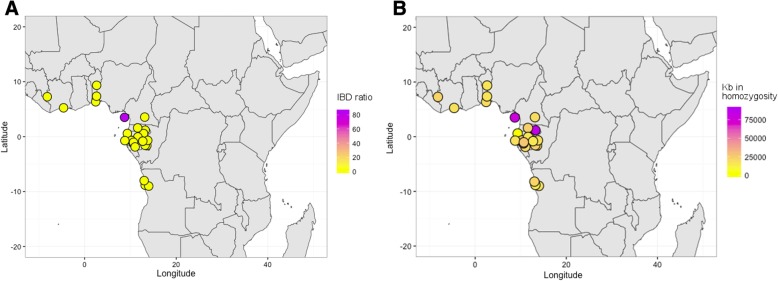
Results: We found that, genetically, the closest mainland population to the Bubi are Bantu-speaking groups from Angola instead the geographically closer groups from Cameroon. The Bubi possess a lower proportion of rainforest hunter-gatherer (RHG) ancestry than most other Bantu-speaking groups. However, their RHG component most likely came from the same source and could have reached them by gene flow from the mainland after island settlement. By studying identity by descent (IBD) genomic blocks and runs of homozygosity (ROHs), we found evidence for a significant level of genetic isolation among the Bubi, isolation that can be attributed to the island effect. Additionally, as this population is known to have one of the highest malaria incidence rates in the world we analysed their genome for malaria-resistant alleles. However, we were unable to detect any specific selective sweeps related to this disease.
Conclusions: By describing their dispersal to the Atlantic islands, the genomic characterization of the Bubi contributes to the understanding of the margins of the massive Bantu migration that shaped all Sub-Saharan African populations.
Keywords: Bantu-speaking groups; Bioko Island; Bubi; Isolation; Population genetics.
Conflict of interest statement
Ethics approval and consent to participate
Written informed consent was provided by all participants. The confidentially and anonymity of all participants has been guaranteed. Experimental protocols and informed consent have been approved by the Clinical Research Ethics Committee from Institut Hospital del Mar d’Investigacions Mèdiques in Barcelona (CEIC-PSMAR)(2018/7845/I).
Consent for publication
The consent for publication has been given by all the participants in the study.
Competing interests
The authors declare that they have no competing interests.
Publisher’s Note
Springer Nature remains neutral with regard to jurisdictional claims in published maps and institutional affiliations.
Figures
References
-
- Günter T. Los Bubis de Fernando Póo. Trujillo JR, Rodríguez B, editors. Madrid: SIAL ediciones; 2008. p. 270.
-
- Bolekia BJ. Lingüística Bantú a través del Bubi. Salamanca: Universidad de Salamanca; 2008. p. 192.
-
- Jeffreys MDW. Some notes on the Neolithic of West Africa. In: Desmond Clark J, Cole S, editors. Third pan-african congress on prehistory. Livingstone: London Chatto & Windus; 1951. pp. 262–273.
-
- Eteo Soriso JF. Los ritos de paso entre los Bubis. Madrid: SIAL- Casa de Àfrica; 2017.
-
- Burton RF. A visit to Fernando Po Peak, and a Night in the Open. Alp J. 1872;VI(XXXVII).
MeSH terms
Grants and funding
LinkOut - more resources
Full Text Sources
