


NAA10 polyadenylation signal variants cause syndromic microphthalmia
- PMID: 30842225
- PMCID: PMC7032957
- DOI: 10.1136/jmedgenet-2018-105836
NAA10 polyadenylation signal variants cause syndromic microphthalmia
Abstract
Background: A single variant in NAA10 (c.471+2T>A), the gene encoding N-acetyltransferase 10, has been associated with Lenz microphthalmia syndrome. In this study, we aimed to identify causative variants in families with syndromic X-linked microphthalmia.
Methods: Three families, including 15 affected individuals with syndromic X-linked microphthalmia, underwent analyses including linkage analysis, exome sequencing and targeted gene sequencing. The consequences of two identified variants in NAA10 were evaluated using quantitative PCR and RNAseq.
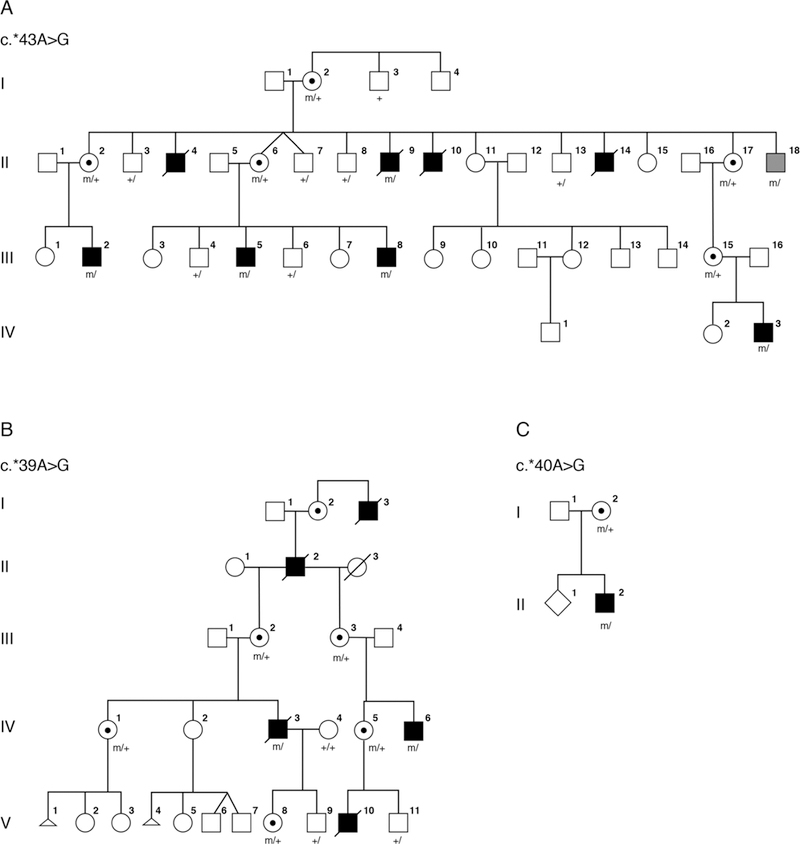
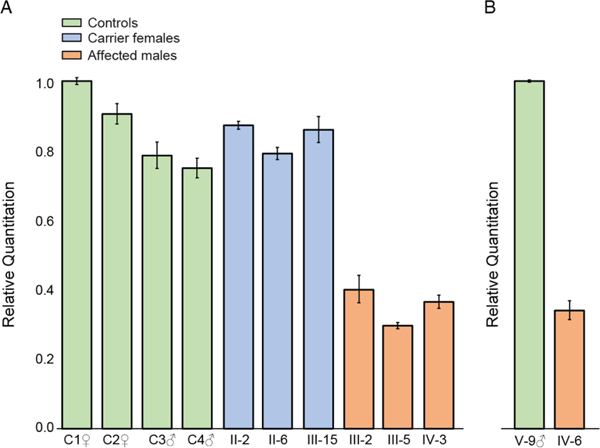
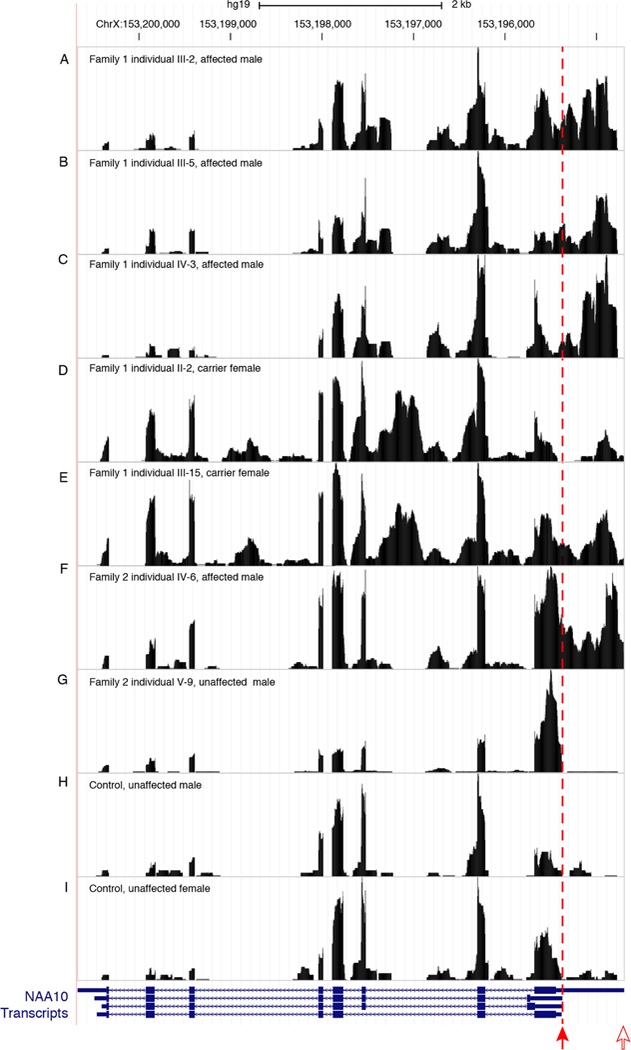
Results: Genetic linkage analysis in family 1 supported a candidate region on Xq27-q28, which included NAA10. Exome sequencing identified a hemizygous NAA10 polyadenylation signal (PAS) variant, chrX:153,195,397T>C, c.*43A>G, which segregated with the disease. Targeted sequencing of affected males from families 2 and 3 identified distinct NAA10 PAS variants, chrX:g.153,195,401T>C, c.*39A>G and chrX:g.153,195,400T>C, c.*40A>G. All three variants were absent from gnomAD. Quantitative PCR and RNAseq showed reduced NAA10 mRNA levels and abnormal 3' UTRs in affected individuals. Targeted sequencing of NAA10 in 376 additional affected individuals failed to identify variants in the PAS.
Conclusion: These data show that PAS variants are the most common variant type in NAA10-associated syndromic microphthalmia, suggesting reduced RNA is the molecular mechanism by which these alterations cause microphthalmia/anophthalmia. We reviewed recognised variants in PAS associated with Mendelian disorders and identified only 23 others, indicating that NAA10 harbours more than 10% of all known PAS variants. We hypothesise that PAS in other genes harbour unrecognised pathogenic variants associated with Mendelian disorders. The systematic interrogation of PAS could improve genetic testing yields.
Keywords: Naa10; polyadenylation signal.
© Author(s) (or their employer(s)) 2019. No commercial re-use. See rights and permissions. Published by BMJ.
Conflict of interest statement
Competing interests: LGB receives royalties from Genentech Corp, is an advisor to the Illumina Corp, received honoraria from Wiley-Blackwell and receives honoraria from Cold Spring Harbor Press. DNC is in receipt of funding from Qiagen Inc through a License Agreement with Cardiff University. AMS receives honoraria from Wiley-Blackwell, Inc, Oxford University Press and UptoDate, Inc.
Figures
References
-
- Tucker S, Jones B, Collin R. Systemic anomalies in 77 patients with congenital anophthalmos or microphthalmos. Eye 1996:10:310–4. - PubMed
-
- Ng D, Thakker N, Corcoran CM, Donnai D, Perveen R, Schneider A, Hadley DW, Tifft C, Zhang L, Wilkie AO, van der Smagt JJ, Gorlin RJ, Burgess SM, Bardwell VJ, Black GC, Biesecker LG. Oculofaciocardiodental and Lenz microphthalmia syndromes result from distinct classes of mutations in BCOR. Nat Genet 2004;36:411–6. - PubMed
