


Delivery of therapeutics to the inner ear: The challenge of the blood-labyrinth barrier
- PMID: 30842313
- PMCID: PMC6488020
- DOI: 10.1126/scitranslmed.aao0935
Delivery of therapeutics to the inner ear: The challenge of the blood-labyrinth barrier
Abstract
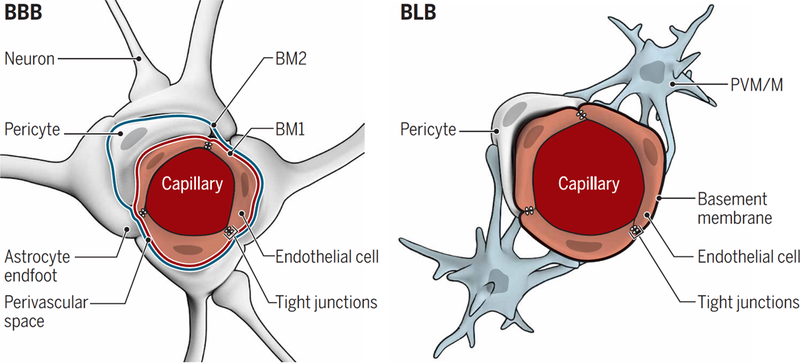
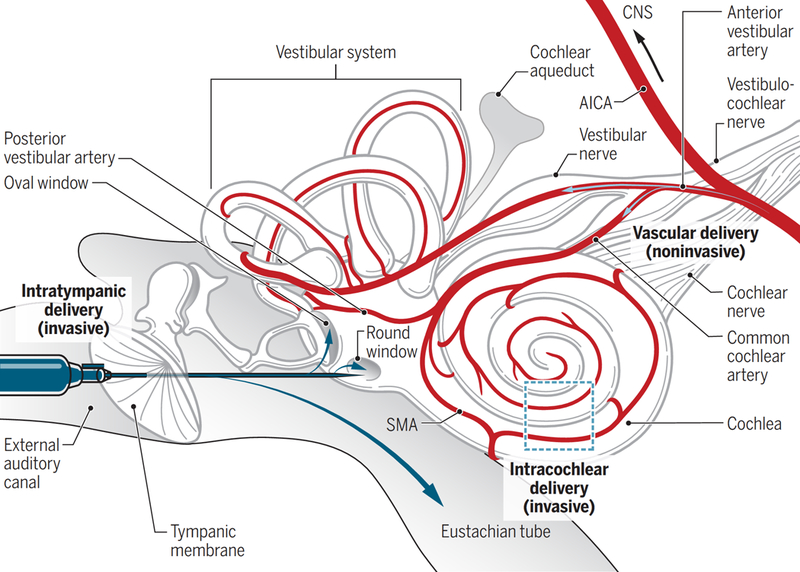
Permanent hearing loss affects more than 5% of the world's population, yet there are no nondevice therapies that can protect or restore hearing. Delivery of therapeutics to the cochlea and vestibular system of the inner ear is complicated by their inaccessible location. Drug delivery to the inner ear via the vasculature is an attractive noninvasive strategy, yet the blood-labyrinth barrier at the luminal surface of inner ear capillaries restricts entry of most blood-borne compounds into inner ear tissues. Here, we compare the blood-labyrinth barrier to the blood-brain barrier, discuss invasive intratympanic and intracochlear drug delivery methods, and evaluate noninvasive strategies for drug delivery to the inner ear.
Copyright © 2019 The Authors, some rights reserved; exclusive licensee American Association for the Advancement of Science. No claim to original U.S. Government Works.
Conflict of interest statement
Figures
References
-
- Bhandare N, Antonelli PJ, Morris CG, Malayapa RS, Mendenhall WM, Ototoxicity after radiotherapy for head and neck tumors. Int. J. Radiat. Oncol. Biol. Phys 67, 469–479 (2007). - PubMed
-
- Schell MJ, McHaney VA, Green AA, Kun LE, Hayes FA, Horowitz M, Meyer WH, Hearing loss in children and young adults receiving cisplatin with or without prior cranial irradiation. J. Clin. Oncol 7, 754–760 (1989). - PubMed
-
- Sone M, Schachern PA, Paparella MM, Loss of spiral ganglion cells as primary manifestation of aminoglycoside ototoxicity. Hear. Res 115, 217–223 (1998). - PubMed
-
- Müller U, Barr-Gillespie PG, New treatment options for hearing loss. Nat. Rev. Drug Discov 14, 346–365 (2015). - PubMed
Publication types
MeSH terms
Substances
Grants and funding
LinkOut - more resources
Full Text Sources
Other Literature Sources
Medical
