


Hepatocytes direct the formation of a pro-metastatic niche in the liver
- PMID: 30842658
- PMCID: PMC6430113
- DOI: 10.1038/s41586-019-1004-y
Hepatocytes direct the formation of a pro-metastatic niche in the liver
Abstract
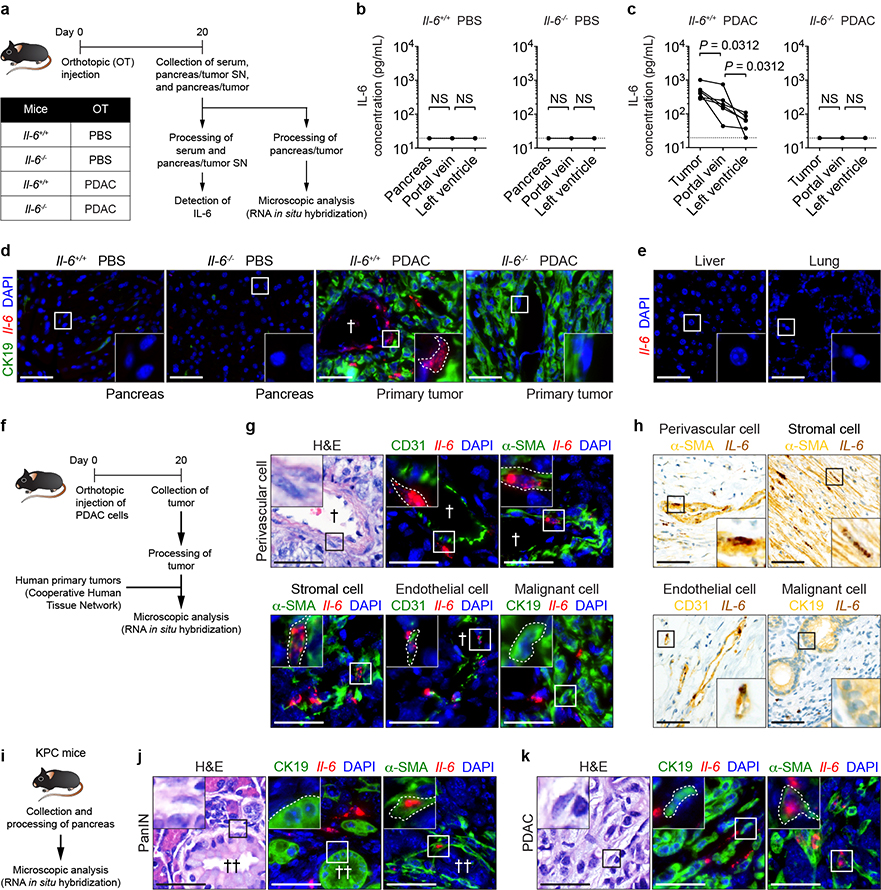
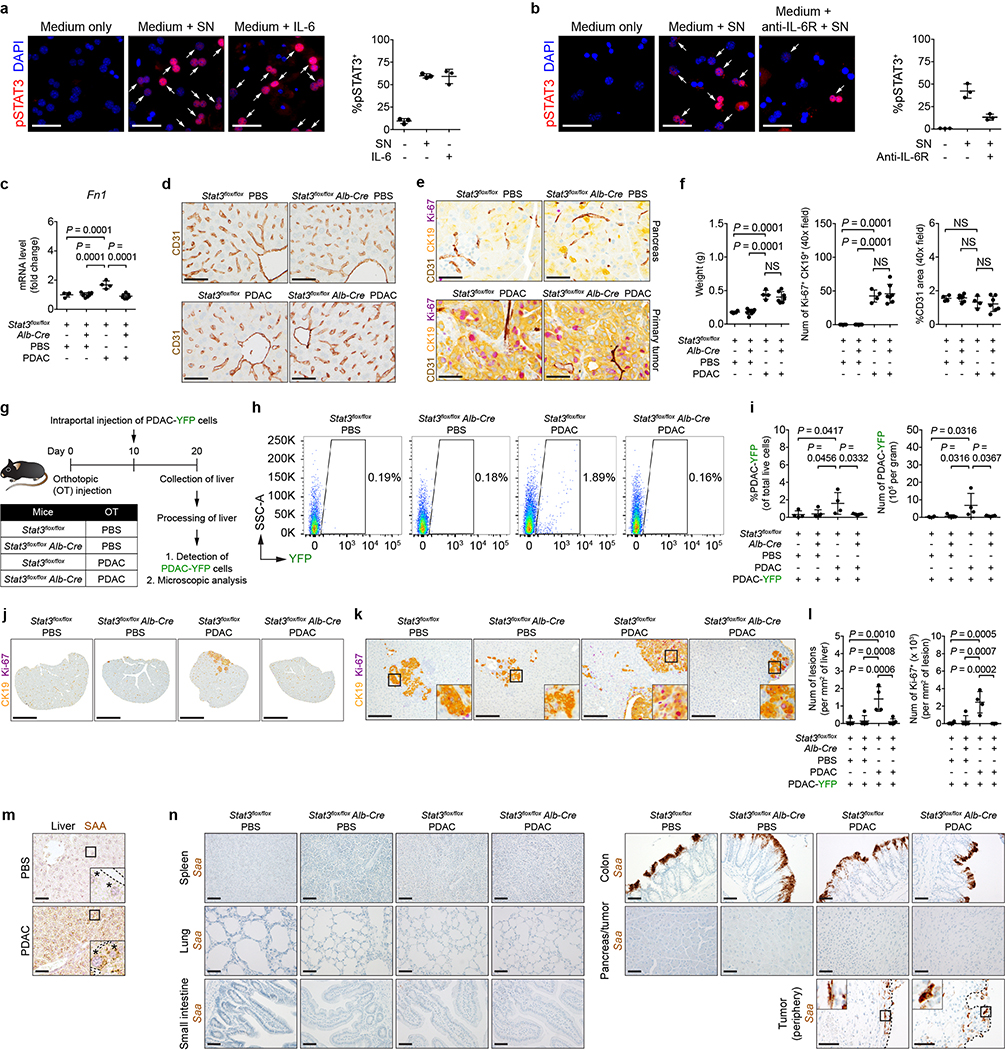
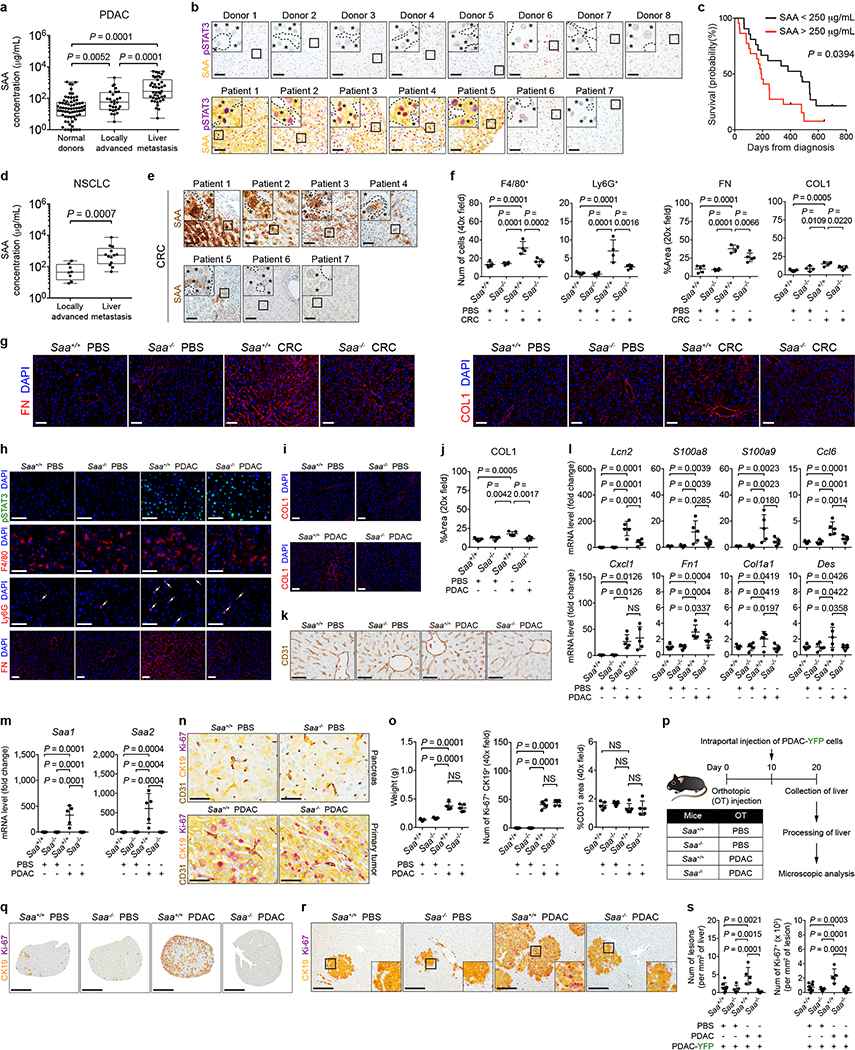
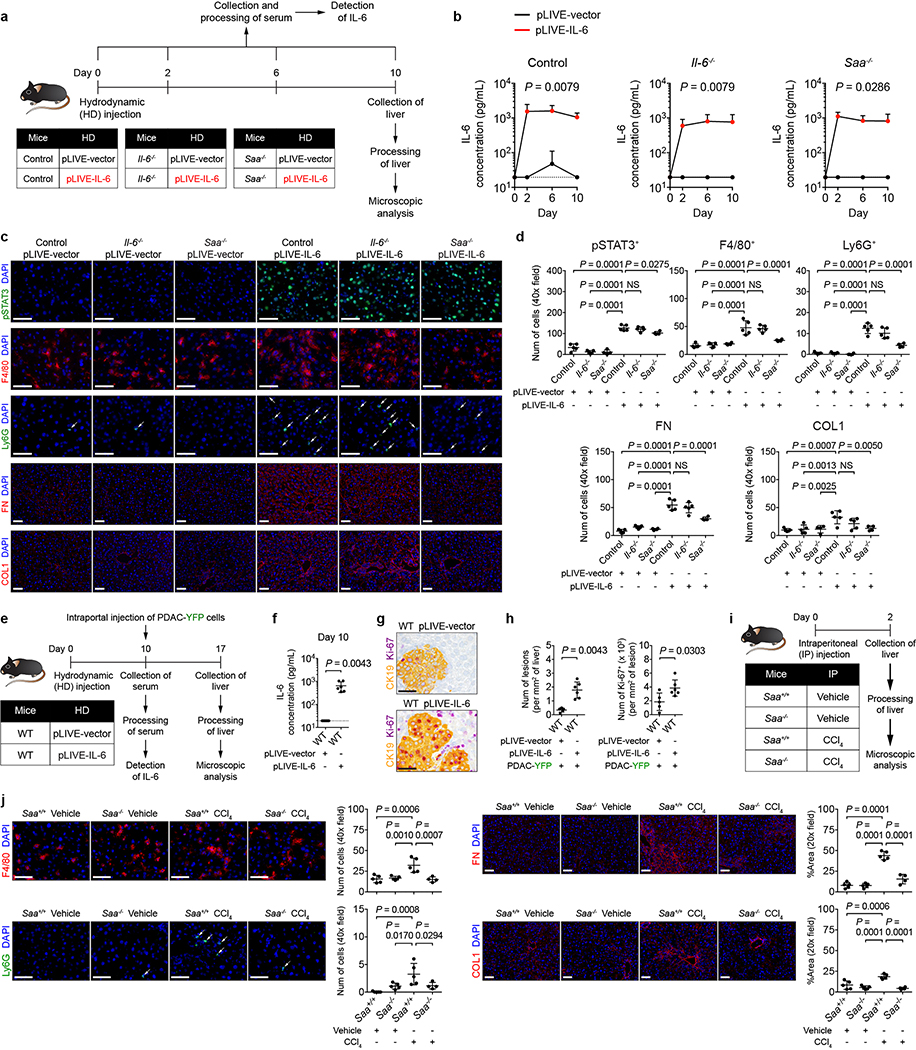
The liver is the most common site of metastatic disease1. Although this metastatic tropism may reflect the mechanical trapping of circulating tumour cells, liver metastasis is also dependent, at least in part, on the formation of a 'pro-metastatic' niche that supports the spread of tumour cells to the liver2,3. The mechanisms that direct the formation of this niche are poorly understood. Here we show that hepatocytes coordinate myeloid cell accumulation and fibrosis within the liver and, in doing so, increase the susceptibility of the liver to metastatic seeding and outgrowth. During early pancreatic tumorigenesis in mice, hepatocytes show activation of signal transducer and activator of transcription 3 (STAT3) signalling and increased production of serum amyloid A1 and A2 (referred to collectively as SAA). Overexpression of SAA by hepatocytes also occurs in patients with pancreatic and colorectal cancers that have metastasized to the liver, and many patients with locally advanced and metastatic disease show increases in circulating SAA. Activation of STAT3 in hepatocytes and the subsequent production of SAA depend on the release of interleukin 6 (IL-6) into the circulation by non-malignant cells. Genetic ablation or blockade of components of IL-6-STAT3-SAA signalling prevents the establishment of a pro-metastatic niche and inhibits liver metastasis. Our data identify an intercellular network underpinned by hepatocytes that forms the basis of a pro-metastatic niche in the liver, and identify new therapeutic targets.
Conflict of interest statement
The authors have no competing financial interests.
Figures
Comment in
-
Molecular envoys pave the way for pancreatic cancer to invade the liver.Nature. 2019 Mar;567(7747):181-182. doi: 10.1038/d41586-019-00710-z. Nature. 2019. PMID: 30850740 No abstract available.
-
IL-6 drives niche formation in pancreatic cancer liver metastasis.Nat Rev Gastroenterol Hepatol. 2019 May;16(5):263. doi: 10.1038/s41575-019-0138-6. Nat Rev Gastroenterol Hepatol. 2019. PMID: 30953033 No abstract available.
References
-
- Hidalgo M Pancreatic cancer. N. Engl. J. Med 362, 1605–1617 (2010). - PubMed
-
- Sceneay J, Smyth MJ & Möller A The pre-metastatic niche: finding common ground. Cancer Metastasis Rev. 32, 449–464 (2013). - PubMed
-
- Hingorani SR et al. Trp53R172H and KrasG12D cooperate to promote chromosomal instability and widely metastatic pancreatic ductal adenocarcinoma in mice. Cancer Cell 7, 469–483 (2005). - PubMed
-
- Lee JW, Komar CA, Bengsch F, Graham K & Beatty GL Genetically engineered mouse models of pancreatic cancer: the KPC model (LSL-KrasG12D/+;LSL-Trp53R172H/+;Pdx-1-Cre), its variants, and their application in immuno-oncology drug discovery. Curr. Protoc. Pharmacol 73, 14.39.1–14.39.20 (2016). - PMC - PubMed
Publication types
MeSH terms
Substances
Grants and funding
LinkOut - more resources
Full Text Sources
Medical
Molecular Biology Databases
Miscellaneous
