Review
. 2019 Mar;25(3):367-376.
doi: 10.1038/s41591-019-0383-9. Epub 2019 Mar 6.

Developmental origins and emerging therapeutic opportunities for childhood cancer

Affiliations
Review

Developmental origins and emerging therapeutic opportunities for childhood cancer

Mariella Filbin et al. Nat Med. 2019 Mar.

Abstract

Cancer is the leading disease-related cause of death in children in developed countries. Arising in the context of actively growing tissues, childhood cancers are fundamentally diseases of dysregulated development. Childhood cancers exhibit a lower overall mutational burden than adult cancers, and recent sequencing studies have revealed that the genomic events central to childhood oncogenesis include mutations resulting in broad epigenetic changes or translocations that result in fusion oncoproteins. Here, we will review the developmental origins of childhood cancers, epigenetic dysregulation in tissue stem/precursor cells in numerous examples of childhood cancer oncogenesis and emerging therapeutic opportunities aimed at both cell-intrinsic and microenvironmental targets together with new insights into the mechanisms underlying long-term sequelae of childhood cancer therapy.


Figures
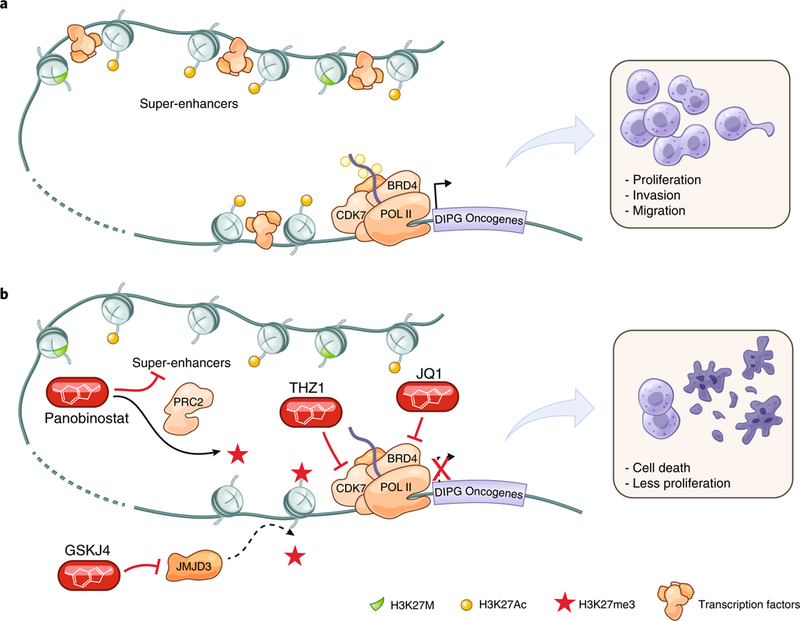
Fig. 1 |
Fig. 1 |. Epigenetic dysregulation and therapeutic opportunities in midline gliomas with histone mutations.
a, H3.3- or H3.1-K27M mutations (green histones) influence transcriptional regulation through global reduction of methylation (shown by red stars, which are absent in a) at position H3-K27 and global increases in acetylation (yellow circles) at H3-K27 (refs. ,). This alters local as well as distal gene regulation through super-enhancers and leads to de-repression of target oncogenes. b, Epigenetic modifiers panobinostat (HDAC inhibitor), GSKJ4 (histone lysine demethylase inhibitor) and JQ1 (bromodomain inhibitor), as well as transcriptional inhibitors like THZ1 (cyclin-dependent kinase 7 inhibitor) partially counteract the downstream effects of the histone mutation, including restoration of H3-K27 tri-methylation (red stars) by panobinostat and subsequent repression of target oncogenes. POL II, RNA polymerase II. BRD4, bromodomain-containing protein 4. CDK7, cyclin-dependent kinase 7. PRC2, polycomb repressive complex II.
Fig. 2 |
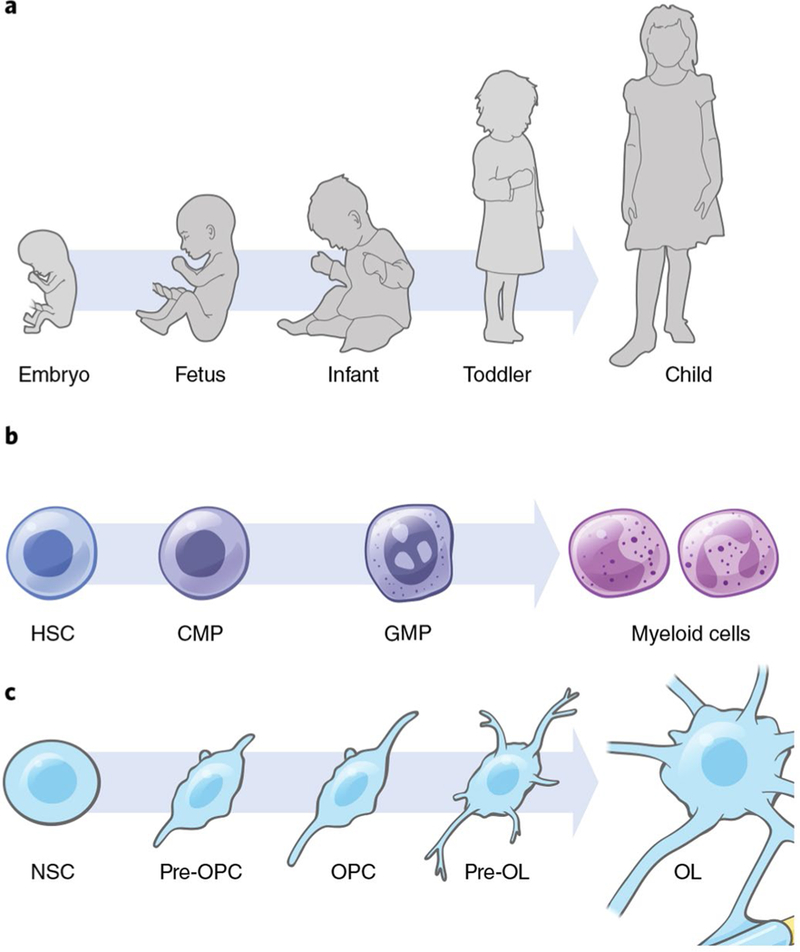
Fig. 2 |. Developmental origins of childhood cancer.
a, Progression of human development from embryo to childhood. Oncogenic mutations may occur in the prenatal period, but cancer only emerges at a later developmental time point. This principle has been well described in childhood leukemias. b, Myeloid differentiation, from HSC, to common myeloid progenitor (CMP), granulocyte monocyte precursor (GMP) and differentiated myeloid cells. The cell of initial mutation for AML is an earlier stem cell, while the AML cell of origin is a more differentiated precursor cell. c, Oligodendrocyte maturation, from neural stem cell (NSC) to OPC and mature myelinating oligodendrocyte (OL). Childhood gliomas may arise from precursors in the oligodendroglial lineage (pre-OPC or OPC). While the timing and cell of mutation for each pediatric glioma subtype is not yet clear, some evidence suggests that the key oncogenic mutations may occur at an earlier developmental time point .
Fig. 3 |
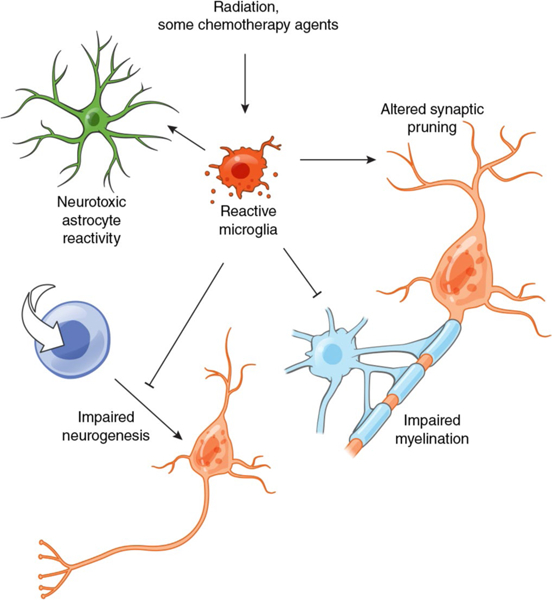
Fig. 3 |. Microglial inflammation is central to childhood cancer-therapy-related cognitive impairment.
Childhood cancer therapies, such as cranial radiation,,, methotrexate and cyclophosphamide, induce persistent microglial reactivity that in turn induces neurotoxic astrocyte reactivity, disrupts oligodendroglial lineage dynamics and impairs myelination, blocks neuronal differentiation of hippocampal stem cells and thereby disrupts hippocampal neurogenesis,, and contributes to aberrantly exuberant pruning of synapses,. Strategies to modulate microglia, such as CSF1R inhibition,,, represent an important therapeutic opportunity for cancer-therapy-related cognitive impairment.

References

    1. Siegel RL, Miller KD & Jemal A Cancer statistics, 2018. CA Cancer J. Clin. 68, 7–30 (2018). - PubMed
    1. Grobner SN et al. The landscape of genomic alterations across childhood cancers. Nature 555, 321–327 (2018). - PubMed
    1. Ma X et al. Pan-cancer genome and transcriptome analyses of 1,699 paediatric leukaemias and solid tumours. Nature 555, 371–376 (2018). - PMC - PubMed
    1. Funato K, Major T, Lewis PW, Allis CD & Tabar V Use of human embryonic stem cells to model pediatric gliomas with H3.3K27M histone mutation. Science 346, 1529–1533 (2014). - PMC - PubMed
    1. Pathania M et al. H3.3K27M Cooperates with Trp53 Loss and PDGFRA Gain in Mouse Embryonic Neural Progenitor Cells to Induce Invasive High-Grade Gliomas. Cancer Cell. 32, 684–700 (2017). - PMC - PubMed

Publication types

Substances