. 2018 Nov 30;10(6):1879-1884.
doi: 10.1039/c8sc03581d. eCollection 2019 Feb 14.

Transforming atmospheric CO2 into alternative fuels: a metal-free approach under ambient conditions

Affiliations

Transforming atmospheric CO2 into alternative fuels: a metal-free approach under ambient conditions

Samaresh Chandra Sau et al. Chem Sci. .

Abstract

This work demonstrates the first-ever completely metal-free approach to the capture of CO2 from air followed by reduction to methoxyborane (which produces methanol on hydrolysis) or sodium formate (which produces formic acid on hydrolysis) under ambient conditions. This was accomplished using an abnormal N-heterocyclic carbene (aNHC)-borane adduct. The intermediate involved in CO2 capture (aNHC-H, HCOO, B(OH)3) was structurally characterized by single-crystal X-ray diffraction. Interestingly, the captured CO2 can be released by heating the intermediate, or by passing this compound through an ion-exchange resin. The capture of CO2 from air can even proceed in the solid state via the formation of a bicarbonate complex (aNHC-H, HCO3, B(OH)3), which was also structurally characterized. A detailed mechanism for this process is proposed based on tandem density functional theory calculations and experiments.


Figures
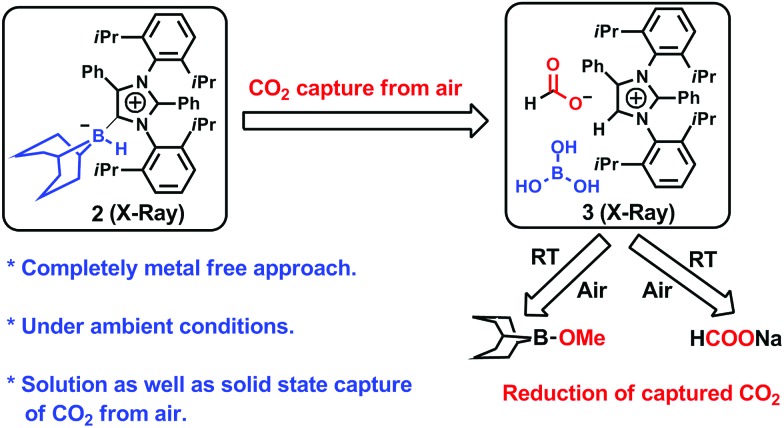
Fig. 1
Fig. 1. Metal-free CO2 fixation from air followed by reduction to methoxyborane or sodium formate under ambient conditions.
Fig. 2
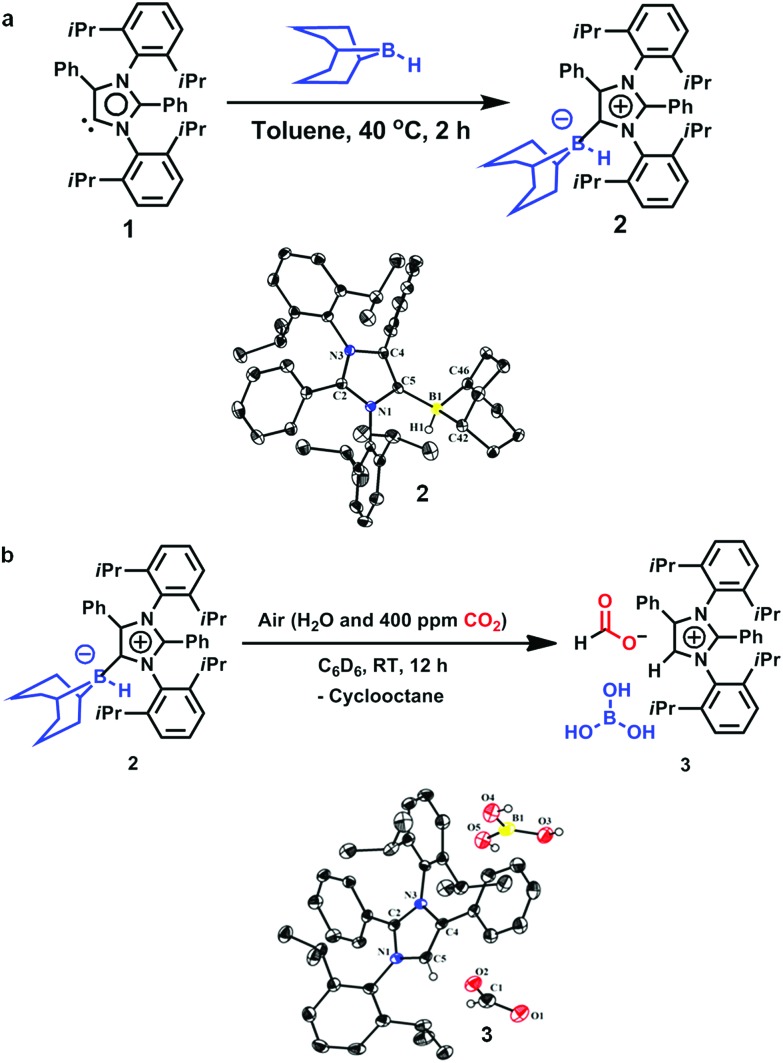
Fig. 2. Fixation of CO2 in air. (a) Synthesis of an abnormal N-heterocyclic carbene–9-borabicyclo(3.3.1)nonane adduct (aNHC–9BBN, 2) and an ORTEP drawing of the molecular structure of 2. (b) Fixation of CO2 from air with the formation of 3 and an ORTEP drawing of 3.
Scheme 1
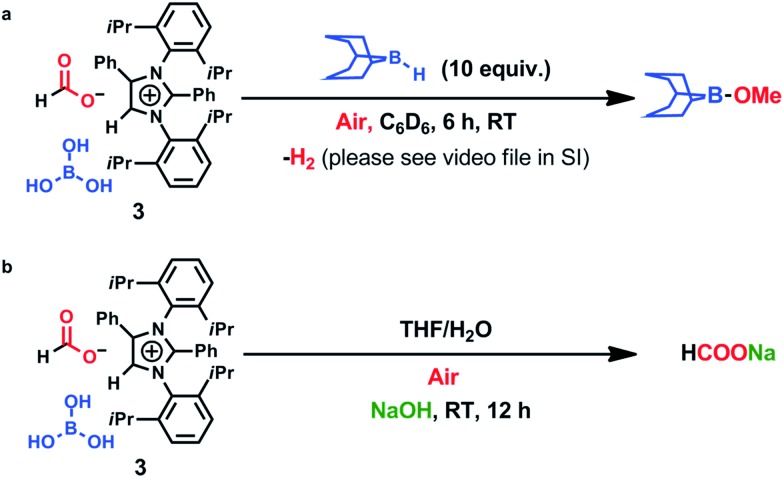
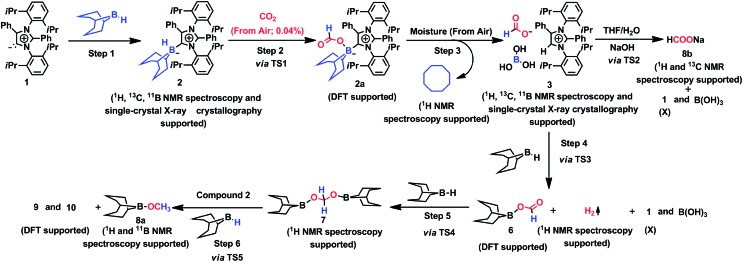
Scheme 1. Reduction of CO2 to methoxyborane and sodium formate in air.
Scheme 2
Scheme 2. Metal-free catalytic reduction of CO2 under ambient conditions.
Fig. 3
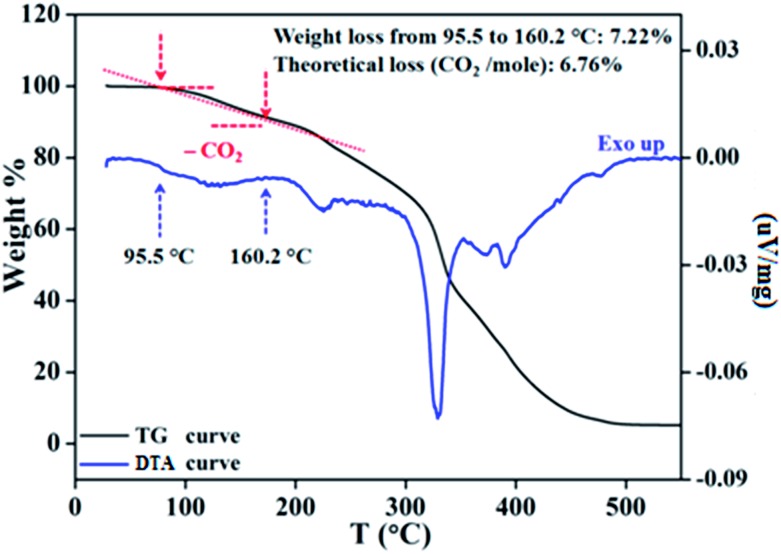
Fig. 3. Removal of captured CO2 in solid state, as monitored by thermogravimetric-differential thermal analysis of compound 3.
Fig. 4
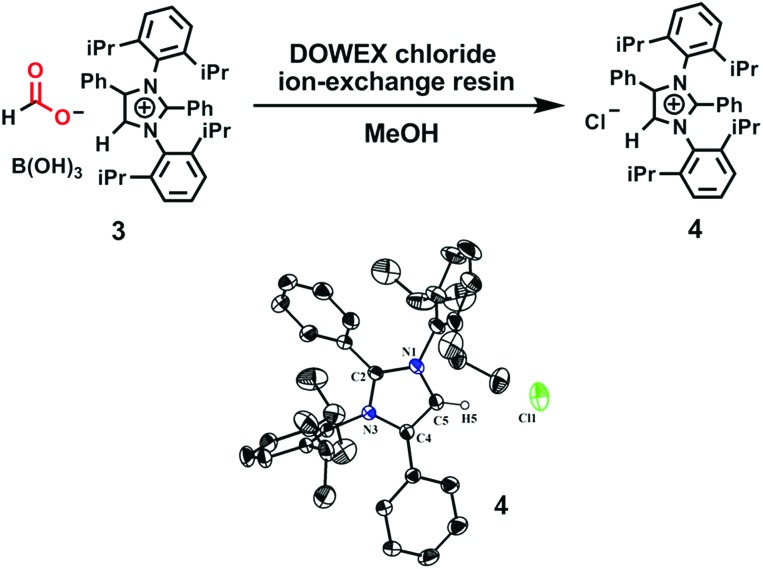
Fig. 4. Substitution of a formate anion with a chloride ion upon passing 3 through an ion-exchange resin, and an ORTEP drawing of the molecular structure of 4.
Fig. 5
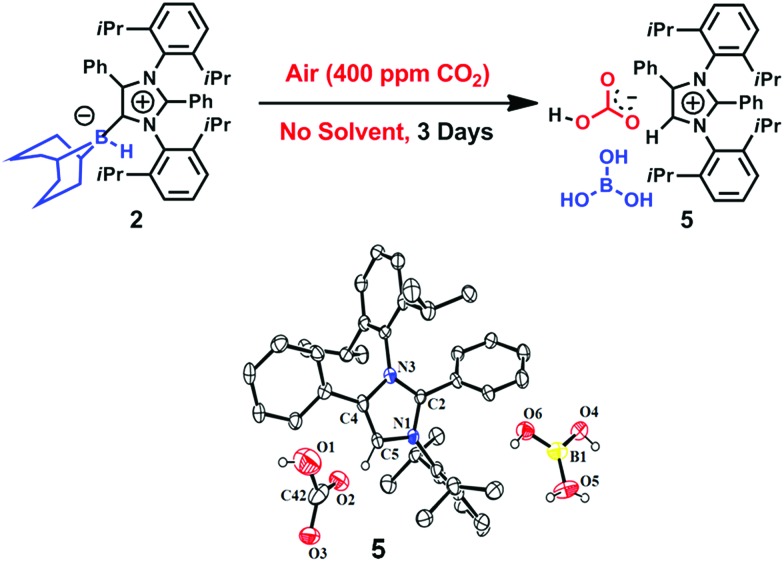
Fig. 5. Capture of CO2 from air by 2 in the solid state with the formation of the bicarbonate 5, and its ORTEP drawing.
Fig. 6
Fig. 6. Mechanistic scheme for the reduction of CO2 to methoxyborane and sodium formate with 2 in air. For drawings of 9 and 10 see Fig. S3.
Fig. 7
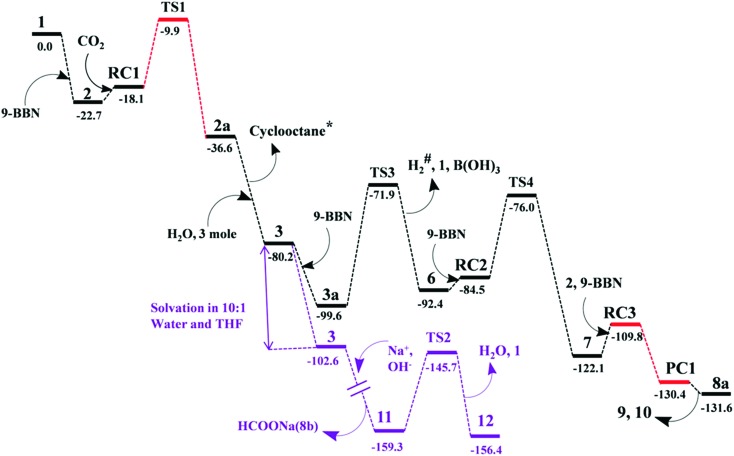
Fig. 7. Computed Gibbs free energy profiles at 25 °C for the conversion of CO2 to methoxyborane or sodium formate with 2 in air. The relative free energies (in kcal mol–1) obtained in solvent were calculated with respect to the energy of the separate reactants {aNHC (1) and 9-BBN}. *Formation of cyclooctane was confirmed by 1H NMR spectroscopy. #H2 gas evolution was confirmed by 1H NMR spectroscopy and visual observation (see the video file in the ESI†). For drawings of all compounds see Fig. S3.
Fig. 8
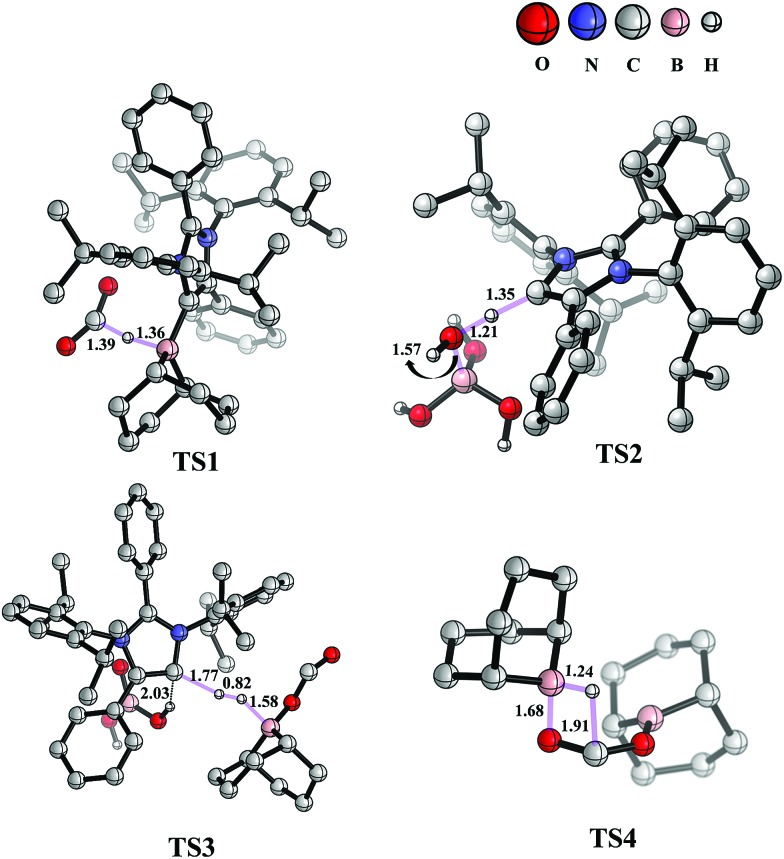
Fig. 8. Optimized structures of the transition states involved in the potential energy surface of CO2 reduction to methoxyborane and sodium formate with 2 in air. Important bond distances (in Å) are shown. Only relevant H atoms are provided in the structures.

References

    1. Li Y.-N., Ma R., He L.-N., Diao Z.-F. Catal. Sci. Technol. 2014;4:1498–1512.
    1. Olah G. A., Prakash G. K. S., Goeppert A. J. Am. Chem. Soc. 2011;133:12881–12898. - PubMed
    1. Seo H., Katcher M. H., Jamison T. F. Nat. Chem. 2017;9:453–456. - PMC - PubMed
    1. Goeppert A., Czaun M., Prakash G. K. S., Olah G. A. Energy Environ. Sci. 2012;5:7833–7853.
    1. Keith D. W. Science. 2009;325:1654–1655. - PubMed