


Prevalence of infection by the microsporidian Nosema spp. in native bumblebees (Bombus spp.) in northern Thailand
- PMID: 30845178
- PMCID: PMC6405097
- DOI: 10.1371/journal.pone.0213171
Prevalence of infection by the microsporidian Nosema spp. in native bumblebees (Bombus spp.) in northern Thailand
Abstract
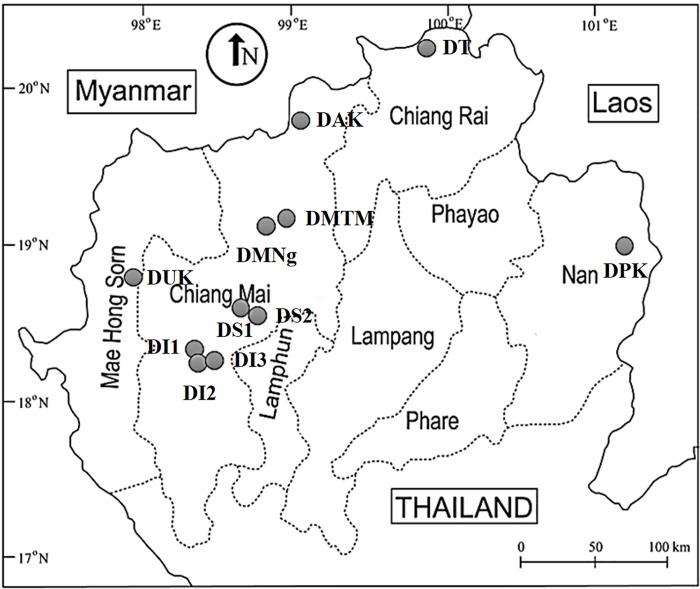
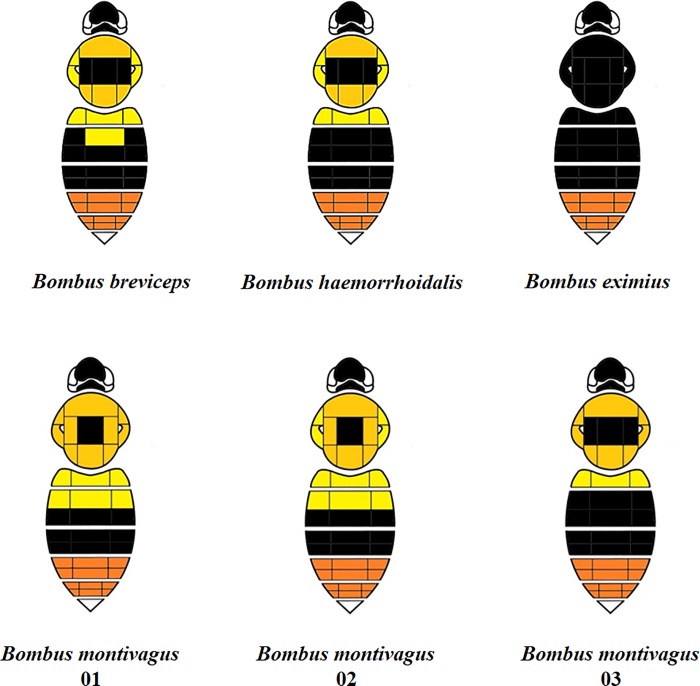
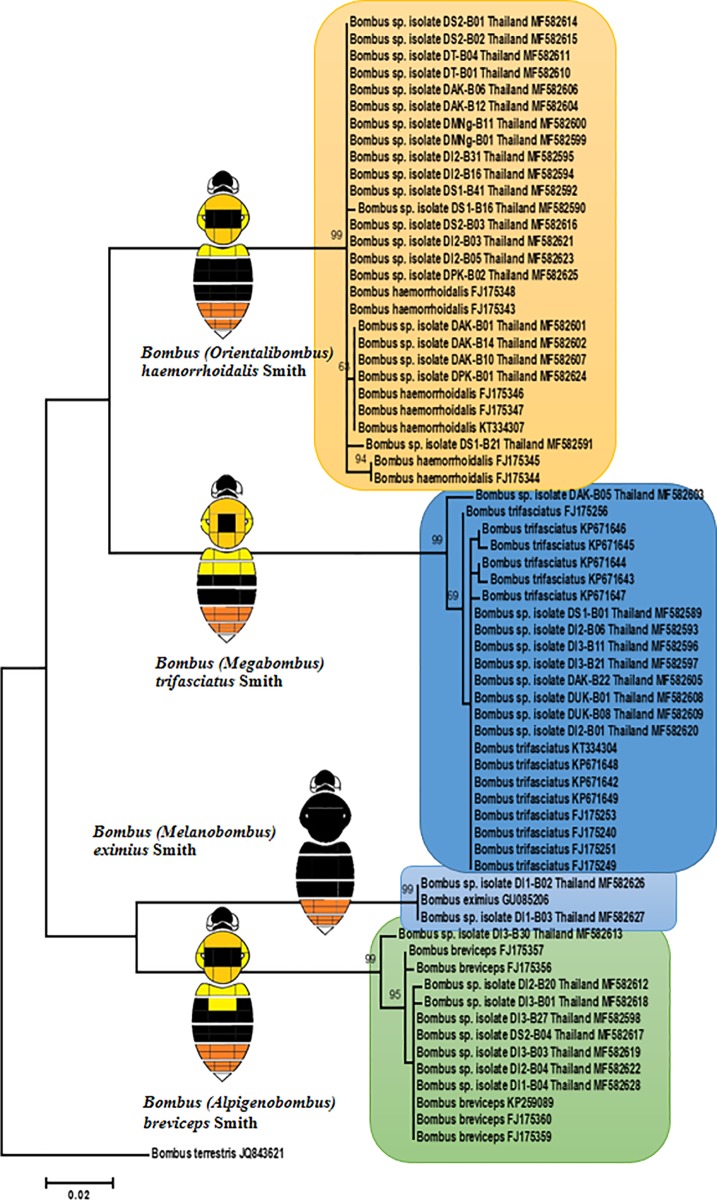
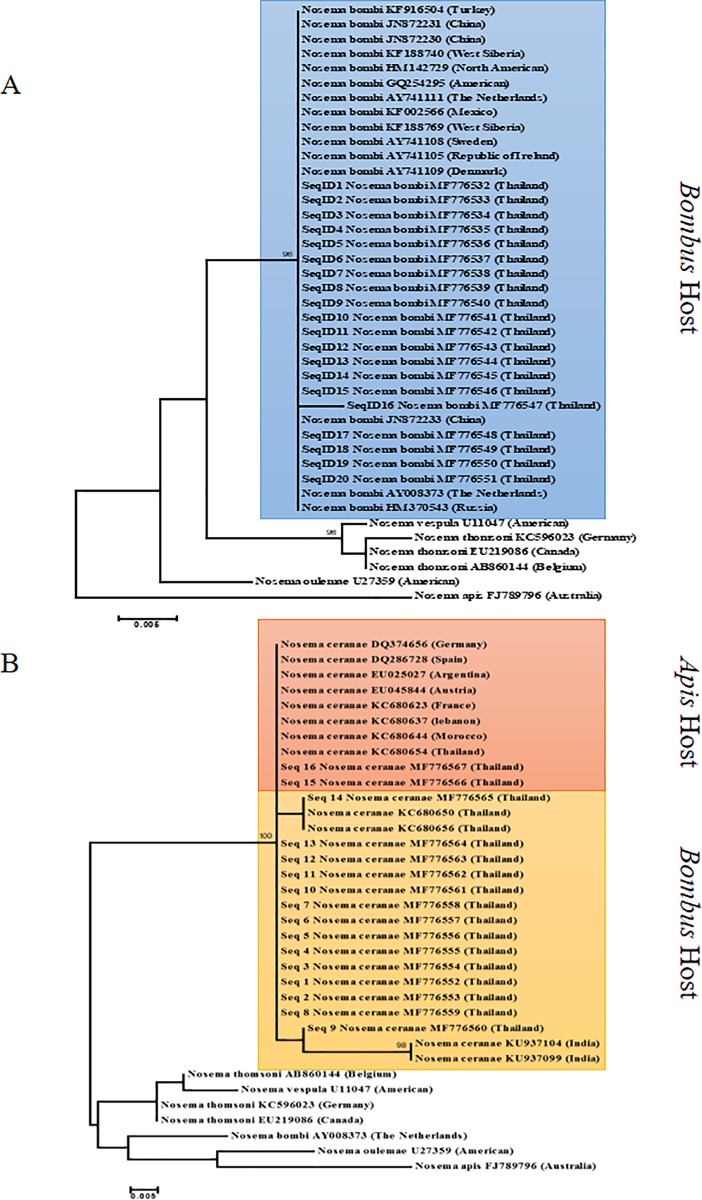
Bumblebees (tribe Bombini, genus Bombus Latreille) play a pivotal role as pollinators in mountain regions for both native plants and for agricultural systems. In our survey of northern Thailand, four species of bumblebees (Bombus (Megabombus) montivagus Smith, B. (Alpigenobombus) breviceps Smith, B. (Orientalibombus) haemorrhoidalis Smith and B. (Melanobombus) eximius Smith), were present in 11 localities in 4 provinces (Chiang Mai, Mae Hong Son, Chiang Rai and Nan). We collected and screened 280 foraging worker bumblebees for microsporidia (Nosema spp.) and trypanosomes (Crithidia spp.). Our study is the first to demonstrate the parasite infection in bumblebees in northern Thailand. We found N. ceranae in B. montivagus (5.35%), B. haemorrhoidalis (4.76%), and B. breviceps (14.28%) and N. bombi in B. montivagus (14.28%), B. haemorrhoidalis (11.64%), and B. breviceps (28.257%).
Conflict of interest statement
The authors have declared that no competing interests exist.
Figures
References
-
- Bingham RA, Orthner AR. Efficient pollination of alpine plants. Nature. 1998;391(6664):238.
-
- Velthuis HH, Van Doorn A. A century of advances in bumblebee domestication and the economic and environmental aspects of its commercialization for pollination. Apidologie. 2006;37(4):421–51.
-
- Williams PH, Osborne JL. Bumblebee vulnerability and conservation world-wide. Apidologie. 2009;40(3):367–87.
-
- Cameron AC, Gelbach JB, Miller DL. Robust inference with multiway clustering. Journal of Business & Economic Statistics. 2011;29(2):238–49.
Publication types
MeSH terms
Substances
LinkOut - more resources
Full Text Sources
Miscellaneous
