


Ozone and Wounding Stresses Differently Alter the Temporal Variation in Formylated Phloroglucinols in Eucalyptus globulus Leaves
- PMID: 30845742
- PMCID: PMC6468632
- DOI: 10.3390/metabo9030046
Ozone and Wounding Stresses Differently Alter the Temporal Variation in Formylated Phloroglucinols in Eucalyptus globulus Leaves
Abstract
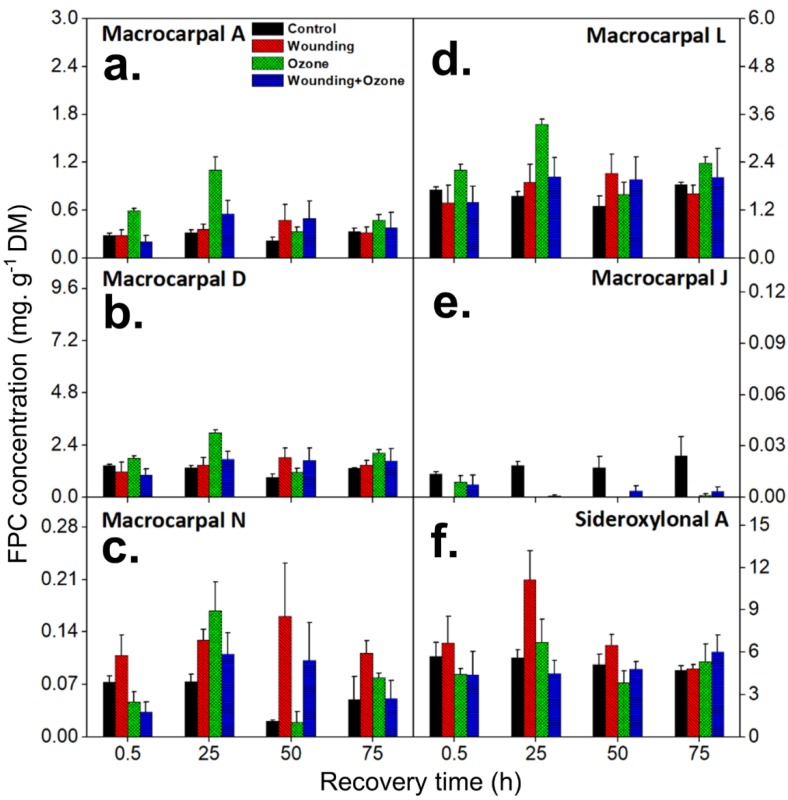
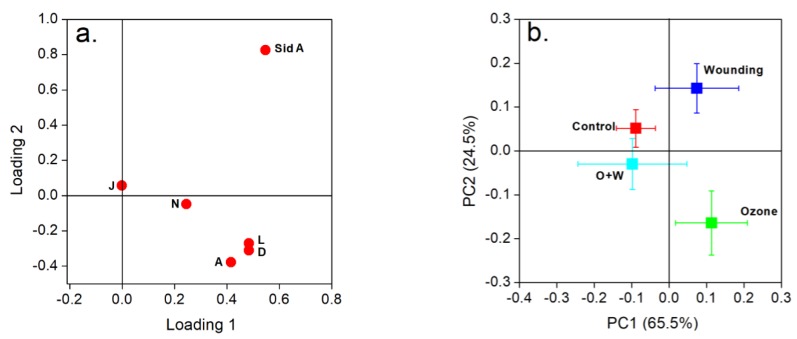
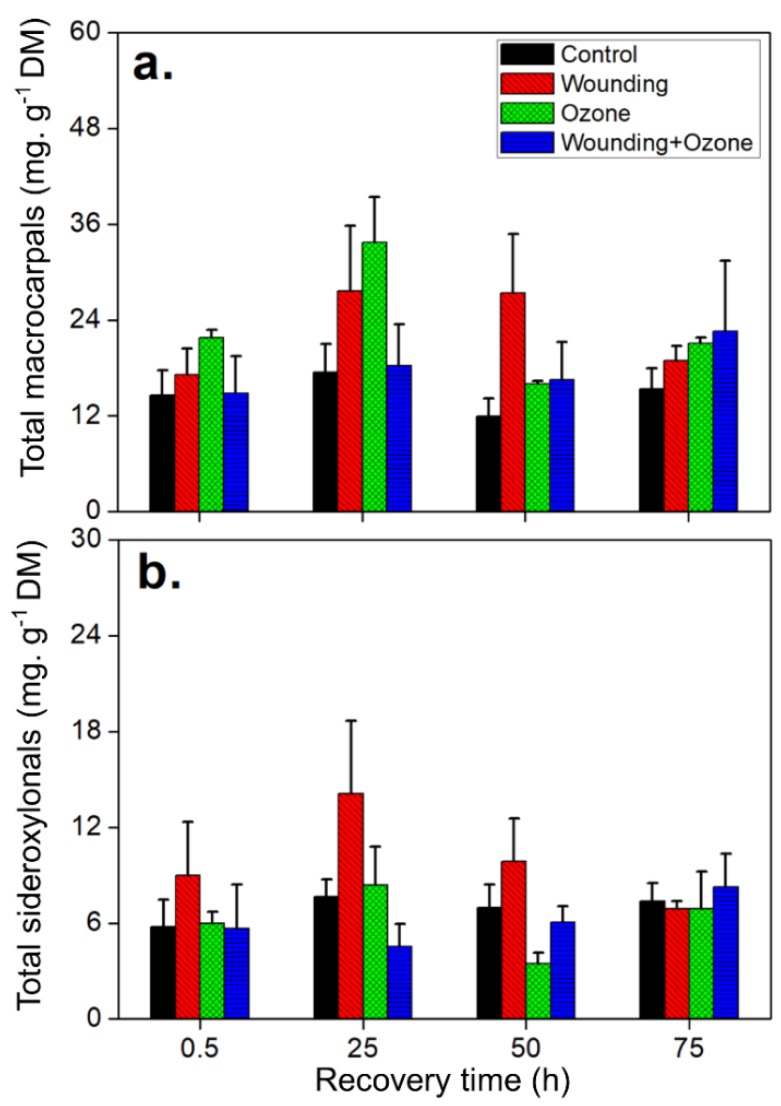
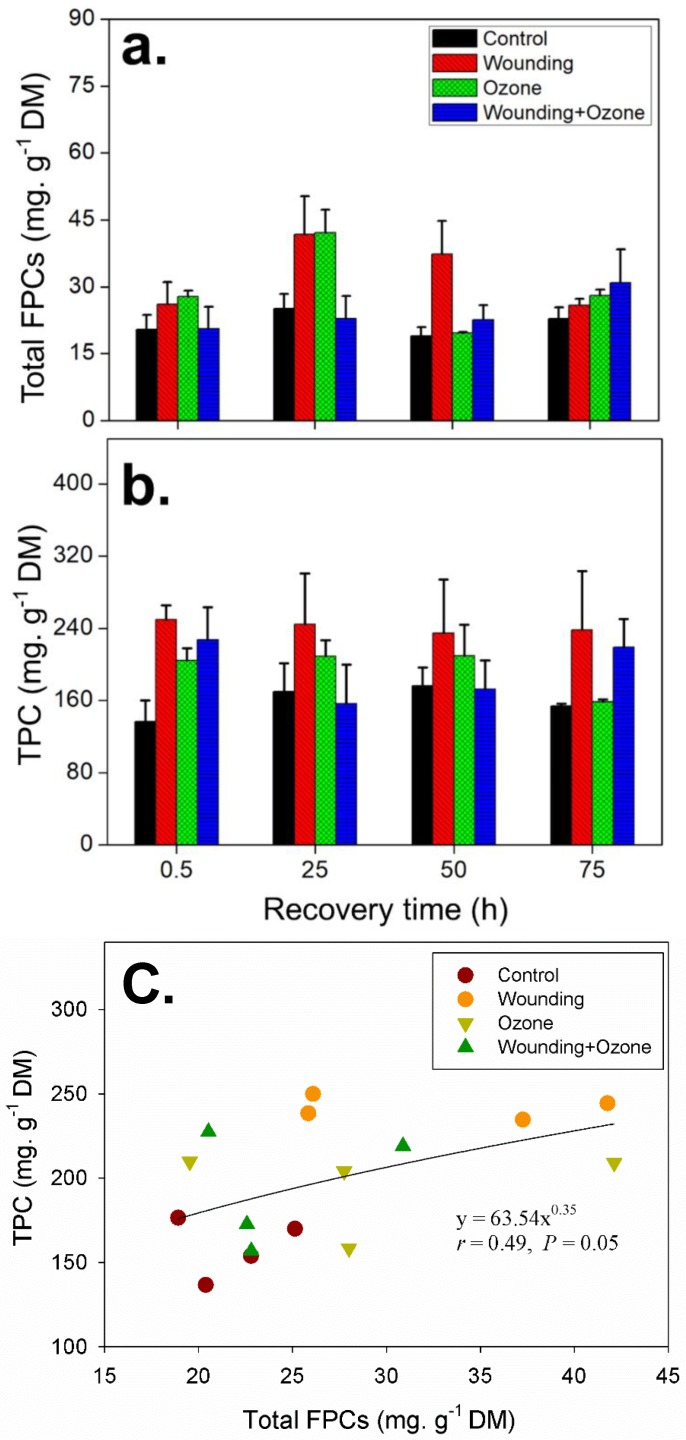
Formylated phloroglucinol compounds (FPCs) are a class of plant specialized metabolite present in the Myrtaceae family, especially in the genus Eucalyptus. FPCs are widely investigated due to their herbivore deterrence properties and various bioactivities of pharmaceutical relevance. Despite the increasing number of studies elucidating new FPCs structures and bioactivity, little is known about the role of those compounds in planta, and the effects of environmental stresses on FPC concentration. Ozone (O₃) and wounding are key stress factors regularly confronted by plants. In this study, we investigated how O₃, wounding, and their combination affected individual and total FPC foliar concentration of the economically important species Eucalyptus globulus. Six individual FPCs, including five macrocarpals and one sideroxylonal, showed different response patterns to the single and combined stresses. Total macrocarpals only increased under single O₃ treatment, whereas total sideroxylonals only increased in response to wounding treatment, suggesting different physiological roles played by the two groups of FPCs predominantly existing in E. globulus foliage. Total FPCs increased significantly under individual wounding and O₃ treatments but not under the combined treatment. A principal component analysis indicated that all different treatments had unique FPC fingerprints. Total phenolic contents increased in all O₃ and wounding treatments, and a marginally positive correlation was found between total FPCs and total phenolic contents. We suggest that, depending on the concentration and composition, FPCs play multiple physiological roles in planta, including serving as antioxidants to scavenge the reactive oxygen species brought about by O₃ and wounding stresses.
Keywords: Eucalyptus globulus; formylated phloroglucinol compounds (FPCs); macrocarpal; ozone; sideroxylonal; wounding.
Conflict of interest statement
The authors declare no conflicts of interest.
Figures
References
-
- Sillman S. The relation between ozone, NOx and hydrocarbons in urban and polluted rural environments. Atmos. Environ. 1999;33:1821–1845. doi: 10.1016/S1352-2310(98)00345-8. - DOI
-
- Carter W.P. Development of ozone reactivity scales for volatile organic compounds. Air Waste. 1994;44:881–899. doi: 10.1080/1073161X.1994.10467290. - DOI
-
- Young P., Archibald A., Bowman K., Lamarque J.-F., Naik V., Stevenson D., Tilmes S., Voulgarakis A., Wild O., Bergmann D. Pre-industrial to end 21st century projections of tropospheric ozone from the Atmospheric Chemistry and Climate Model Intercomparison Project (ACCMIP) Atmos. Chem. Phys. 2013;13:2063–2090. doi: 10.5194/acp-13-2063-2013. - DOI
-
- Wohlgemuth H., Mittelstrass K., Kschieschan S., Bender J., Weigel H.J., Overmyer K., Kangasjärvi J., Sandermann H., Langebartels C. Activation of an oxidative burst is a general feature of sensitive plants exposed to the air pollutant ozone. Plant Cell Environ. 2002;25:717–726. doi: 10.1046/j.1365-3040.2002.00859.x. - DOI
-
- Langebartels C., Wohlgemuth H., Kschieschan S., Grün S., Sandermann H. Oxidative burst and cell death in ozone-exposed plants. Plant Physiol. Biochem. 2002;40:567–575. doi: 10.1016/S0981-9428(02)01416-X. - DOI
Grants and funding
- European Regional Development Fund (Centre of Excellence EcolChange)/European Commission
- advanced grant 322603, SIP-VOL+/European Research Council/International
- institutional grant IUT-8-3/Estonian Ministry of Science and Education
- Project No. 13167/Villum Foundation Young Investigator Program
- Grant No. 6111- 00379B/Danish Independent Research Council Post-Doctoral Stipend
LinkOut - more resources
Full Text Sources
