


Water Pipe (Hookah) Smoking and Cardiovascular Disease Risk: A Scientific Statement From the American Heart Association
- PMID: 30845826
- PMCID: PMC6600812
- DOI: 10.1161/CIR.0000000000000671
Water Pipe (Hookah) Smoking and Cardiovascular Disease Risk: A Scientific Statement From the American Heart Association
Abstract
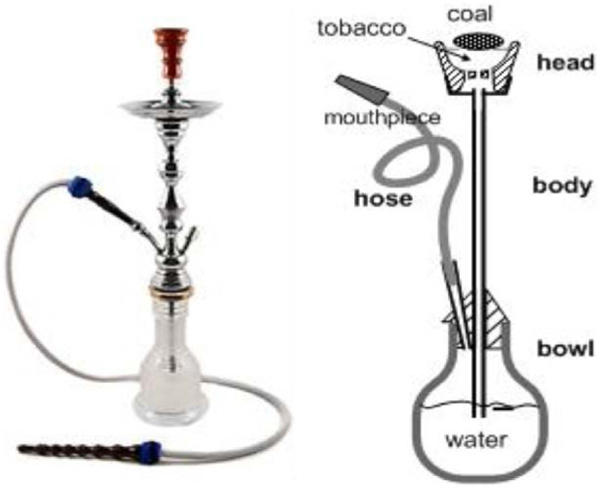
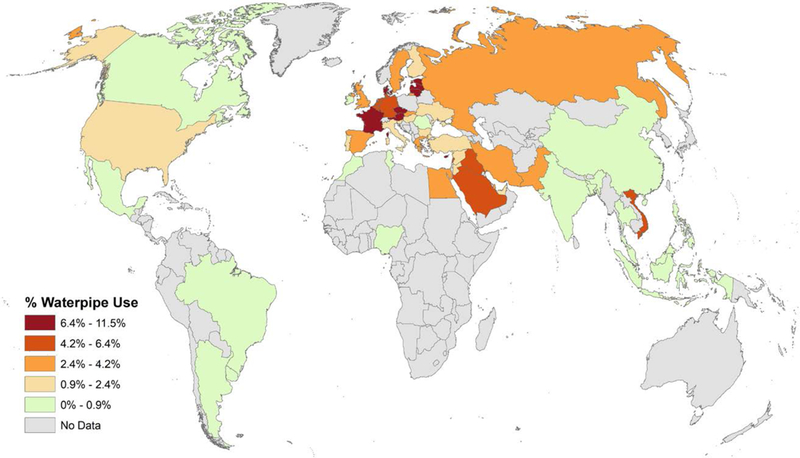
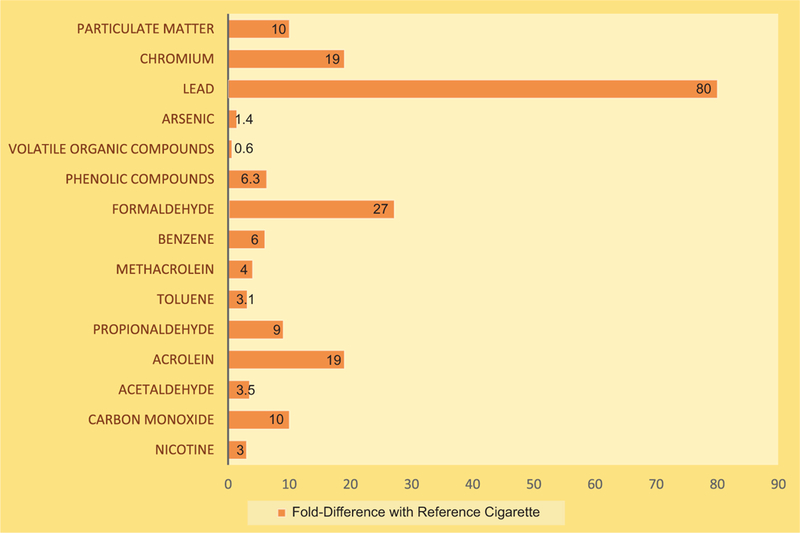
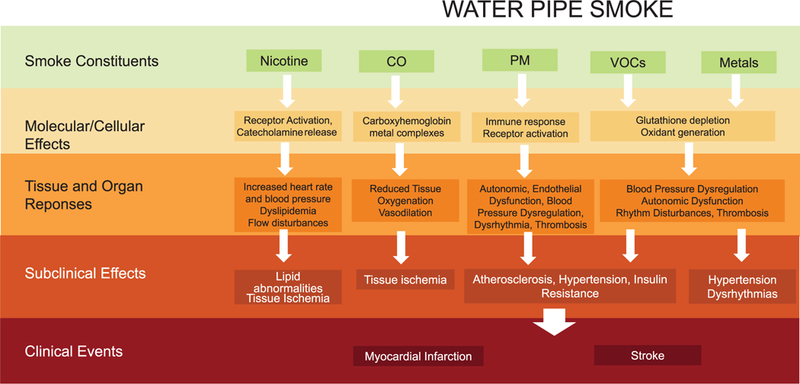
Tobacco smoking with a water pipe or hookah is increasing globally. There are millions of water pipe tobacco smokers worldwide, and in the United States, water pipe use is more common among youth and young adults than among adults. The spread of water pipe tobacco smoking has been abetted by the marketing of flavored tobacco, a social media environment that promotes water pipe smoking, and misperceptions about the addictive potential and potential adverse health effects of this form of tobacco use. There is growing evidence that water pipe tobacco smoking affects heart rate, blood pressure regulation, baroreflex sensitivity, tissue oxygenation, and vascular function over the short term. Long-term water pipe use is associated with increased risk of coronary artery disease. Several harmful or potentially harmful substances present in cigarette smoke are also present in water pipe smoke, often at levels exceeding those found in cigarette smoke. Water pipe tobacco smokers have a higher risk of initiation of cigarette smoking than never smokers. Future studies that focus on the long-term adverse health effects of intermittent water pipe tobacco use are critical to strengthen the evidence base and to inform the regulation of water pipe products and use. The objectives of this statement are to describe the design and operation of water pipes and their use patterns, to identify harmful and potentially harmful constituents in water pipe smoke, to document the cardiovascular risks of water pipe use, to review current approaches to water pipe smoking cessation, and to offer guidance to healthcare providers for the identification and treatment of individuals who smoke tobacco using water pipes.
Keywords: AHA Scientific Statements; cardiovascular disease; epidemiology; nicotine; particulate matter; smoking water pipes; tobacco; volatile organic compounds.
Conflict of interest statement
The American Heart Association makes every effort to avoid any actual or potential conflicts of interest that may arise as a result of an outside relationship or a personal, professional, or business interest of a member of the writing panel. Specifically, all members of the writing group are required to complete and submit a Disclosure Questionnaire showing all such relationships that might be perceived as real or potential conflicts of interest.
Figures
References
-
- Giovino GA, Mirza SA, Samet JM, Gupta PC, Jarvis MJ, Bhala N, Peto R, Zatonski W, Hsia J, Morton J, Palipudi KM, Asma S; GATS Collaborative Group. Tobacco use in 3 billion individuals from 16 countries: an analysis of nationally representative cross-sectional household surveys. Lancet. 2012;380:668–679. doi: 10.1016/S0140-6736(12)61085-X - DOI - PubMed
-
- World Health Organization. Global Health Risks: Mortality and Burden of Disease Attributable to Selected Major Risks: Cancer. Geneva, Switzerland: World Health Organization; 2017.
-
- World Health Organization. WHO Report on the Global Tobacco Epidemic, 2011: Warning About the Dangers of Tobacco. Geneva, Switzerland: World Health Organization; 2011.
Publication types
MeSH terms
Grants and funding
LinkOut - more resources
Full Text Sources
