


Interhemispheric plasticity is mediated by maximal potentiation of callosal inputs
- PMID: 30846552
- PMCID: PMC6442599
- DOI: 10.1073/pnas.1810132116
Interhemispheric plasticity is mediated by maximal potentiation of callosal inputs
Abstract
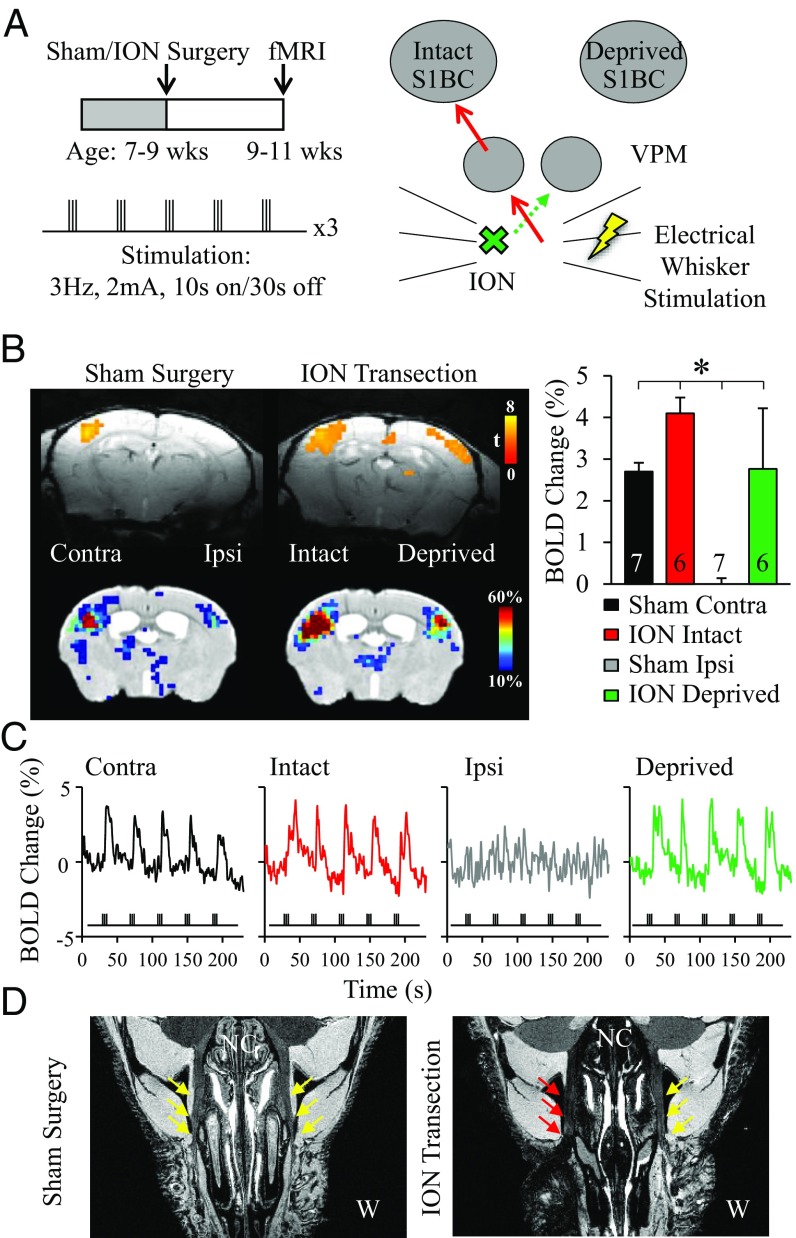
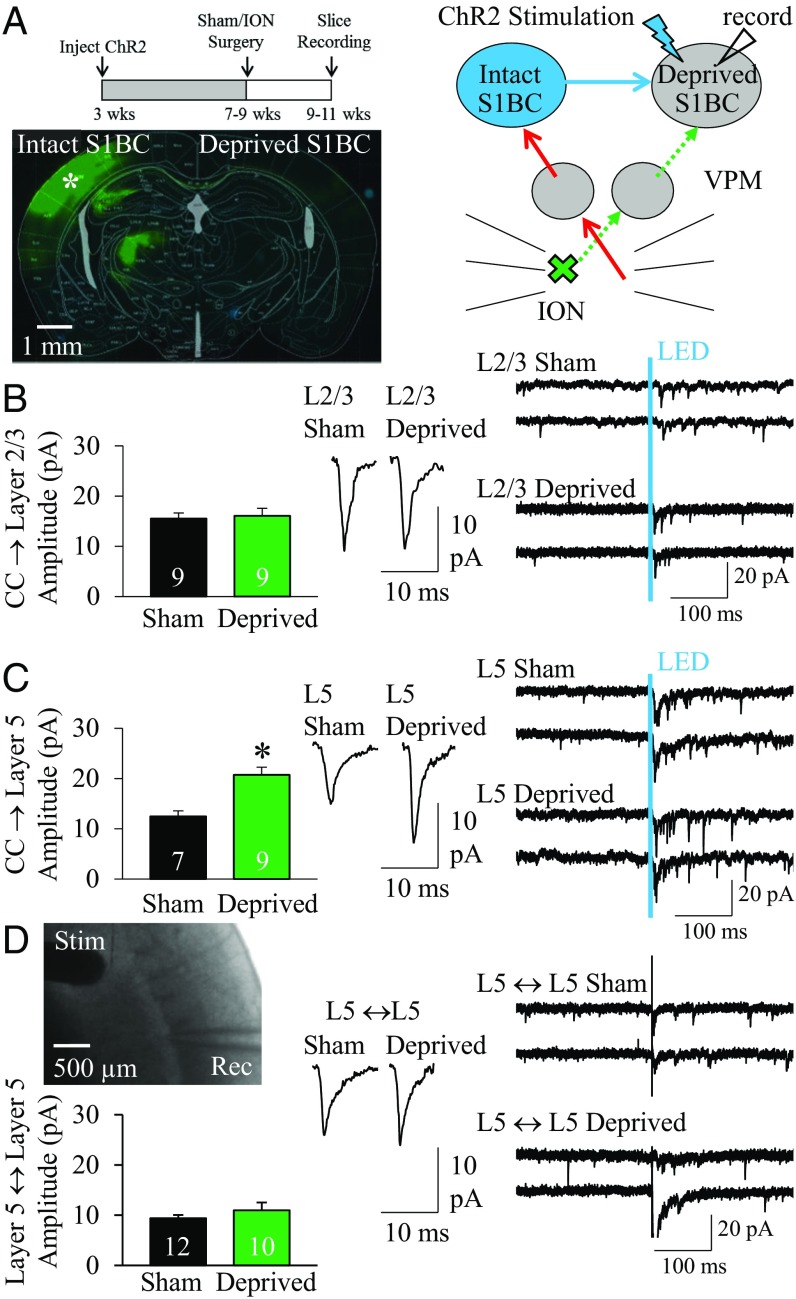
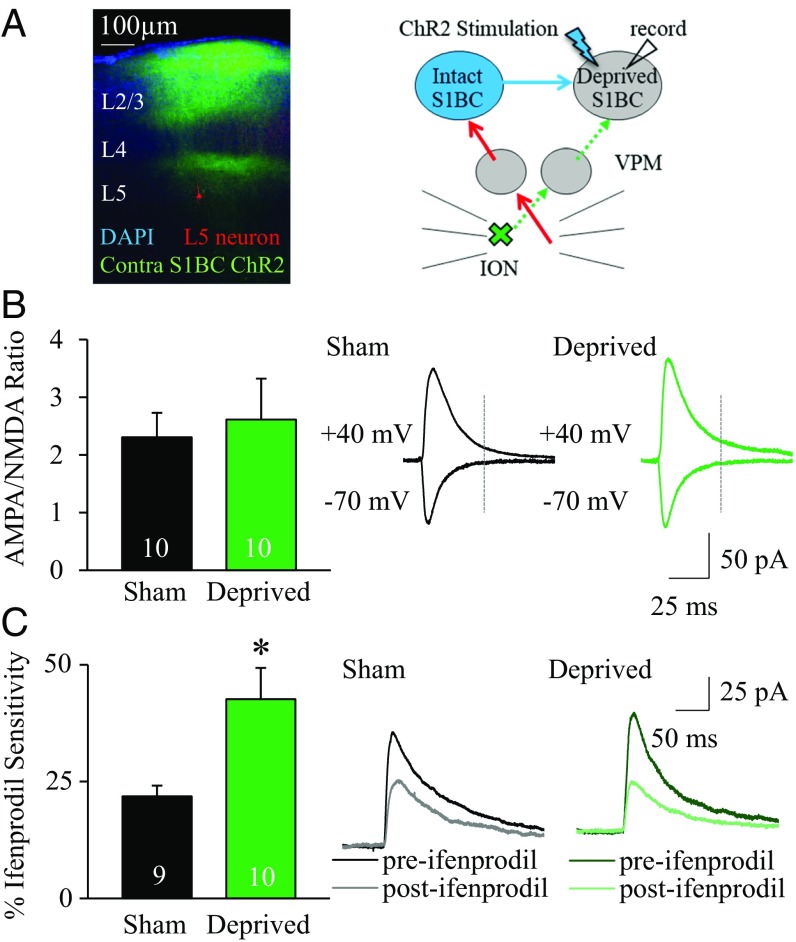
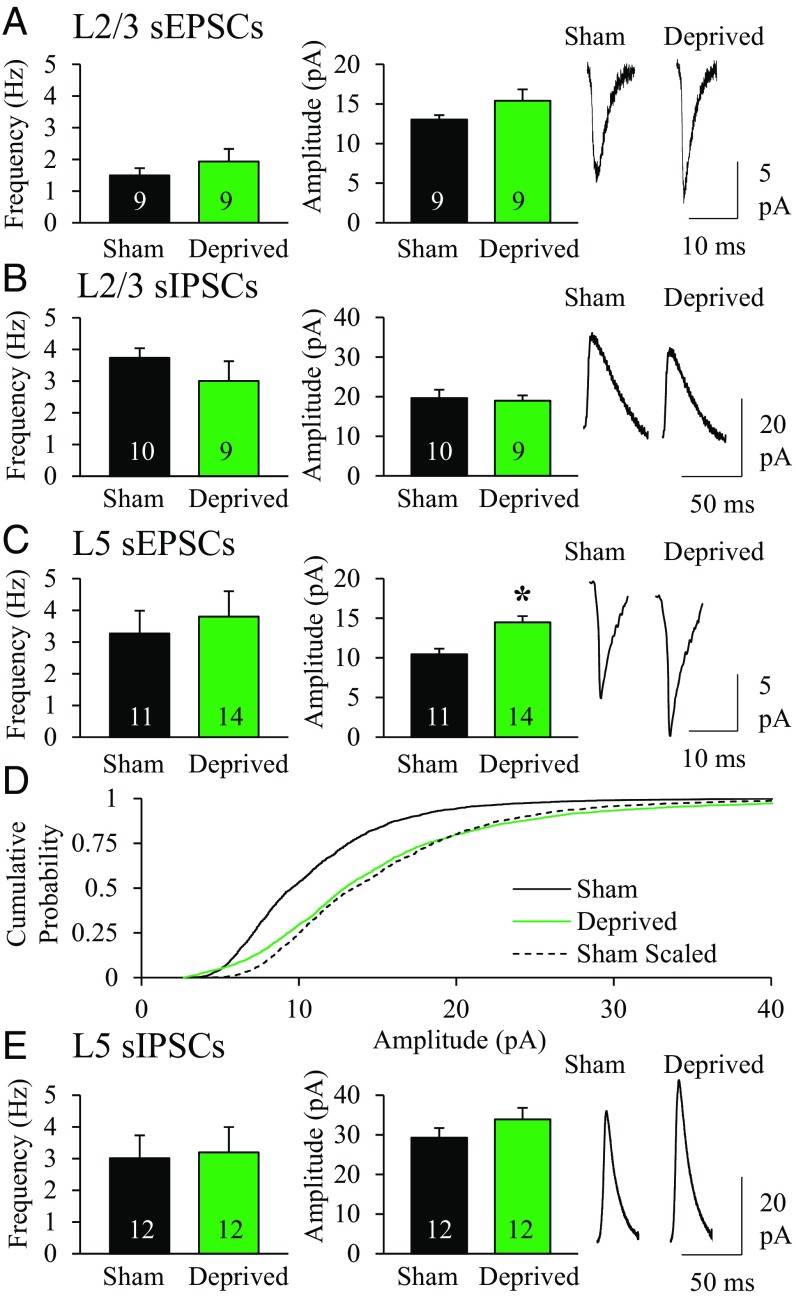
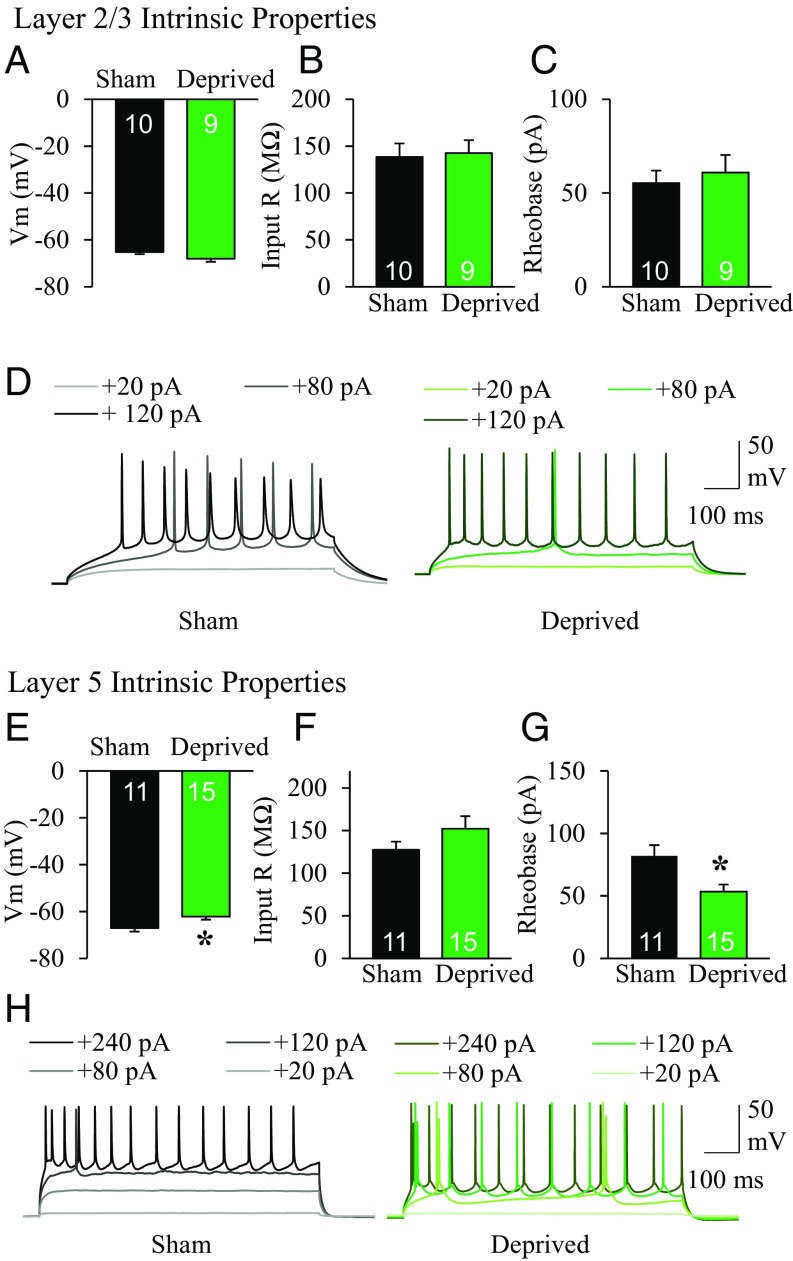
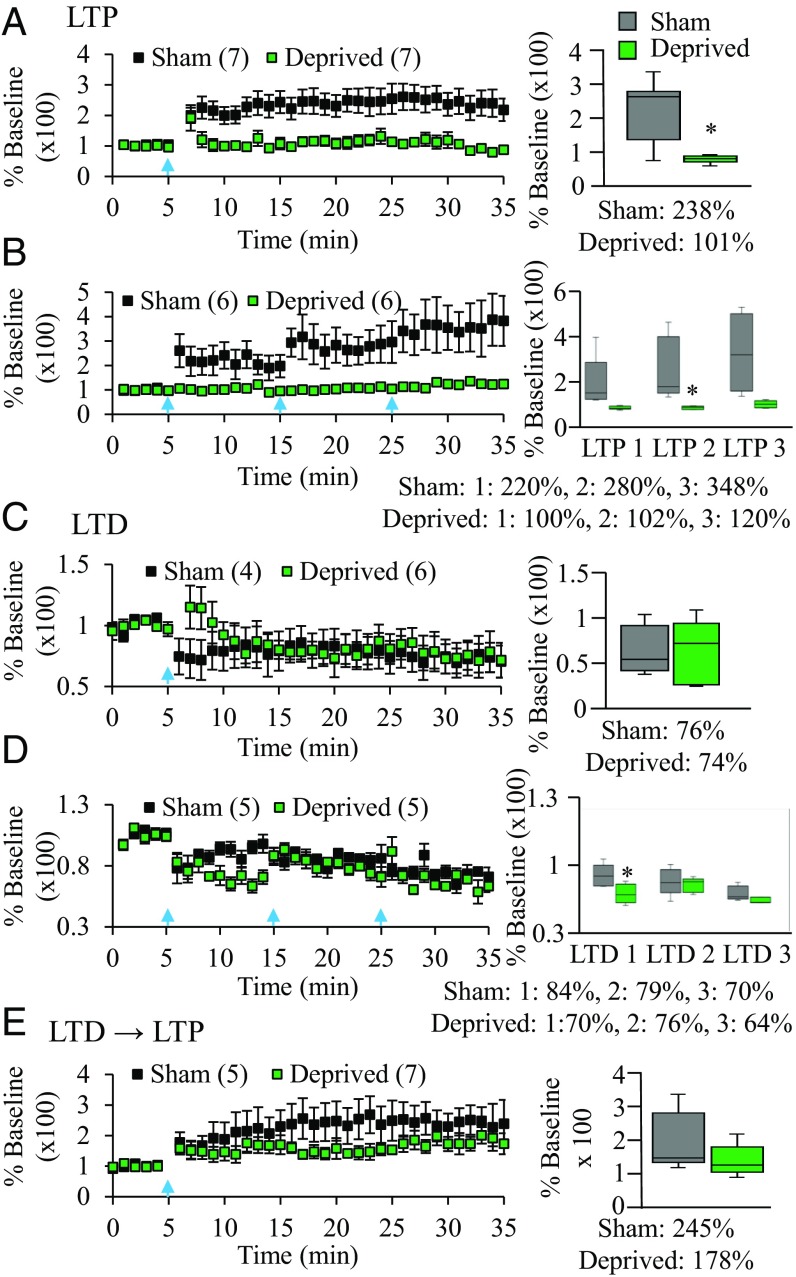
Central or peripheral injury causes reorganization of the brain's connections and functions. A striking change observed after unilateral stroke or amputation is a recruitment of bilateral cortical responses to sensation or movement of the unaffected peripheral area. The mechanisms underlying this phenomenon are described in a mouse model of unilateral whisker deprivation. Stimulation of intact whiskers yields a bilateral blood-oxygen-level-dependent fMRI response in somatosensory barrel cortex. Whole-cell electrophysiology demonstrated that the intact barrel cortex selectively strengthens callosal synapses to layer 5 neurons in the deprived cortex. These synapses have larger AMPA receptor- and NMDA receptor-mediated events. These factors contribute to a maximally potentiated callosal synapse. This potentiation occludes long-term potentiation, which could be rescued, to some extent, with prior long-term depression induction. Excitability and excitation/inhibition balance were altered in a manner consistent with cell-specific callosal changes and support a shift in the overall state of the cortex. This is a demonstration of a cell-specific, synaptic mechanism underlying interhemispheric cortical reorganization.
Keywords: corpus callosum; cortical circuit; interhemispheric plasticity.
Copyright © 2019 the Author(s). Published by PNAS.
Conflict of interest statement
The authors declare no conflict of interest.
Figures
References
-
- Cao Y, Vikingstad EM, George KP, Johnson AF, Welch KMA. Cortical language activation in stroke patients recovering from aphasia with functional MRI. Stroke. 1999;30:2331–2340. - PubMed
-
- Kinsbourne M. The minor cerebral hemisphere as a source of aphasic speech. Arch Neurol. 1971;25:302–306. - PubMed
-
- Grefkes C, et al. Cortical connectivity after subcortical stroke assessed with functional magnetic resonance imaging. Ann Neurol. 2008;63:236–246. - PubMed
-
- Rehme AK, Fink GR, von Cramon DY, Grefkes C. The role of the contralesional motor cortex for motor recovery in the early days after stroke assessed with longitudinal FMRI. Cereb Cortex. 2011;21:756–768. - PubMed
-
- Shuler MG, Krupa DJ, Nicolelis MAL. Integration of bilateral whisker stimuli in rats: Role of the whisker barrel cortices. Cereb Cortex. 2002;12:86–97. - PubMed
Publication types
MeSH terms
Substances
LinkOut - more resources
Full Text Sources
