. 2019 Mar 8;363(6431):1098-1103.
doi: 10.1126/science.aau5721. Epub 2019 Mar 7.

A molecular assembly phase transition and kinetic proofreading modulate Ras activation by SOS

Affiliations

A molecular assembly phase transition and kinetic proofreading modulate Ras activation by SOS

William Y C Huang et al. Science. .

Abstract

The guanine nucleotide exchange factor (GEF) Son of Sevenless (SOS) is a key Ras activator that is autoinhibited in the cytosol and activates upon membrane recruitment. Autoinhibition release involves structural rearrangements of the protein at the membrane and thus introduces a delay between initial recruitment and activation. In this study, we designed a single-molecule assay to resolve the time between initial receptor-mediated membrane recruitment and the initiation of GEF activity of individual SOS molecules on microarrays of Ras-functionalized supported membranes. The rise-and-fall shape of the measured SOS activation time distribution and the long mean time scale to activation (~50 seconds) establish a basis for kinetic proofreading in the receptor-mediated activation of Ras. We further demonstrate that this kinetic proofreading is modulated by the LAT (linker for activation of T cells)-Grb2-SOS phosphotyrosine-driven phase transition at the membrane.


Conflict of interest statement

Competing interests: None declared.

Figures

Fig. 1.
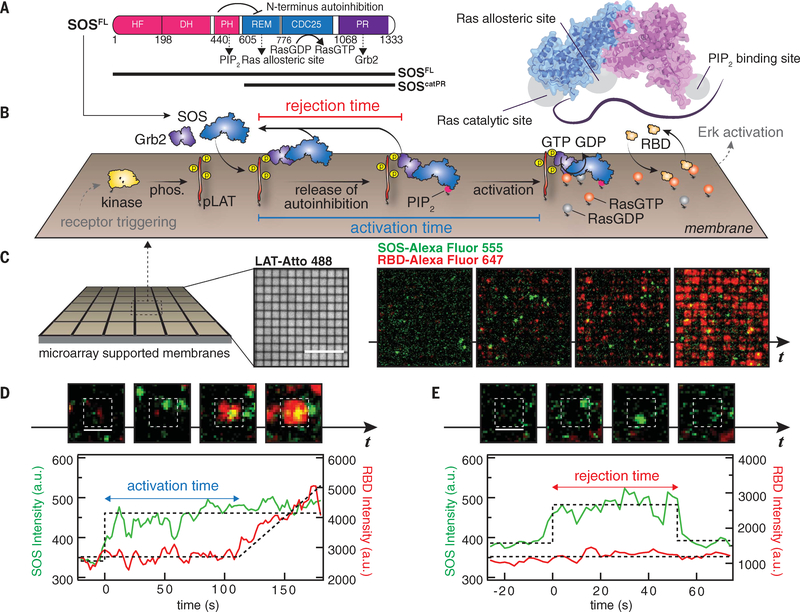
Fig. 1.. Single-molecule activation assay of SOSFL on supported membranes.
(A) Domain architecture (left) and a cartoon model (right) of SOSFL The crystal structure was rendered with Protein Data Bank entry 3KSY. HF, histone fold; DH, Dbl homology domain; PH, Pleckstrin homology domain; REM, Ras exchanger motif. Numbers indicate amino acid positions. (B) Schematic of the reconstitution of Grb2-mediated SOS activation. LAT phosphorylated by membrane-bound kinase Hck (pLAT) and Ras preloaded with GDP were decorated on the supported membranes corralled by 1-μm by 1-μm or 2-μm by 2-μm chromium grids. The injection of Grb2, SOSFL-Alexa Flour 555, RBD-K65E-Alexa Fluor 647, and GTP into the solution triggered SOS recruitment, subsequent release of autoinhibition, and activation. Receptor triggering and downstream activation (in gray) are shown to illustrate the signaling pathway, and not included in the experiments. phos., phosphorylation. (C) Snapshot images of SOS (green) and RBD (red) recruitment in microarray supported membranes. Scale bar, 10 μm. t, time. (D) Definition of activation time. (E) Definition of rejection time. [(D) and (E)] Scale bars, 2 μm. a.u., arbitrary units.
Fig. 2.
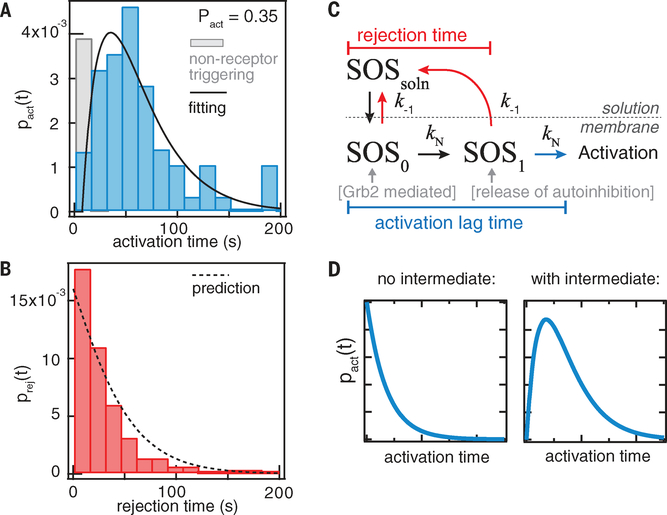
Fig. 2.. Activation time distribution of SOS.
(A and B) Histograms of the activation time and rejection time of Grb2-mediated SOSFL recruitment from the single-molecule activation assay. The solid line is fitting to the model in (C); the fitted values are kN = 0.02 s−1 and k−1 = 0.016 s−1. The dashed line represents the prediction by the model using fitted values from the activation time distribution. (C) A simple model of SOSFL activation. kN denotes the transition rate constants for the kinetic intermediates, and k−1 represents the dissociation rate constants from membranes. SOSsoln, SOS in solution. (D) Without a kinetic intermediate (N = 0), the activation time distribution is an exponential distribution peaked at t = 0. In contrast, the existence of at least one intermediate produces the characteristic rise-and-decay shape for the activation time distribution.
Fig. 3.
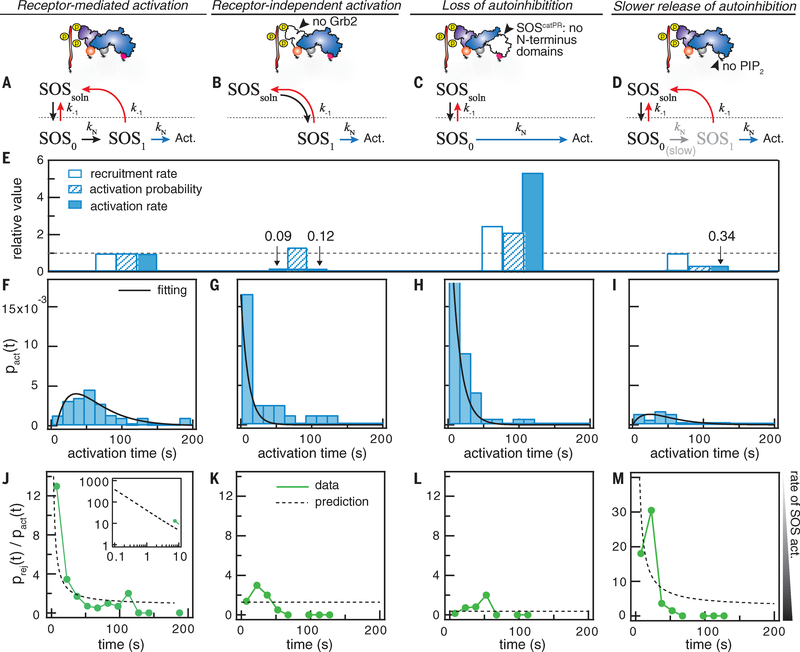
Fig. 3.. The regulation of autoinhibition defines the activation timing of SOS and its kinetic proofreading capability.
The top schematics show the experimental design (details are in fig. S2). (A to D) The kinetic models for Grb2-mediated SOSFL activation, SOSFL activation without Grb2, SOScatPR activation, and SOSFL activation without PIP2. Act., activation. (E) The relative recruitment rate, activation probability, and activation rate for each condition. Activation rate = recruitment rate × activation probability. The Grb2-mediated recruitment rate of SOSFL was 3 × 10⁻³ s−1 μm−2. The dashed line is at 1. (F to I) The activation time distribution for each condition. Black lines are fitting to the models in (A) to (D). (F) is the same data from Fig. 2A. (J to M) The ratio between rejection and activation counts as a function of SOS dwell time. The inset in (J) shows the model’s extrapolation for very short dwelling SOS. Dashed lines are predictions by the models in (A) to (D).
Fig. 4.
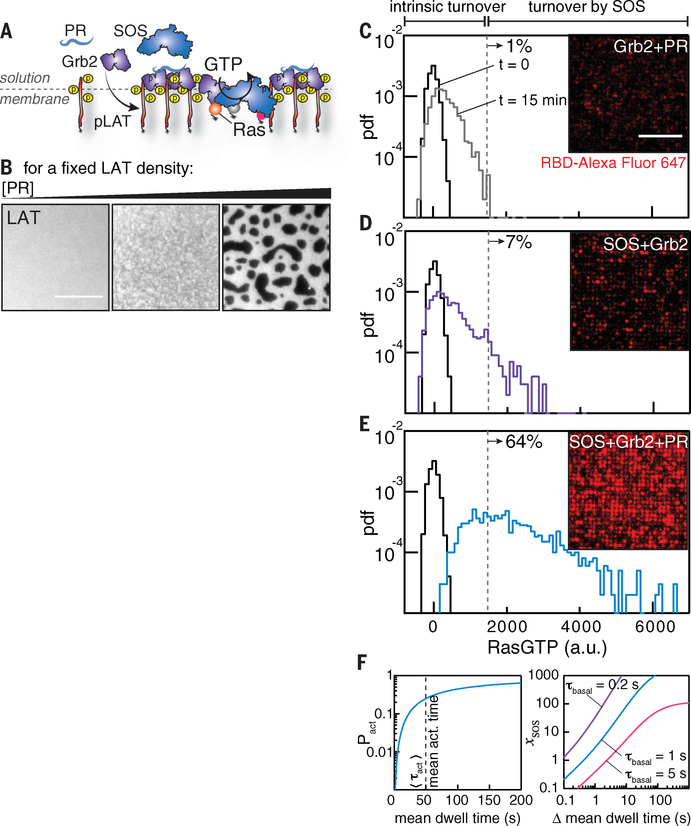
Fig. 4.. Molecular assembly enhances Ras activation by SOS.
(A and B) LAT assemblies are tuned by the addition of Grb2 and the PR domain of SOS, which enables multivalent cross-linking but has no intrinsic catalytic activity. Images represent LAT-Alexa Flour 555 after the addition of Grb2 and the PR domain. (C to E) Snapshot images of RBD after 15 min of reaction time. The histograms show the RBD intensities per corral of the images. The dashed lines are guidelines for the maximum extent of intrinsic nucleotide turnover. The percentages show the number of corrals with turnover above the level of the dashed line. Scale bar, 10 μm. pdf, probability density function. (F) Calculation of the probability of SOS activation as a function of Grb2-mediated mean dwell time (left) and the increase in SOS activity as a function of the change in mean dwell time (right). The change in mean dwell time is defined as Δτ=τactivatedτbasal.

Comment in

References

    1. Samelson LE, Annu. Rev. Immunol 20, 371–394 (2002). - PubMed
    1. Schlessinger J, Cell 103, 211–225 (2000). - PubMed
    1. Sondermann H et al. , Cell 119, 393–405 (2004). - PubMed
    1. Gale NW, Kaplan S, Lowenstein EJ, Schlessinger J, Bar-Sagi D, Nature 363, 88–92 (1993). - PubMed
    1. Bandaru P, Kondo Y, Kuriyan J, Cold Spring Harb. Perspect. Med 9, a031534 (2019). - PMC - PubMed

Publication types

MeSH terms