


Cortical morphometry of the five-factor model of personality: findings from the Human Connectome Project full sample
- PMID: 30848280
- PMCID: PMC6523439
- DOI: 10.1093/scan/nsz017
Cortical morphometry of the five-factor model of personality: findings from the Human Connectome Project full sample
Erratum in
-
Corrigendum to: Cortical morphometry of the five-factor model of personality: findings from the Human Connectome Project full sample.Soc Cogn Affect Neurosci. 2021 Jul 6;16(7):736. doi: 10.1093/scan/nsab036. Soc Cogn Affect Neurosci. 2021. PMID: 33787899 Free PMC article. No abstract available.
Abstract
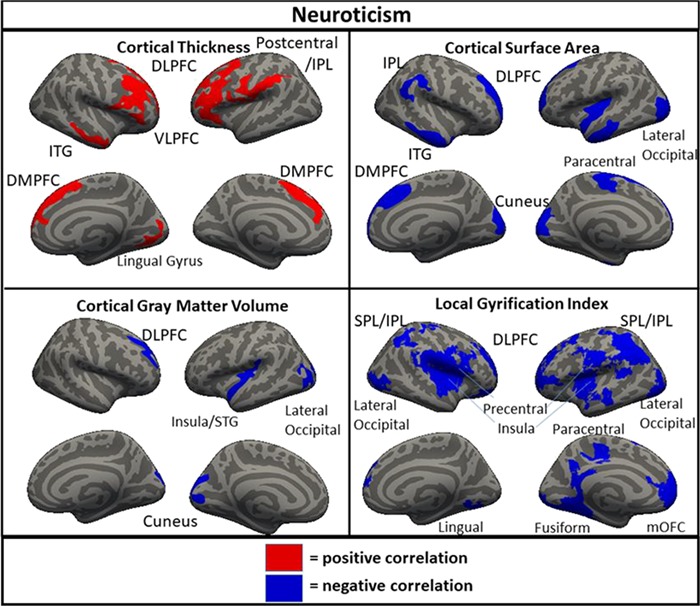
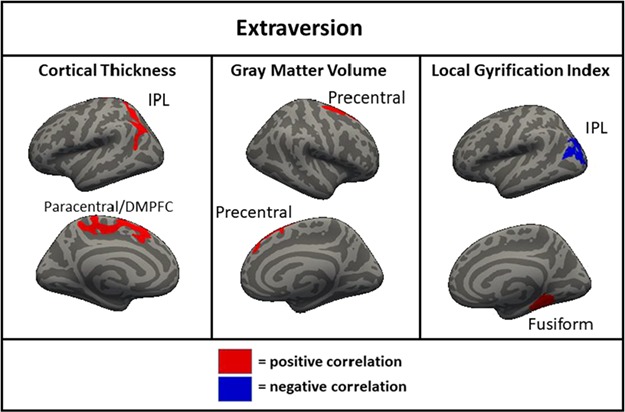
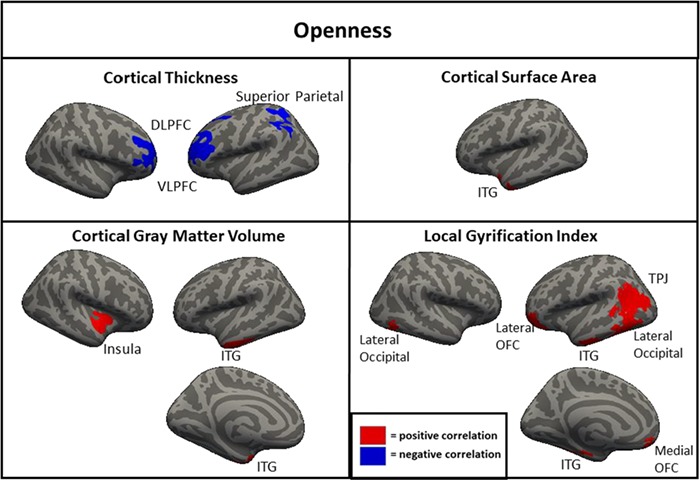
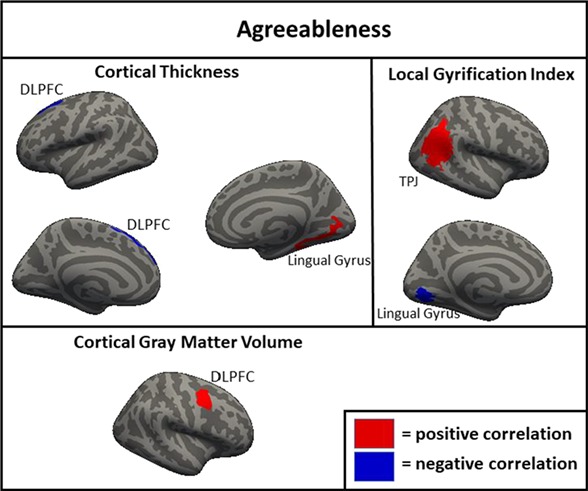
This study is a replication of an existing large study (N = 507) on the surface-based morphometric correlates of five-factor model (FFM) personality traits. The same methods were used as the original study in another large sample drawn from the same population (N = 597) with results then being aggregated from both samples (N = 1104), providing the largest investigation into the neuroanatomical correlates of FFM personality traits to date. Clusters of association between brain morphometry and each FFM trait are reported. For neuroticism, agreeableness, openness and conscientiousness clusters of association were found in the dorsolateral prefrontal cortex for at least one morphometric index. Morphometry in various other regions was also associated with each personality trait. While some regions found in the original study were confirmed in the replication and full samples, others were not, highlighting the importance of replicating even high-quality, well-powered studies. Effect sizes were very similar in the replication and whole samples as those found in the original study. As a whole, the current results provide the strongest evidence to date on the neuroanatomical correlates of personality and highlights challenges in using this approach to understanding the neural correlates of personality.
Keywords: MRI; five-factor model; morphometry; personality; traits.
© The Author(s) 2019. Published by Oxford University Press.
Figures
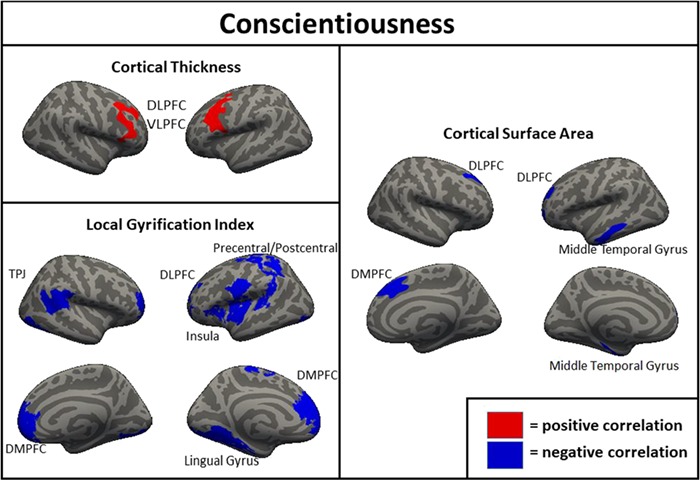
References
-
- Allen T.A., DeYoung C.G. (2015). Personality neuroscience and the five factor model In: Oxford Handbook of the Five Factor Model. New York, NY: Oxford University Press.
-
- Behrmann M., Geng J.J., Shomstein S. (2004). Parietal cortex and attention. Current Opinion in Neurobiology, 14, 212–217. - PubMed
-
- Berlim M.T., Van Den Eynde F., Tovar-Perdomo S., Daskalakis Z.J. (2014). Response, remission and drop-out rates following high-frequency repetitive transcranial magnetic stimulation (rTMS) for treating major depression: a systematic review and meta-analysis of randomized, double-blind and sham-controlled trials. Psychological Medicine, 44, 225–239. - PubMed
-
- Brunoni A.R., Chaimani A., Moffa A.H., et al. (2017). Repetitive transcranial magnetic stimulation for the acute treatment of major depressive episodes a systematic review with network meta-analysis. JAMA Psychiatry, 74, 143–152. - PubMed
Publication types
MeSH terms
Grants and funding
LinkOut - more resources
Full Text Sources
Research Materials
