


Review
doi: 10.1146/annurev-anchem-061318-115329.
Epub 2019 Mar 8.
E-Cigarette Chemistry and Analytical Detection
Affiliations
- PMID: 30848928
- PMCID: PMC6565477
- DOI: 10.1146/annurev-anchem-061318-115329
Item in Clipboard
Review
E-Cigarette Chemistry and Analytical Detection
Annu Rev Anal Chem (Palo Alto Calif).
.
Abstract
The study of e-cigarette aerosol properties can inform public health while longer-term epidemiological investigations are ongoing. The determination of aerosol levels of known toxins, as well as of molecules with unknown inhalation toxicity profiles, affords specific information for estimating the risks of e-cigarettes and for uncovering areas that should be prioritized for further investigation.
Keywords: aerosol; electronic cigarette; flavoring; glycerol; harm reduction; propylene glycol; tobacco.
Figures
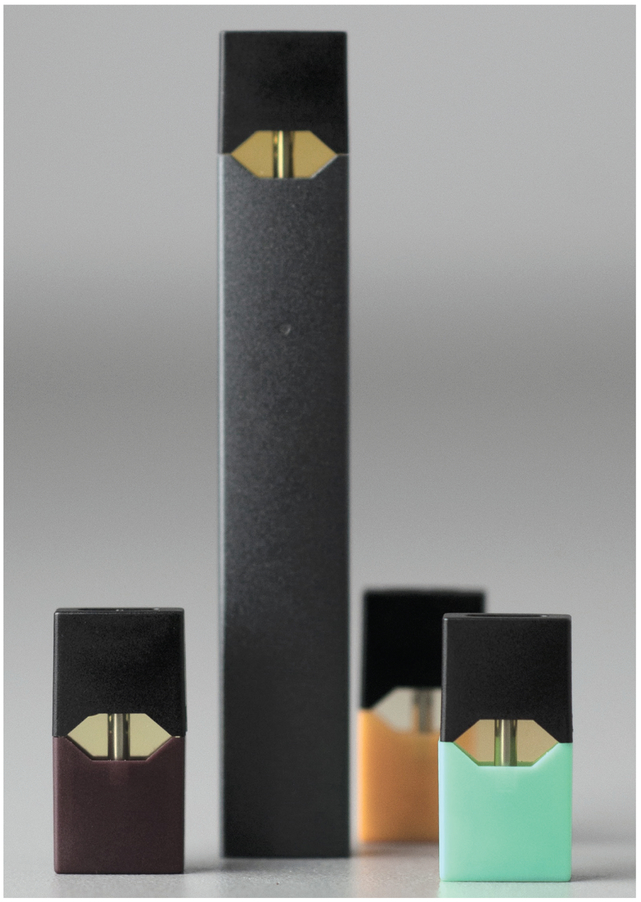
A Juul electronic cigarette, with four pods (one loaded and three next to it). Juul e-cigarette usage is prevalent among teens, prompting the US Food and Drug Administration to term the situation an epidemic. Adapted fromWikipedia Commons under the terms of the Creative Commons Attribution (CC BY-SA) License, https://creativecommons.org/licenses/by-sa/4.0 .
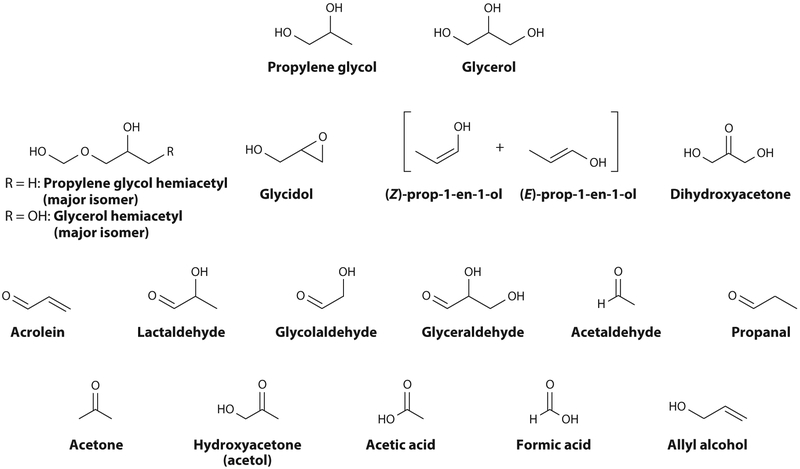
Molecules determined by nuclear magnetic resonance in e-cigarette aerosols. They include known risk factors for cardiovascular disease at reported detection levels. The pathways leading to their formation are shown in Figures 3 and 4. Adapted from Reference under the terms of the Creative Commons Attribution 4.0 International License, http://creativecommons.org/licenses/by/4.0 .
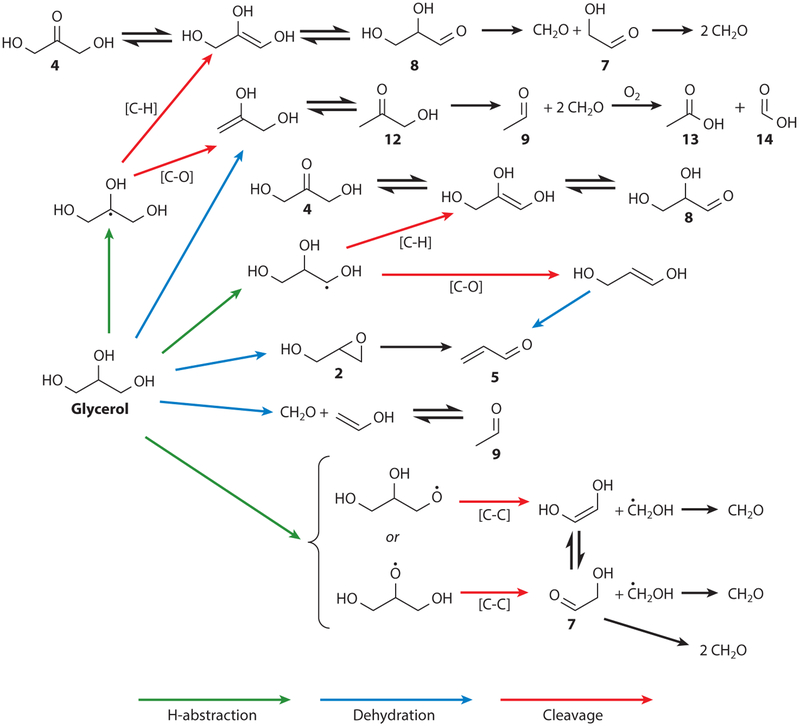
Decomposition pathways of glycerol in e-cigarettes. The most prevalent reaction mechanisms involve oxidation and dehydration. Adapted from Reference under the terms of the Creative Commons Attribution 4.0 International License, http://creativecommons.org/licenses/by/4.0 .
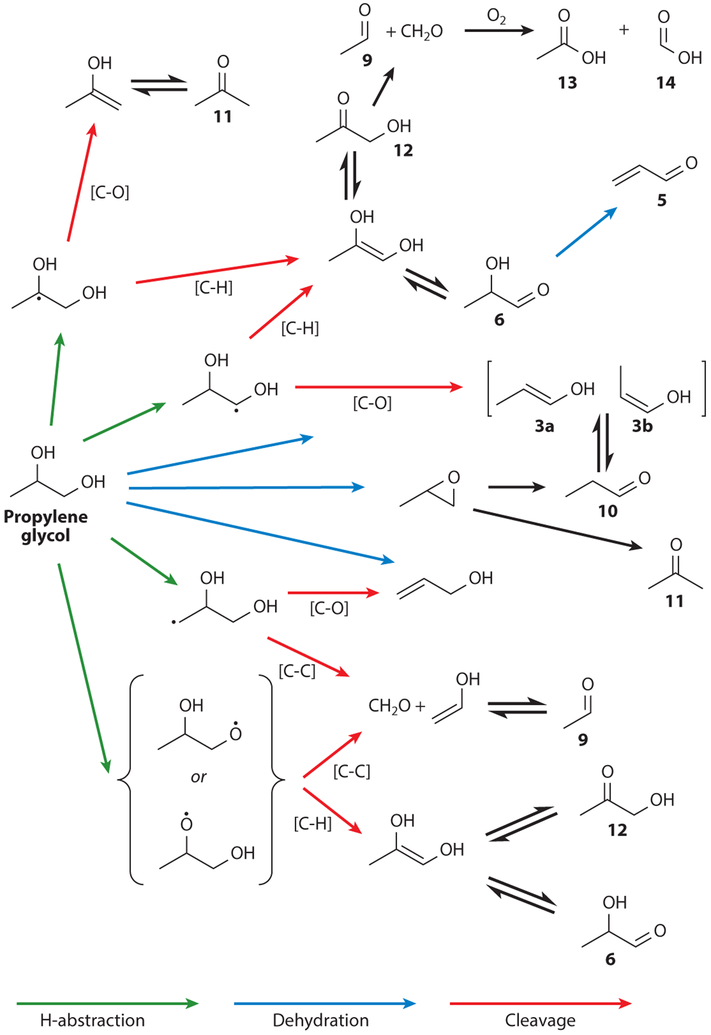
Decomposition pathways of propylene glycol in e-cigarettes. As in the case of glycerol (Figure 3), the most prevalent reaction mechanisms involve oxidation and dehydration. Adapted from Reference under the terms of the Creative Commons Attribution 4.0 International License, http://creativecommons.org/licenses/by/4.0 .
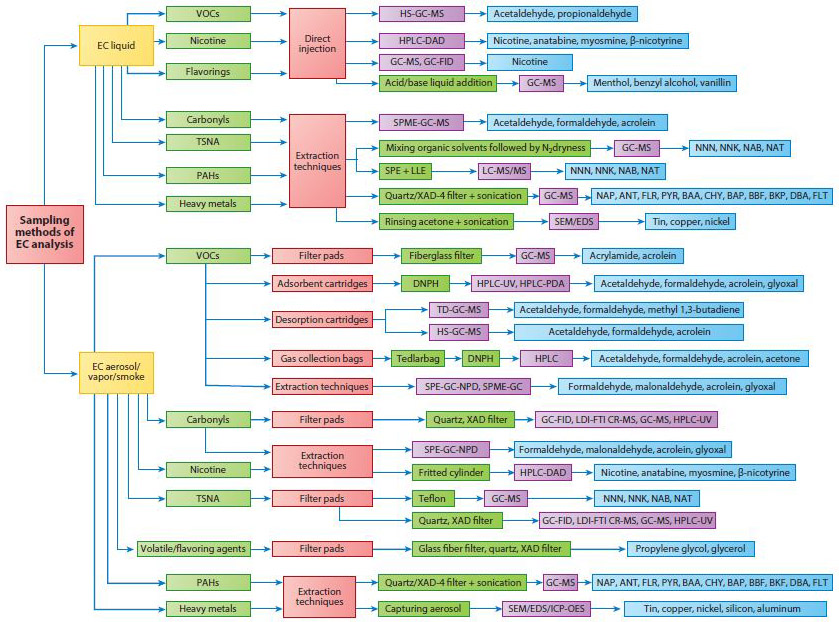
Examples of sampling methods for EC analysis. The boxes depict the following: analyte class (light green), sample collection (pink), pretreatment (dark green), analytical technique (purple), and specific analytes detected (blue). Adapted with permission from Reference . Copyright 2016, Elsevier. Abbreviations: ANT, anthracene; BAA, benz[a]anthracene; BAP, benzo[a]pyrene; BBF, benzo[b]fluoranthene; BKP, benzo[k]fluoranthene; CHY, chrysene; CR, cyclotron resonance; DAD, diode array detection; DBA, dibenz[a,b]anthracene; DNPH, dinitrophenylhydrazine; EC, electronic cigarette; EDS, energy-dispersive X-ray spectroscopy; FID, flame ionization detection; FLR, fluorine; FLT, fluoranthene; FTI, Fourier transform ion; GC, gas chromatography; HPLC, high-pressure liquid chromatography; HS, head space; ICP-OES, inductively coupled plasma optical emission spectrometry; LDI, laser desorption/ionization; LLE, liquid-liquid extraction; MS, mass spectrometry; MS/MS, tandem MS; NAB, nitrosoanabasine; NAP, naphthalene; NAT, N′-nitrosoanatabine; NNK, nicotine-derived nitrosamine ketone; NNN = N-nitrosonornicotine; NPD, nitrogen phosphorous detection; PAH, polycyclic aromatic hydrocarbon; PYR, pyrene; SEM, scanning electron microscopy; SPE, solid-phase extraction; SPME, solid-phase microextraction; TD, thermal desorption; TSNA, tobacco-specific nitrosamine; VOC, volatile organic compound.
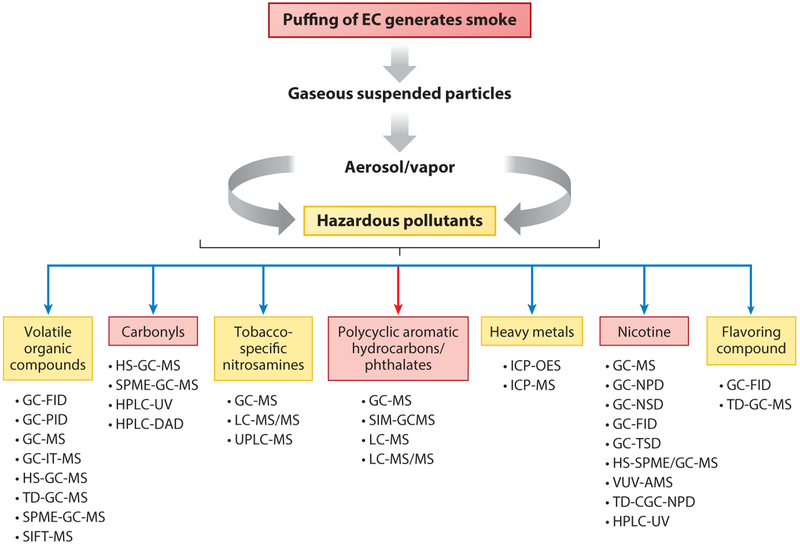
Examples of analytical methods for EC analysis. Adapted with permission from Reference . Copyright 2016, Elsevier. Abbreviations: AMS, aerosol mass spectrometry; CGC, capillary gas chromatography; DAD, diode array detection; EC, electronic cigarette; FID, flame ionization detection; GC, gas chromatography; HPLC, high-pressure liquid chromatography; HS, head space; ICP-OES, inductively coupled plasma optical emission spectrometry; IT, ion trap; MS, mass spectrometry; MS/MS, tandem MS; NPD, nitrogen phosphorous detection; NSD, nitrogen selective detection; PID, photoionization detection; SIFT, selected ion flow tube; SIM, selected ion monitoring; SPME, solid-phase microextraction; TD, thermal desorption; TSD, thermionic specific detection; UP, ultraperformance; VUV, vacuum ultraviolet.
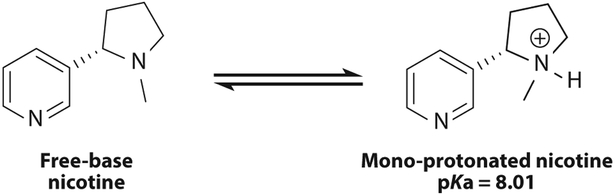
The most abundant protonation states of nicotine. The pKa value corresponds to 25°C in H2O. Protonated nicotine is less harsh and can have greater potential for addiction. Protonated nicotine is delivered to the lungs in the aerosol particulate phase.
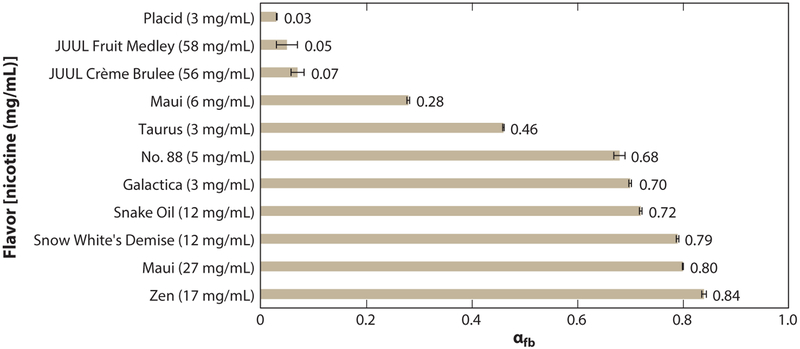
Commercial e-liquid flavors and their nicotine content. The x-axis shows the free-base (fb) nicotine fraction. A low ratio of free-base to protonated nicotine dampens aerosol harshness and thus may enhance the popularity and addiction potential of e-cigarettes such as Juuls with teens and pre-teens. Adapted with permission from Reference . Copyright 2018, American Chemical Society.
References
-
- Proctor RN. 2012. The history of the discovery of the cigarette–lung cancer link: evidentiary traditions, corporate denial, global toll. Tob. Control 21:87–91 - PubMed
Publication types
MeSH terms
Substances
Grants and funding
LinkOut - more resources
Full Text Sources
Medical
