


Top research priorities in liver and gallbladder disorders in the UK
- PMID: 30850408
- PMCID: PMC6429888
- DOI: 10.1136/bmjopen-2018-025045
Top research priorities in liver and gallbladder disorders in the UK
Abstract
Objectives: There is a mismatch between research questions considered important by patients, carers and healthcare professionals and the research performed in many fields of medicine. The non-alcohol-related liver and gallbladder disorders priority setting partnership was established to identify the top research priorities in the prevention, diagnostic and treatment of gallbladder disorders and liver disorders not covered by the James-Lind Alliance (JLA) alcohol-related liver disease priority setting partnership.
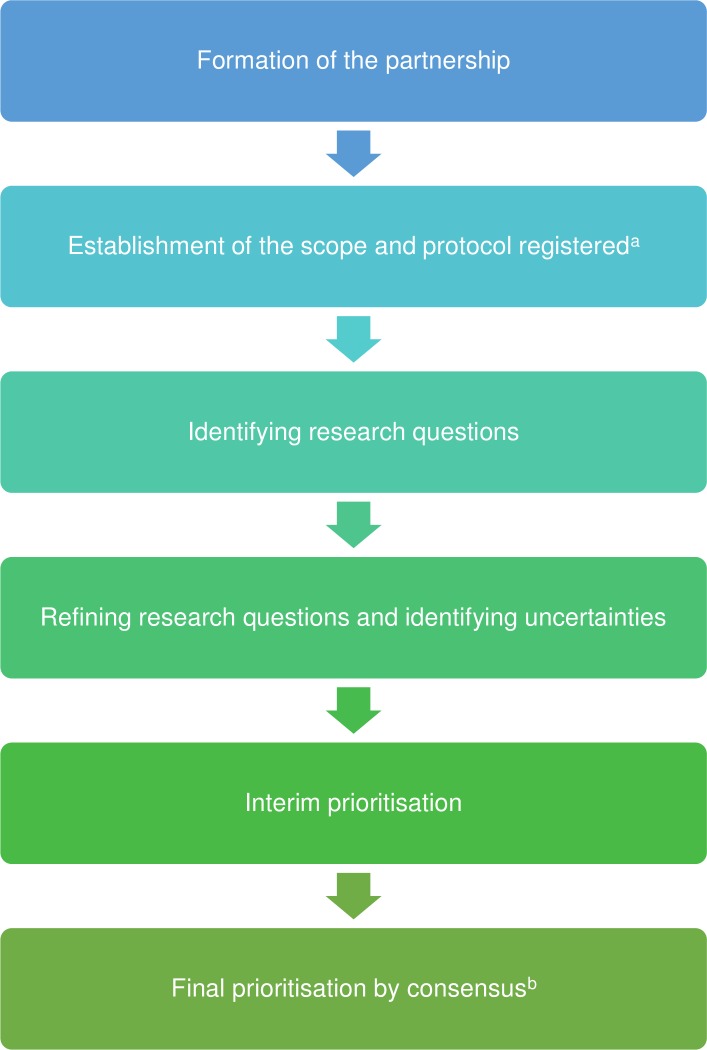
Design: The methods broadly followed the principles of the JLA guidebook. The one major deviation from the JLA methodology was the final step of identifying priorities: instead of prioritisation by group discussions at a consensus workshop involving stakeholders, the prioritisation was achieved by a modified Delphi consensus process.
Results: A total of 428 unique valid diagnostic or treatment research questions were identified. A literature review established that none of these questions were considered 'answered' that is, high-quality systematic reviews suggest that further research is not required on the topic. The Delphi panel achieved consensus (at least 80% Delphi panel members agreed) that a research question was a top research priority for six questions. Four additional research questions with highest proportion of Delphi panel members ranking the question as highly important were added to constitute the top 10 research priorities.
Conclusions: A priority setting process involving patients, carers and healthcare professionals has been used to identify the top 10priority areas for research related to liver and gallbladder disorders. Basic, translational, clinical and public health research are required to address these uncertainties.
Keywords: chronic liver disease; liver.
© Author(s) (or their employer(s)) 2019. Re-use permitted under CC BY-NC. No commercial re-use. See rights and permissions. Published by BMJ.
Conflict of interest statement
Competing interests: The decisions made by healthcare professionals involved in the research prioritisation process might have been influenced by their professional interests, in addition to their own, or family member’s experience of health conditions. Decisions made by patients and carers in the research prioritisation process might have been influenced by their particular experiences, health needs and interests.
Figures
References
-
- James Lind Alliance Priority Setting Partnerships. About the James Lind Alliance. 2018. http://wwwjlanihracuk/about-the-james-lind-alliance/ (accessed 6th April 2018).
-
- James Lind Alliance Priority Setting Partnerships. Tinnitus PSP: What’s happening to address the priorities more than 4 years later? 2017. http://wwwjlanihracuk/news/tinnitus-psp-whats-happening-to-address-the-p... (accessed on 2 Dec 2018).
Publication types
MeSH terms
LinkOut - more resources
Full Text Sources
Medical
Molecular Biology Databases
