


Processing bodies control the selective translation for optimal development of Arabidopsis young seedlings
- PMID: 30850529
- PMCID: PMC6442596
- DOI: 10.1073/pnas.1900084116
Processing bodies control the selective translation for optimal development of Arabidopsis young seedlings
Erratum in
-
Correction for Jang et al., Processing bodies control the selective translation for optimal development of Arabidopsis young seedlings.Proc Natl Acad Sci U S A. 2019 Jun 18;116(25):12575. doi: 10.1073/pnas.1908132116. Epub 2019 Jun 10. Proc Natl Acad Sci U S A. 2019. PMID: 31182577 Free PMC article. No abstract available.
Abstract
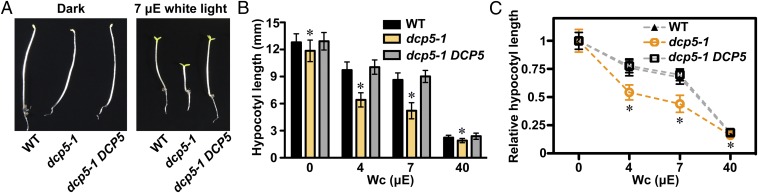
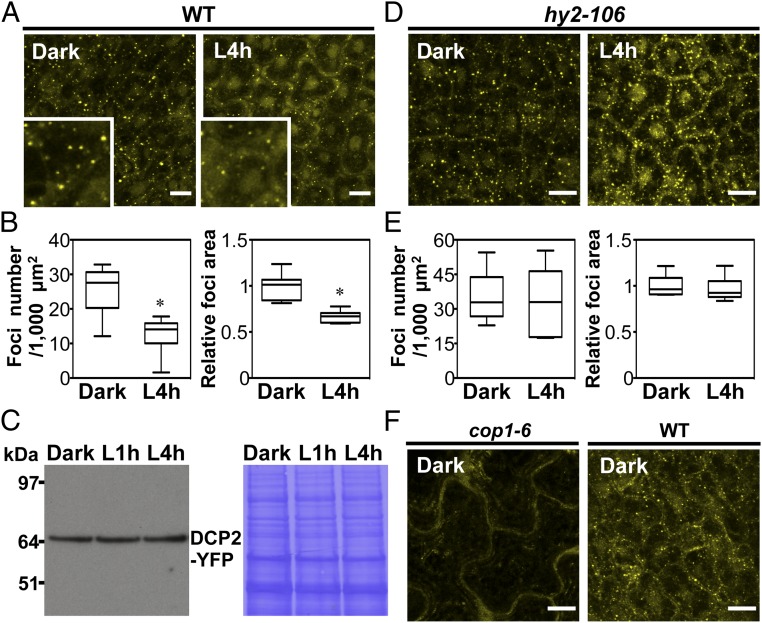
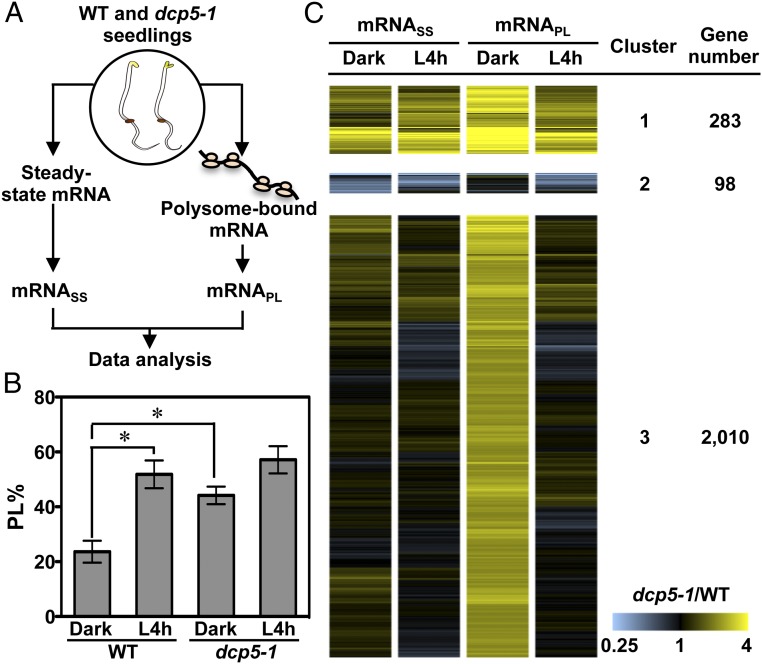
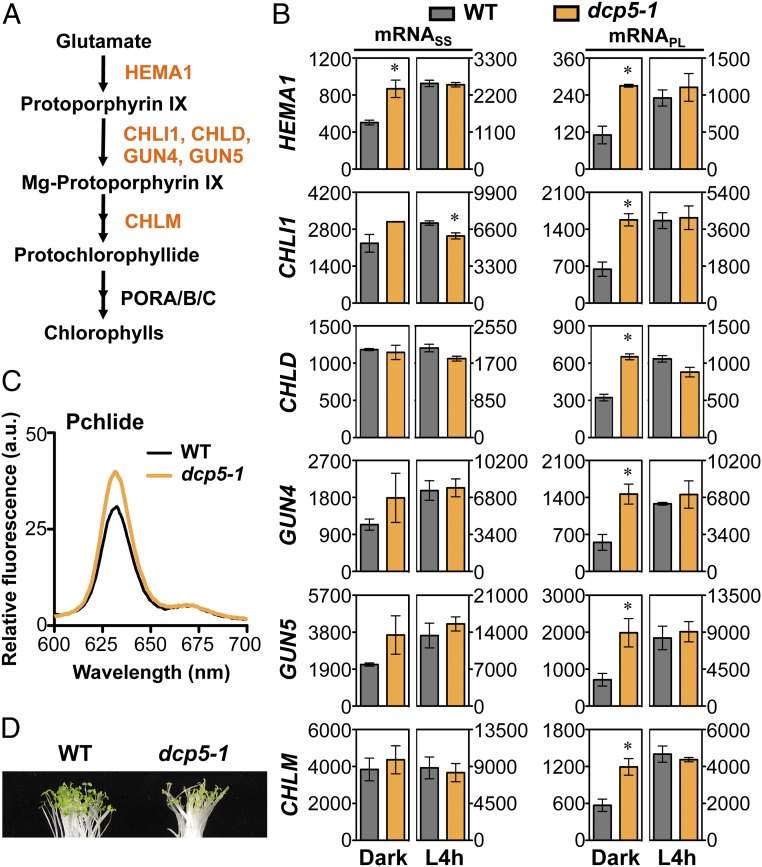
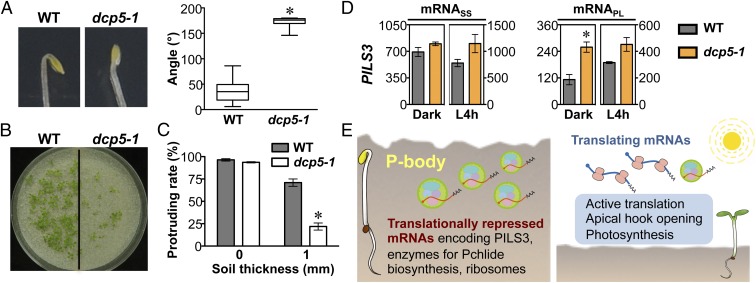
Germinated plant seeds buried in soil undergo skotomorphogenic development before emergence to reach the light environment. Young seedlings transitioning from dark to light undergo photomorphogenic development. During photomorphogenesis, light alters the transcriptome and enhances the translation of thousands of mRNAs during the dark-to-light transition in Arabidopsis young seedlings. About 1,500 of these mRNAs have comparable abundance before and after light treatment, which implies widespread translational repression in dark-grown seedlings. Processing bodies (p-bodies), the cytoplasmic granules found in diverse organisms, can balance the storage, degradation, and translation of mRNAs. However, the function of p-bodies in translation control remains largely unknown in plants. Here we found that an Arabidopsis mutant defective in p-body formation (Decapping 5; dcp5-1) showed reduced fitness under both dark and light conditions. Comparative transcriptome and translatome analyses of wild-type and dcp5-1 seedlings revealed that p-bodies can attenuate the premature translation of specific mRNAs in the dark, including those encoding enzymes for protochlorophyllide synthesis and PIN-LIKES3 for auxin-dependent apical hook opening. When the seedlings protrude from soil, light perception by photoreceptors triggers a reduced accumulation of p-bodies to release the translationally stalled mRNAs for active translation of mRNAs encoding proteins needed for photomorphogenesis. Our data support a key role for p-bodies in translation repression, an essential mechanism for proper skotomorphogenesis and timely photomorphogenesis in seedlings.
Keywords: light; p-bodies; photomorphogenesis; skotomorphogenesis; translation.
Copyright © 2019 the Author(s). Published by PNAS.
Conflict of interest statement
The authors declare no conflict of interest.
Figures
References
-
- Wu SH. Gene expression regulation in photomorphogenesis from the perspective of the central dogma. Annu Rev Plant Biol. 2014;65:311–333. - PubMed
-
- Xu X, Paik I, Zhu L, Huq E. Illuminating progress in phytochrome-mediated light signaling pathways. Trends Plant Sci. 2015;20:641–650. - PubMed
-
- Lau OS, Deng XW. The photomorphogenic repressors COP1 and DET1: 20 years later. Trends Plant Sci. 2012;17:584–593. - PubMed
Publication types
MeSH terms
Substances
LinkOut - more resources
Full Text Sources
Other Literature Sources
Molecular Biology Databases
