


Agricultural intensification reduces microbial network complexity and the abundance of keystone taxa in roots
- PMID: 30850707
- PMCID: PMC6591126
- DOI: 10.1038/s41396-019-0383-2
Agricultural intensification reduces microbial network complexity and the abundance of keystone taxa in roots
Abstract
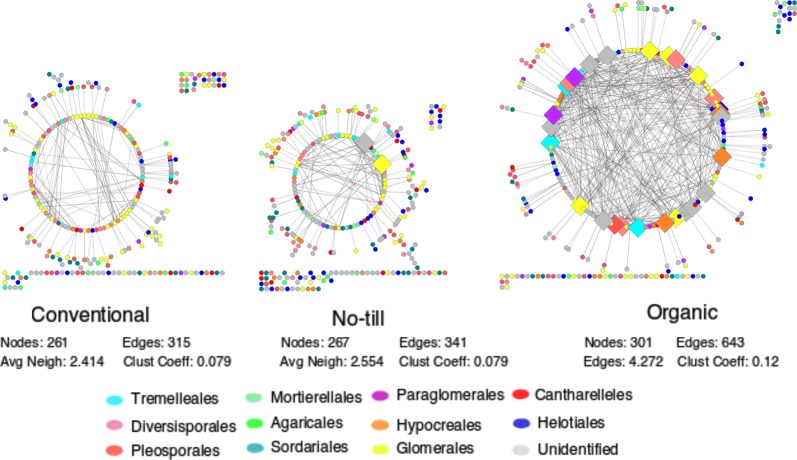
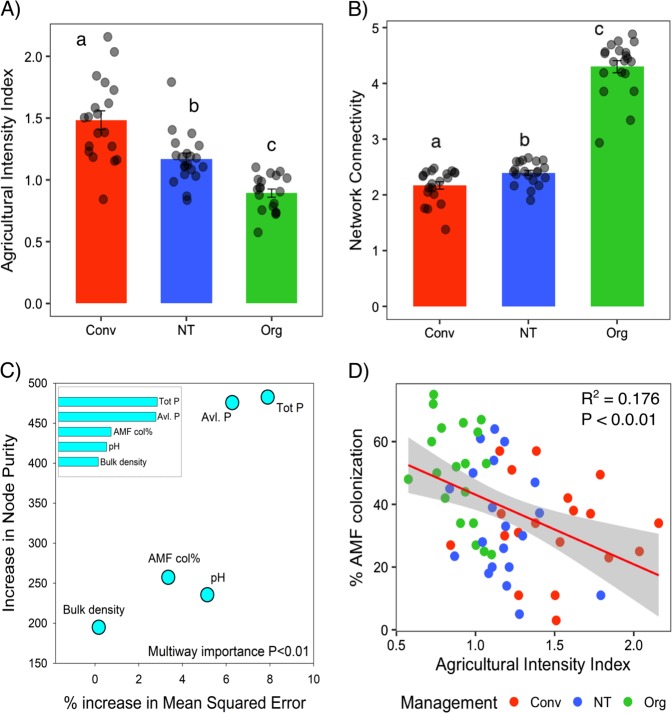
Root-associated microbes play a key role in plant performance and productivity, making them important players in agroecosystems. So far, very few studies have assessed the impact of different farming systems on the root microbiota and it is still unclear whether agricultural intensification influences the structure and complexity of microbial communities. We investigated the impact of conventional, no-till, and organic farming on wheat root fungal communities using PacBio SMRT sequencing on samples collected from 60 farmlands in Switzerland. Organic farming harbored a much more complex fungal network with significantly higher connectivity than conventional and no-till farming systems. The abundance of keystone taxa was the highest under organic farming where agricultural intensification was the lowest. We also found a strong negative association (R2 = 0.366; P < 0.0001) between agricultural intensification and root fungal network connectivity. The occurrence of keystone taxa was best explained by soil phosphorus levels, bulk density, pH, and mycorrhizal colonization. The majority of keystone taxa are known to form arbuscular mycorrhizal associations with plants and belong to the orders Glomerales, Paraglomerales, and Diversisporales. Supporting this, the abundance of mycorrhizal fungi in roots and soils was also significantly higher under organic farming. To our knowledge, this is the first study to report mycorrhizal keystone taxa for agroecosystems, and we demonstrate that agricultural intensification reduces network complexity and the abundance of keystone taxa in the root microbiome.
Conflict of interest statement
The authors declare that they have no conflict of interest.
Figures
References
-
- Foley JA, Ramankutty N, Brauman KA, Cassidy ES, Gerber JS, Johnston M, et al. Solutions for a cultivated planet. Nature. 2011;478:337–42. - PubMed
-
- FAO. Food and Agriculture Organization of the United Nations. 2018. http://www.fao.org. Accessed 22 Mar 2018.
-
- Tilman D, Cassman KG, Matson PA, Naylor R, Polasky S. Agricultural sustainability and intensive production practices. Nature. 2002;418:671–7. - PubMed
-
- Foley JA, et al. Global consequences of land use. Science. 2005;309:570–4. - PubMed
-
- Bender SF, Wagg C, van der Heijden MGA. An underground revolution: biodiversity and soil ecological engineering for agricultural sustainability. Trends Ecol Evol. 2016;31:440–52. - PubMed
