. 2019 Apr;103(8):3521-3535.
doi: 10.1007/s00253-019-09618-0. Epub 2019 Mar 9.

Natural quorum sensing inhibitors effectively downregulate gene expression of Pseudomonas aeruginosa virulence factors

Affiliations

Natural quorum sensing inhibitors effectively downregulate gene expression of Pseudomonas aeruginosa virulence factors

Syed A K S Ahmed et al. Appl Microbiol Biotechnol. 2019 Apr.

Abstract

At present, anti-virulence drugs are being considered as potential therapeutic alternatives and/or adjuvants to currently failing antibiotics. These drugs do not kill bacteria but inhibit virulence factors essential for establishing infection and pathogenesis through targeting non-essential metabolic pathways reducing the selective pressure to develop resistance. We investigated the effect of naturally isolated plant compounds on the repression of the quorum sensing (QS) system which is linked to virulence/pathogenicity in Pseudomonas aeruginosa. Our results show that trans-cinnamaldehyde (CA) and salicylic acid (SA) significantly inhibit expression of QS regulatory and virulence genes in P. aeruginosa PAO1 at sub-inhibitory levels without any bactericidal effect. CA effectively downregulated both the las and rhl QS systems with lasI and lasR levels inhibited by 13- and 7-fold respectively compared to 3- and 2-fold reductions with SA treatment, during the stationary growth phase. The QS inhibitors (QSI) also reduced the production of extracellular virulence factors with CA reducing protease, elastase and pyocyanin by 65%, 22% and 32%, respectively. The QSIs significantly reduced biofilm formation and concomitantly with repressed rhamnolipid gene expression, only trace amount of extracellular rhamnolipids were detected. The QSIs did not completely inhibit virulence factor expression and production but their administration significantly lowered the virulence phenotypes at both the transcriptional and extracellular levels. This study shows the significant inhibitory effect of natural plant-derived compounds on the repression of QS systems in P. aeruginosa.

Keywords: Pseudomonas aeruginosa; Quorum sensing; Quorum sensing inhibitor; Salicylic acid; Trans-cinnamaldehyde.


Conflict of interest statement

Conflict of interest

The authors declare that they have no conflict of interest.

Ethical approval

This article does not contain any studies with human participants or animals performed by any of the authors.

Figures
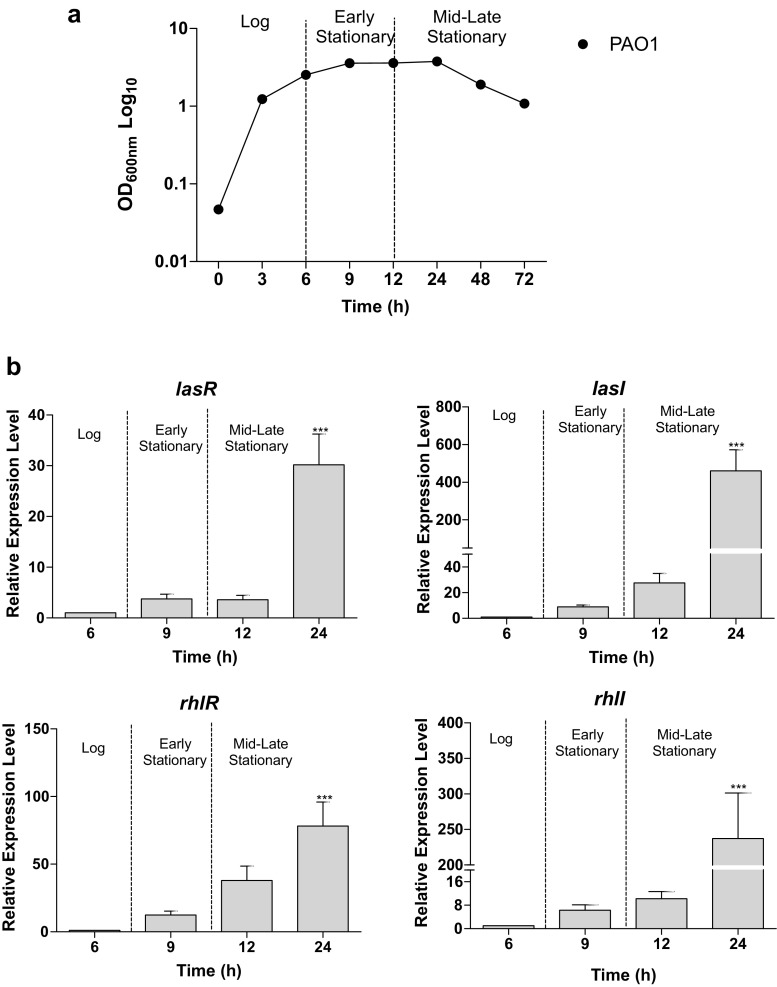
Fig. 1
Fig. 1
Las and rhl QS regulatory genes in P. aeruginosa PAO1 are differentially expressed in a cell density-dependent manner. a Growth of P. aeruginosa in phosphate-limited media (PPGAS). b Transcriptional expression of QS regulatory genes lasR, lasI, rhlR and rhlI. Expression levels were quantified by RT-qPCR, relative mRNA levels for target genes were normalised to the geometric mean of two reference genes (rpoD and proC) and values plotted are the mean calibrator normalised ratios to log phase (6 h). Vertical bars represent S.D. ± (n = 3). Data was analysed using one-way ANOVA followed by Dunnett’s multiple comparison test (**p < 0.01, ***p < 0.001)
Fig. 2
Fig. 2
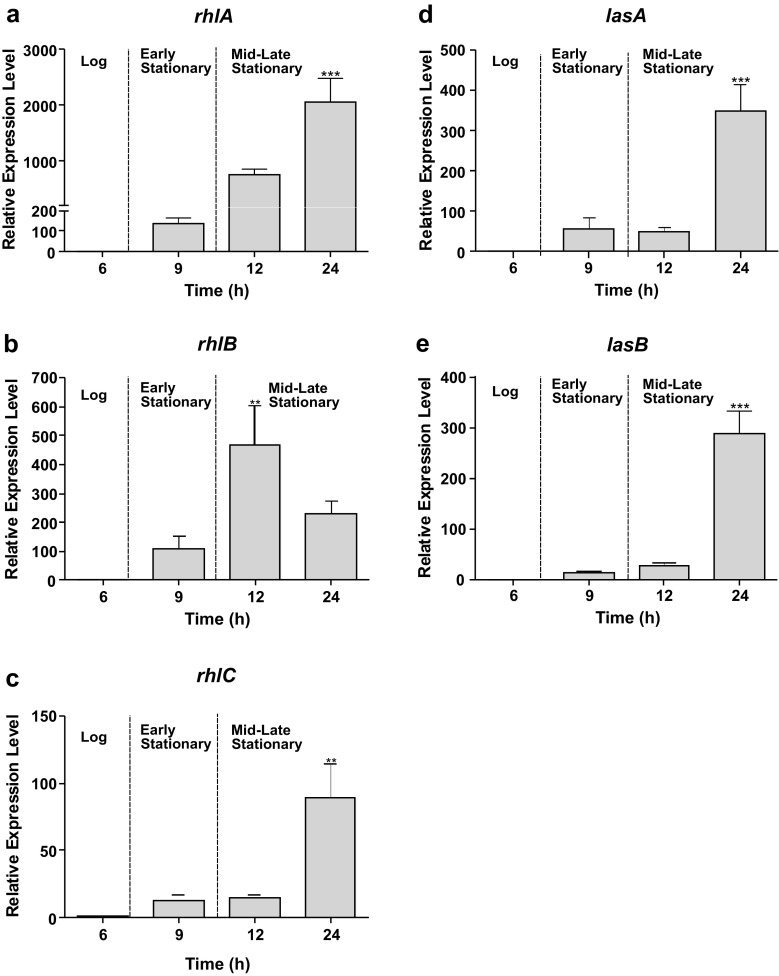
QS-regulated virulence-associated genes are highly expressed in stationary phase in P. aeruginosa PAO1. Relative transcript levels of virulence-associated rhamnolipid biosynthetic genes arhlA,brhlB, crhlC and exoprotease dlasA and elastase elasB. Relative mRNA levels for target genes were normalised to the geometric mean of two reference genes (rpoD and proC) and values plotted are the mean calibrator normalised ratios to log phase (6 h). Vertical bars represent S.D. ± (n = 3). Data was analysed using one-way ANOVA followed by Dunnett’s multiple comparison test (*p < 0.05, **p < 0.01, ***p < 0.001)
Fig. 3
Fig. 3
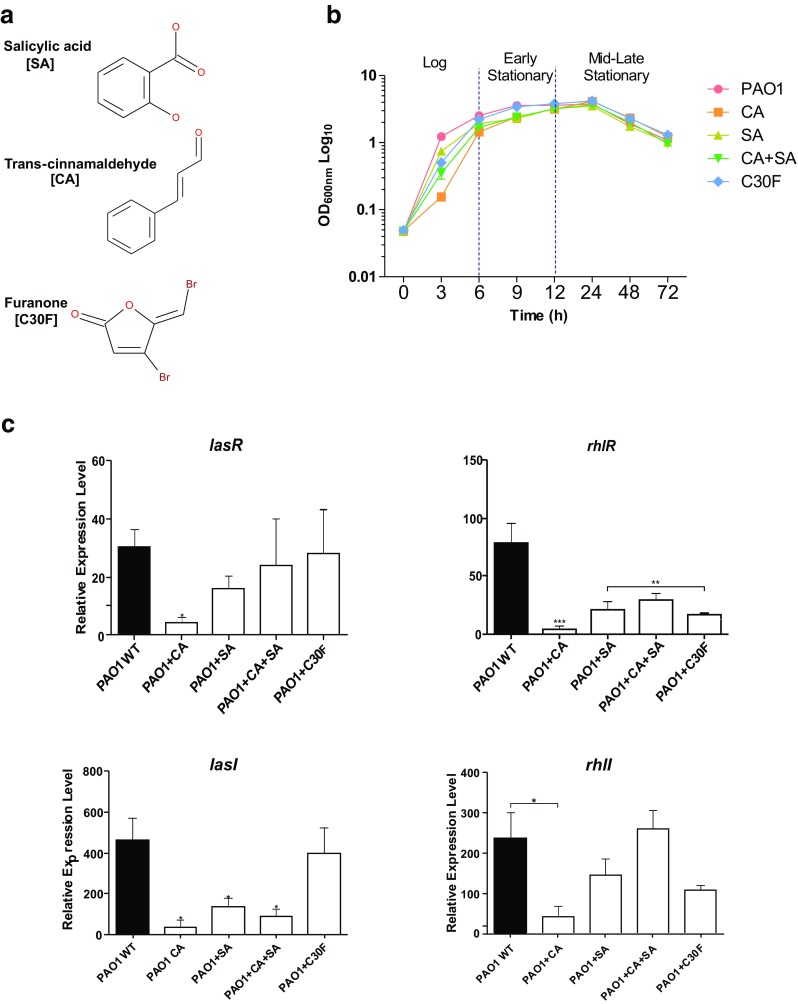
Quorum sensing inhibitors (QSIs) significantly reduce expression of las and rhl QS systems in P. aeruginosa. a Molecular structure of the natural QSIs used in this study, salicylic acid (SA), trans-cinnamaldehyde (CA) and positive control furanone C30 (C30F). b Growth of P. aeruginosa with QSIs at sub-MIC concentrations (SA 3.62 mM, CA 2.27 mM and C30F 10 μM). c Relative expression of QS regulatory genes lasR, lasI, rhlR and rhlI with combinations of QSI treatments. Relative mRNA levels for target genes were normalised to the geometric mean of two reference genes (rpoD and proC). Vertical bars represent S.D. ± (n = 3). Data was analysed using two-way ANOVA followed by Bonferroni post-tests (**p < 0.01, ***p < 0.001)
Fig. 4
Fig. 4
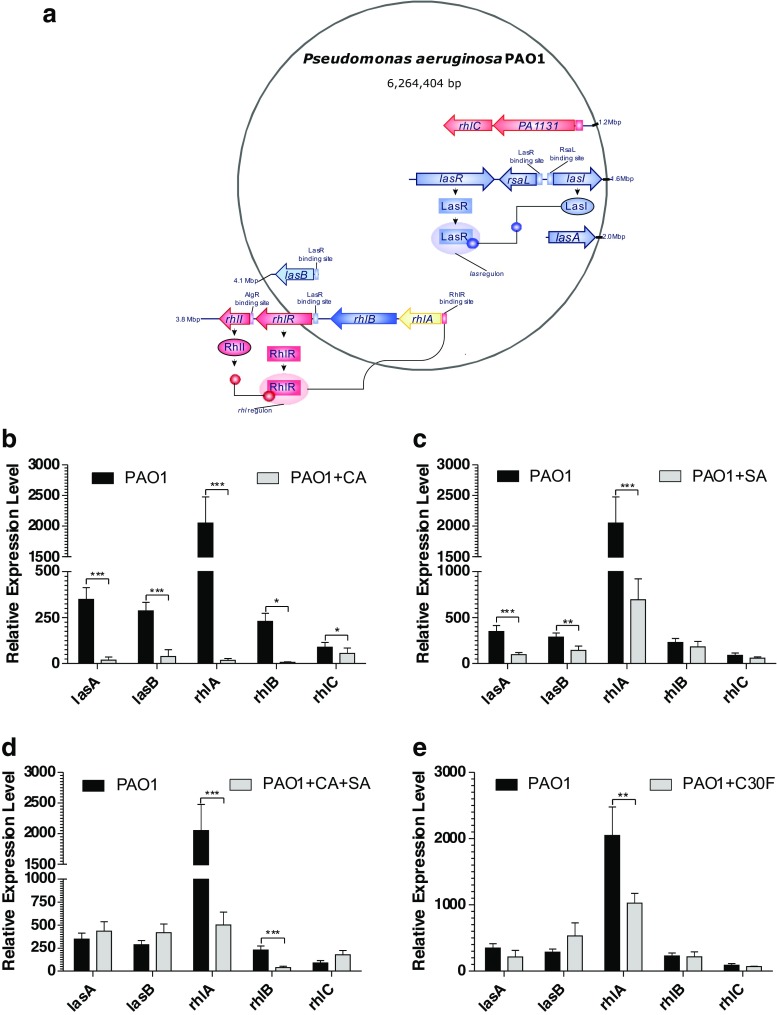
Trans-cinnamaldehyde (CA) significantly reduces gene expression of virulence-associated genes in P. aeruginosa PAO1. a The schematic representation of the genetic location of las and rhl QS systems in P. aeruginosa. Effect of QSIs at the following concentrations of b 2.27 mM CA, c 3.62 mM SA, d 2.27 mM CA + 3.62 mM SA and e 10 μM C30F on the transcriptional expression of virulence-associated genes lasA, lasB, rhlA, rhlB and rhlC in P. aeruginosa PAO1. Gene expression was quantified at 24 h for both treated and untreated cells, relative mRNA levels for target genes were normalised to the geometric mean of two reference genes (rpoD and proC). Vertical bars represent S.D. ± (n = 3). Data was analysed using two-way ANOVA followed by Bonferroni post-tests (*p < 0.05, **p < 0.01, ***p < 0.001)
Fig. 5
Fig. 5
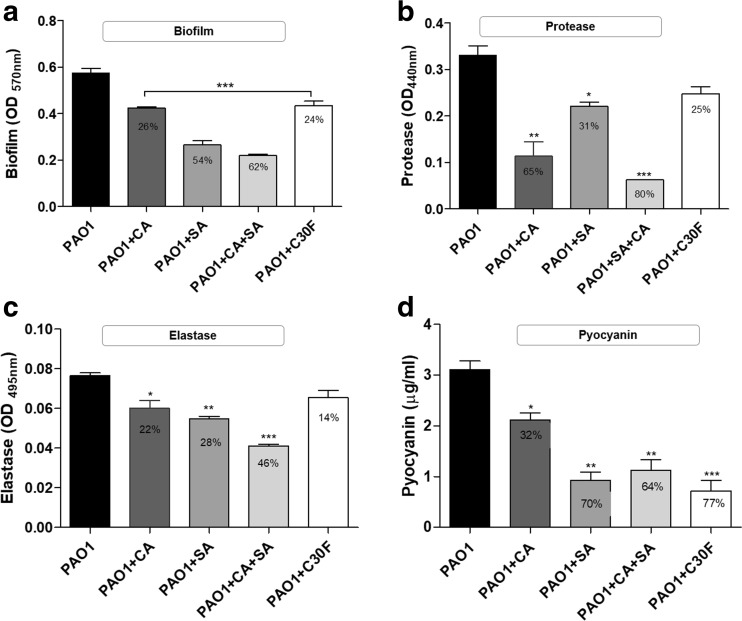
QSIs quantitatively reduce production of extracellular virulence factors in P. aeruginosa PAO1. QS-regulated phenotypes a biofilm formation and extracellular factors b protease, c elastase and d pyocyanin were significantly disrupted by QSIs. The percentage reductions mentioned were calculated against the untreated PAO1. Error bars represent S.D. ± (n = 3). Data was analysed using one-way ANOVA followed by Dunnett’s multiple comparison test (*p < 0.05, **p < 0.01, ***p < 0.001)
Fig. 6
Fig. 6
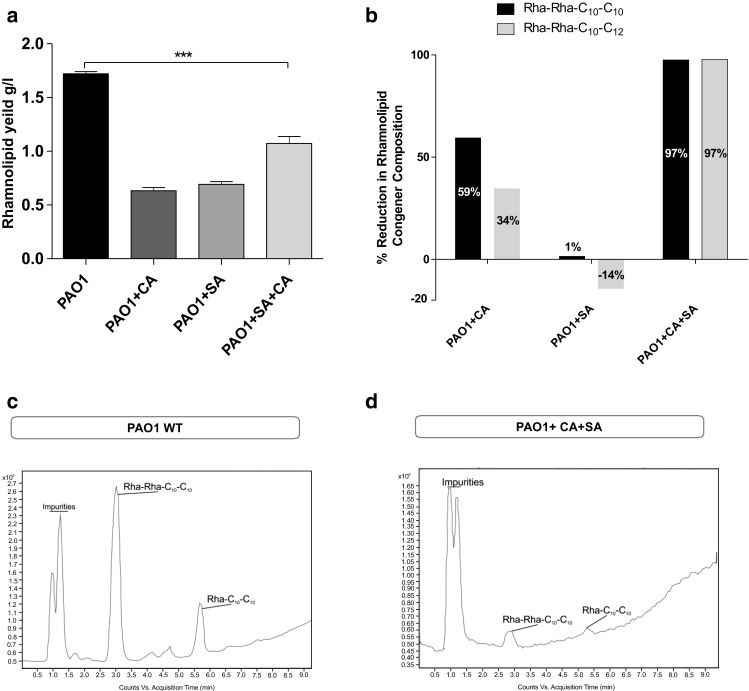
QSIs significantly reduce rhl-regulated rhamnolipid production P. aeruginosa. a The QSIs reduces the rhamnolipid crude yield significantly compared to the untreated PAO1 cells. b % reduction in the two main RL congeners Rha-C10-C10 and Rha-Rha-C10-C10 relative to untreated P. aeruginosa PAO1. RL congeners were studied by HPLC-MS/MS. The HPLC chromatograms of c untreated P. aeruginosa PAO1 and dP. aeruginosa PAO1 treated with trans-cinnamaldehyde (CA) and salicylic acid (SA)

References

    1. Aghazadeh M, Hojabri Z, Mahdian R, Nahaei MR, Rahmati M, Hojabri T, Pirzadeh T, Pajand O. Role of efflux pumps: MexAB-OprM and MexXY(-OprA), AmpC cephalosporinase and OprD porin in non-metallo-β-lactamase producing Pseudomonas aeruginosa isolated from cystic fibrosis and burn patients. Infect Genet Evol. 2014;24:187–192. doi: 10.1016/j.meegid.2014.03.018. - DOI - PubMed
    1. Anand R, Rai N, Thattai M. Interactions among quorum sensing inhibitors. PLoS One. 2013;8:e2254. - PMC - PubMed
    1. Andersen CL, Jensen JL, Ørntoft TF. Normalization of real-time quantitative reverse transcription-PCR data: a model-based variance estimation approach to identify genes suited for normalization, applied to bladder and colon cancer data sets. Cancer Res. 2004;64:5245–5250. doi: 10.1158/0008-5472.CAN-04-0496. - DOI - PubMed
    1. Anwar H, Costerton JW. Enhanced activity of combination of tobramycin and piperacillin for eradication of sessile biofilm cells of Pseudomonas aeruginosa. Antimicrob Agents Chemother. 1990;34:1666–1671. doi: 10.1128/AAC.34.9.1666. - DOI - PMC - PubMed
    1. Bottomley MJ, Muraglia E, Bazzo R, Carfì A. Molecular insights into quorum sensing in the human pathogen Pseudomonas aeruginosa from the structure of the virulence regulator LasR bound to its autoinducer. J Biol Chem. 2007;282:13592–13600. doi: 10.1074/jbc.M700556200. - DOI - PubMed

MeSH terms

LinkOut - more resources