


doi: 10.1142/S021797921840009X.
Epub 2017 Dec 11.
Protein structure prediction
Affiliations
- PMID: 30853739
- PMCID: PMC6407873
- DOI: 10.1142/S021797921840009X
Item in Clipboard
Protein structure prediction
Int J Mod Phys B.
.
Abstract
Predicting 3D structure of protein from its amino acid sequence is one of the most important unsolved problems in biophysics and computational biology. This paper attempts to give a comprehensive introduction of the most recent effort and progress on protein structure prediction. Following the general flowchart of structure prediction, related concepts and methods are presented and discussed. Moreover, brief introductions are made to several widely-used prediction methods and the community-wide critical assessment of protein structure prediction (CASP) experiments.
Keywords: Protein structure prediction; ab initio prediction; homology modeling; structure refinement.
Figures
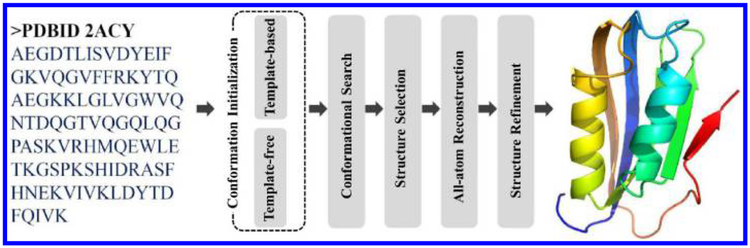
The general flowchart of protein structure prediction.
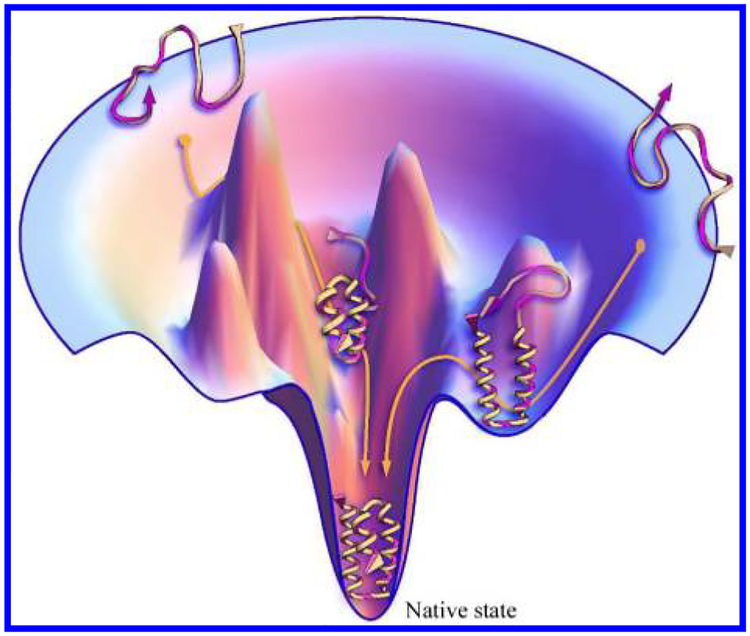
Protein folding guided by funnel-shaped energy landscape (see Ref. 20).
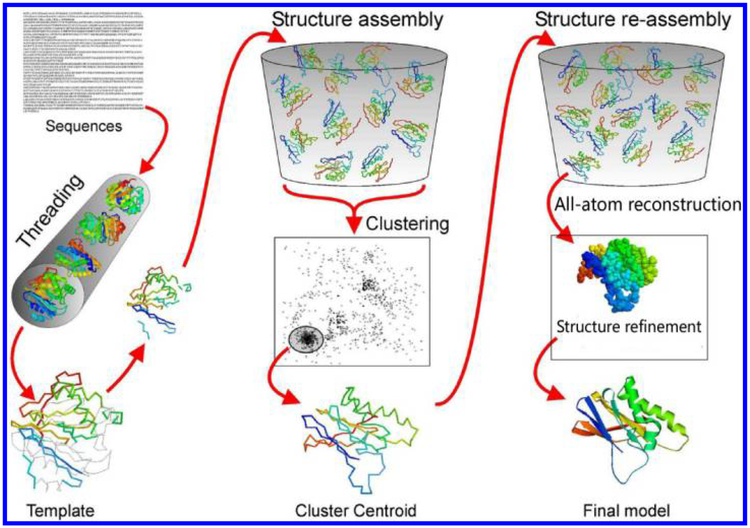
Flowchart of I-TASSER method for protein structure prediction.
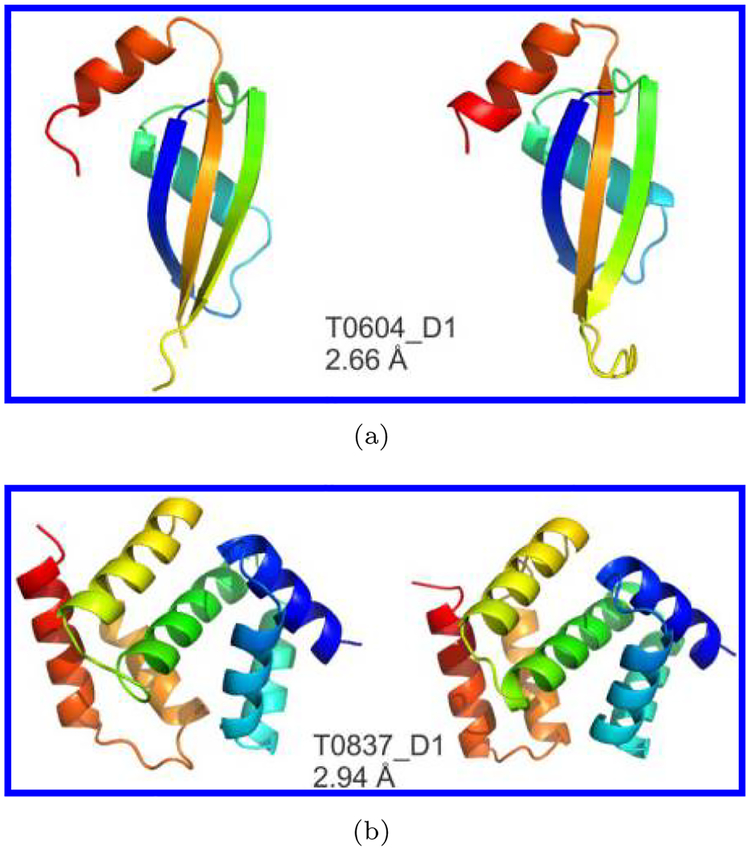
Two examples of ab initio modeling in CASP (the left and right panels are X-ray structures and predicted models respectively). (a) The first model of T0604_D1 in CASP9 by I-TASSER, with RMSD = 2.66 Å, length = 79, and classification being FM target; (b) the first model of T0837_D1 in CASP11 by QUARK, with RMSD = 2.94 Å, length = 128, and classification being FM target.
References
Grants and funding
LinkOut - more resources
Full Text Sources
Other Literature Sources