


Randomized Controlled Trial
Caries Management by Risk Assessment: Results from a Practice-Based Research Network Study
Affiliations
- PMID: 30853771
- PMCID: PMC6407860
Item in Clipboard
Randomized Controlled Trial
Caries Management by Risk Assessment: Results from a Practice-Based Research Network Study
J Calif Dent Assoc.
2019 Jan.
Abstract
Thirty dentists with clinical practices outside of a university setting were trained and calibrated successfully in DMFS and ICDAS-scoring. This randomized, controlled, parallel-arm, double-blind 2-year clinical trial with individual-level caries risk assignment of 460 patients to standard of care as control versus active CAMBRA treatment as intervention demonstrated that caries risk level, as well as caries disease indicators, were significantly reduced in the CAMBRA intervention group compared to the controls at all recall time points.
Conflict of interest statement
The authors declare no potential conflicts of interest with respect to the authorship and/or publication of this article. Disclosure: There is no conflict of interest to report.
Figures
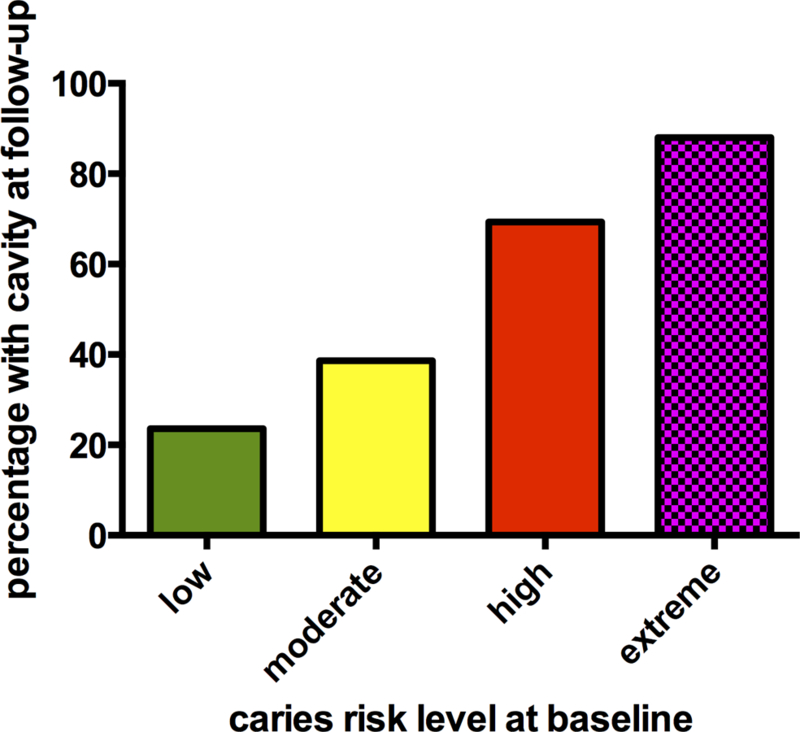
Percentage of patients with new cavities at follow up separated into
low, moderate, high, and extreme high caries risk level at baseline (patients
had not received the appropriate preventive measures); generated from
Domejean S, White JM, Featherstone JD. Validation of the CDA CAMBRA caries
risk assessment--a six-year retrospective study. J. Calif. Dent. Assoc.
2011;39(10):709–715.
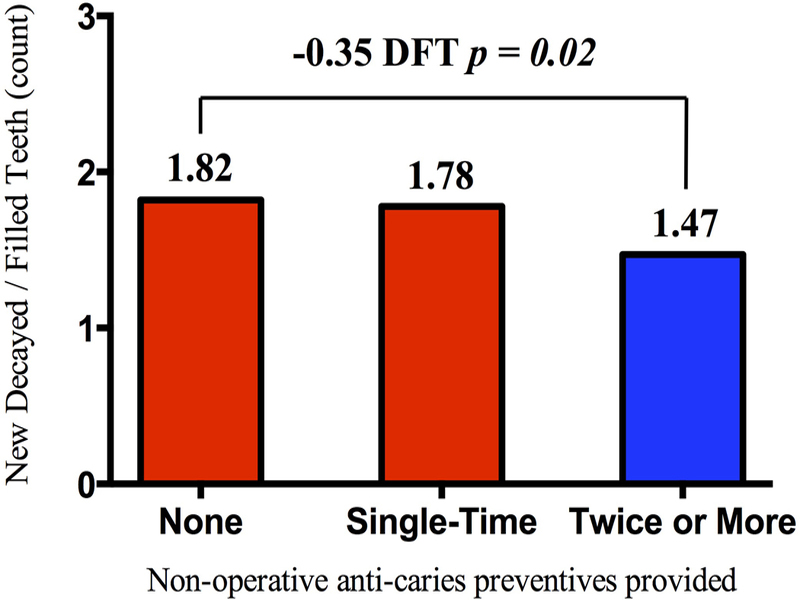
Number of new decayed/filled teeth of patients who received none, a
single-time, and twice or more often anti-caries preventives; a 20% reduction in
new decayed/filled teeth over 18 months in the group receiving twice of more
anti-caries preventives was shown. (adapted from BMC Oral
Health. 2015;15(1):111)
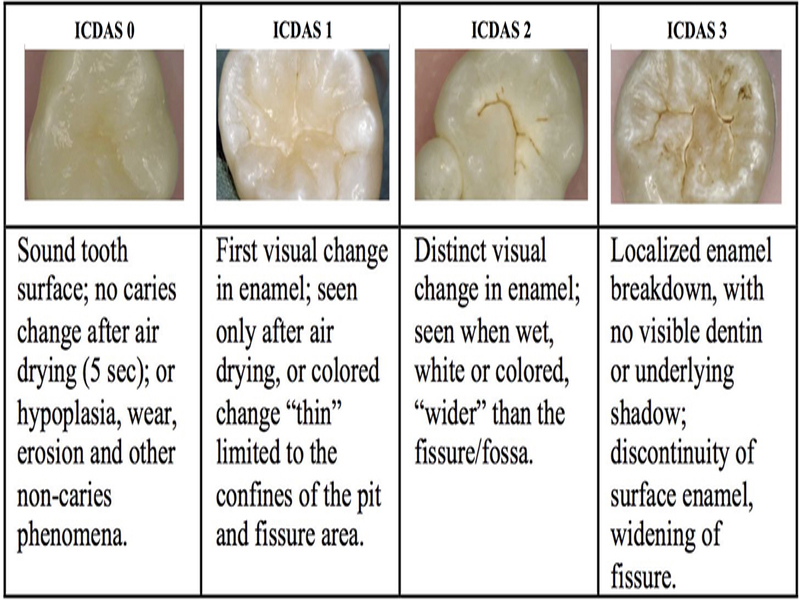
ICDAS scoring criteria for healthy (score 0), non-cavitated lesions
(score 1 and 2) and first representation of a cavitated lesion (score 3)
(adapted from BMC Oral Health. 2018;18(2))
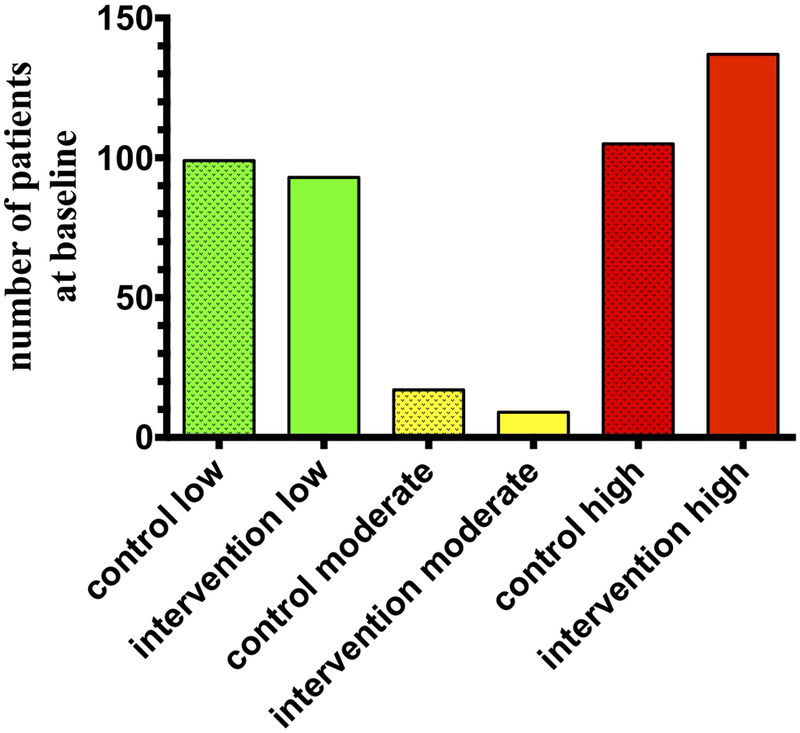
Number of eligible patients at baseline, separated into caries risk
levels and assignment to control and intervention group treatment.
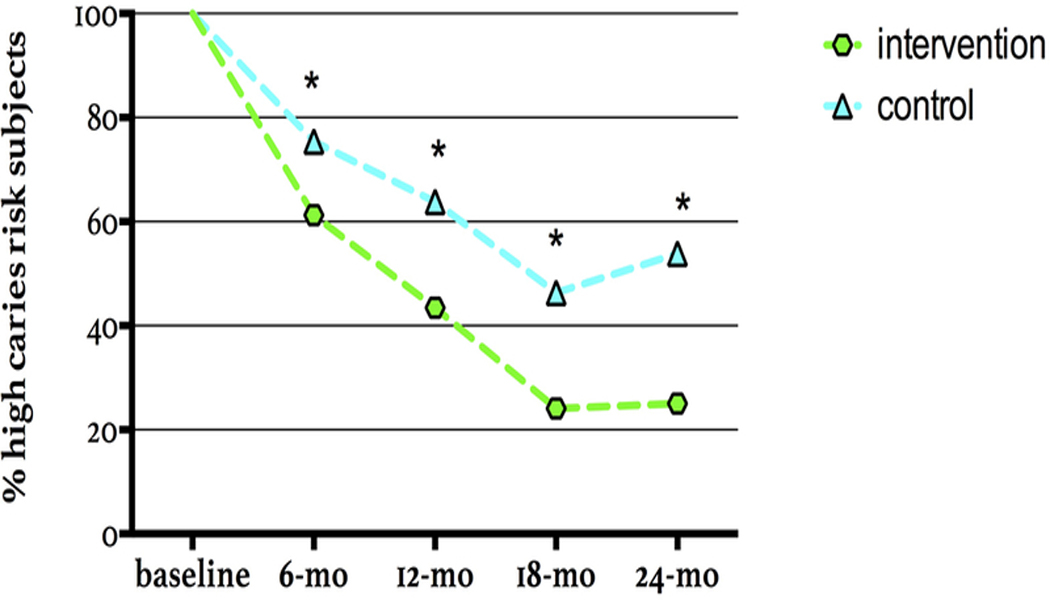
Change in caries risk levels for patients assessed as high caries risk
at baseline; showing the percentage of patients staying at high risk over time
for the intervention and the control group. (* marks statistically significant difference at specific recall time
point; overall significance P<0.001)
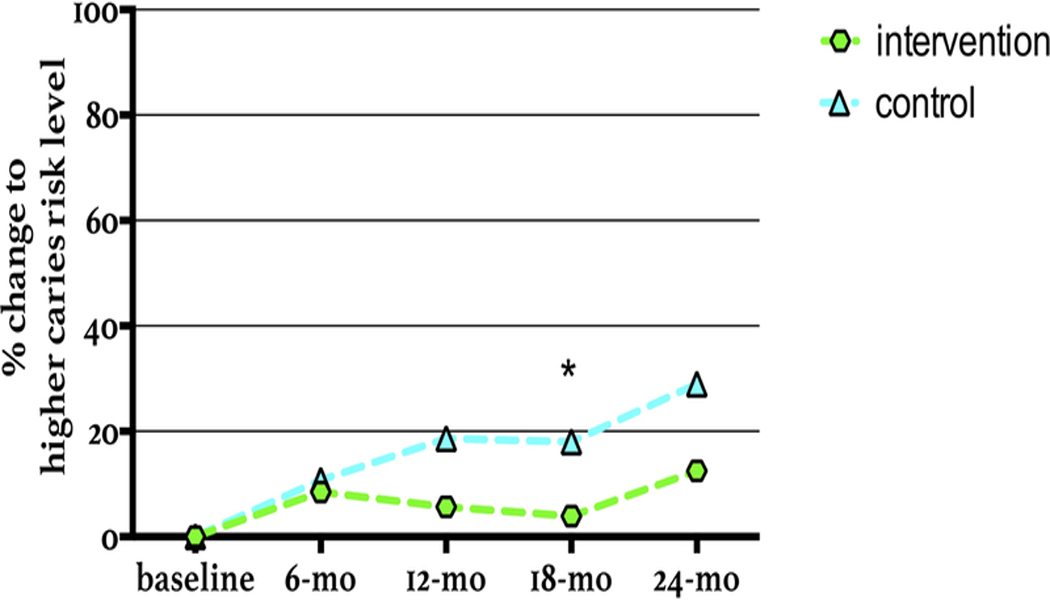
Percentage of participants classified as low caries risk at baseline,
showing increased caries risk level to moderate or high caries risk, over time
for intervention and control group (* marks statistically significant difference
at specific recall time point).
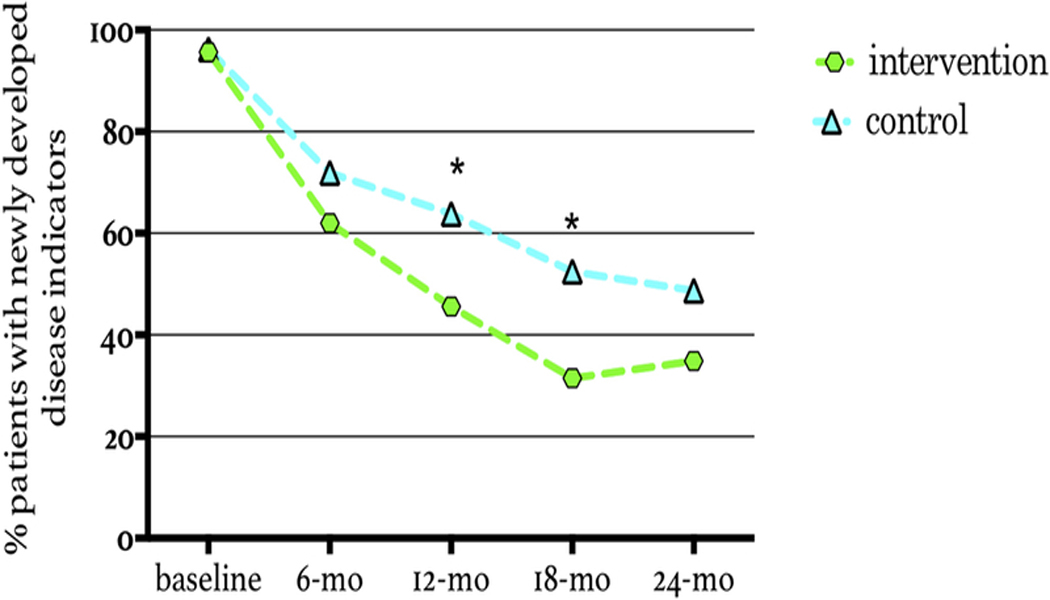
Percentage of patients with initial high risk at baseline developing any
of the 4 clinical outcomes/disease indicators (cavities on radiographic into
dentin, proximal enamel lesions on radiographs, active white spot lesions on
smooth surfaces, restorations within prior year). *Percentages statistically
significant different (cluster-adjusted P < 0.05) newly developed disease
indicators (* marks statistically significant difference at specific recall time
point).
References
-
- Kassebaum NJ, Bernabé E, Dahiya M, Bhandari B, Murray CJL, Marcenes W. Global Burden of Untreated Caries:A Systematic Review and Metaregression. J Dent Res 2015;94(5):650–658. - PubMed
-
- Berkowitz RJ. Mutans streptococci: acquisition and transmission. Pediatric Dentistry Mar-Apr 2006;28(2):106–109; discussion 192–108. - PubMed
-
- Marsh PD. In Sickness and in Health-What Does the Oral Microbiome Mean to Us? An Ecological Perspective. Adv Dent Res February 2018;29(1):60–65. - PubMed
-
- Brantley CF, Bader JD, Shugars DA, Nesbit SP. Does the cycle of rerestoration lead to larger restorations? J Am Dent Assoc October 1995;126(10):1407–1413. - PubMed