Long-term survival and major outcomes in post-cardiotomy extracorporeal membrane oxygenation for adult patients in cardiogenic shock
- PMID: 30854320
- PMCID: PMC6379181
- DOI: 10.21037/acs.2018.12.04
Long-term survival and major outcomes in post-cardiotomy extracorporeal membrane oxygenation for adult patients in cardiogenic shock
Abstract
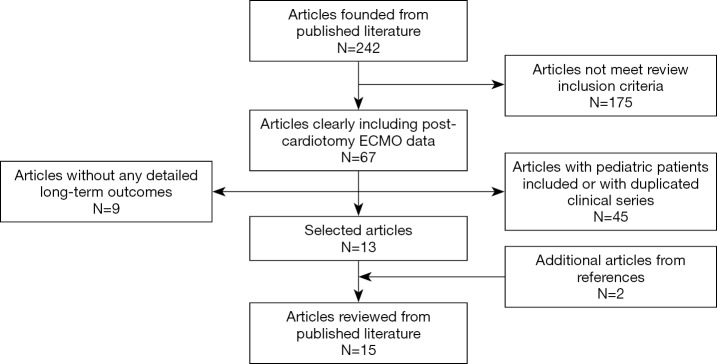
Extracorporeal membrane oxygenation (ECMO) in the veno-arterial (VA) configuration is an established method for the treatment of refractory cardiogenic shock. Such a condition characterizes the postoperative course of approximatively 1% of cardiac surgery patients. Although some studies have reported ECMO-related short-term results, little is known about the long-term outcomes of VA-ECMO therapy in the post-cardiotomy setting. Therefore, an extensive literature search was conducted regarding articles published after 1990 reporting postoperative ECMO use. PubMed, EMBASE and Web of Science were searched for sources. In-hospital mortality was high in post-cardiotomy VA-ECMO patients, ranging from 24.8% to 52%. Long-term results were poorly reported. However, based on the limited information available, hospital survivors showed a favorable outcome, with improvement in overall clinical condition, quality of life and limited hospital readmission for cardiac-related events. To conclude, in-hospital outcome in post-cardiotomy ECMO is often unfavorable, post-discharge results show satisfactory condition, with stable improvement of overall patient clinical status and low rate of hospital readmission and cardiac-related adverse events. Data reporting is, however, scarce and hence new and detailed studies are still warranted to investigate such aspects.
Keywords: Extracorporeal membrane oxygenation (ECMO); cardiac surgery; cardiogenic shock; heart failure.
Conflict of interest statement
Conflicts of Interest: Prof. Lorusso declares that he is Principal Investigator of the PERSIST-AVR Study (sponsored by LivaNova) and is Consultant for Medtronic. The other authors have no conflicts of interest to declare.
Figures