


Magi-1 scaffolds NaV1.8 and Slack KNa channels in dorsal root ganglion neurons regulating excitability and pain
- PMID: 30860870
- PMCID: PMC6529352
- DOI: 10.1096/fj.201802454RR
Magi-1 scaffolds NaV1.8 and Slack KNa channels in dorsal root ganglion neurons regulating excitability and pain
Abstract
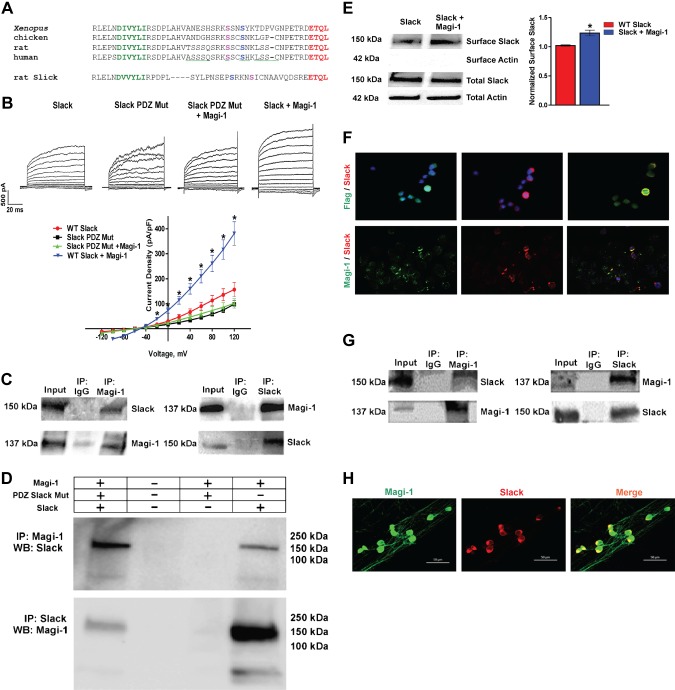
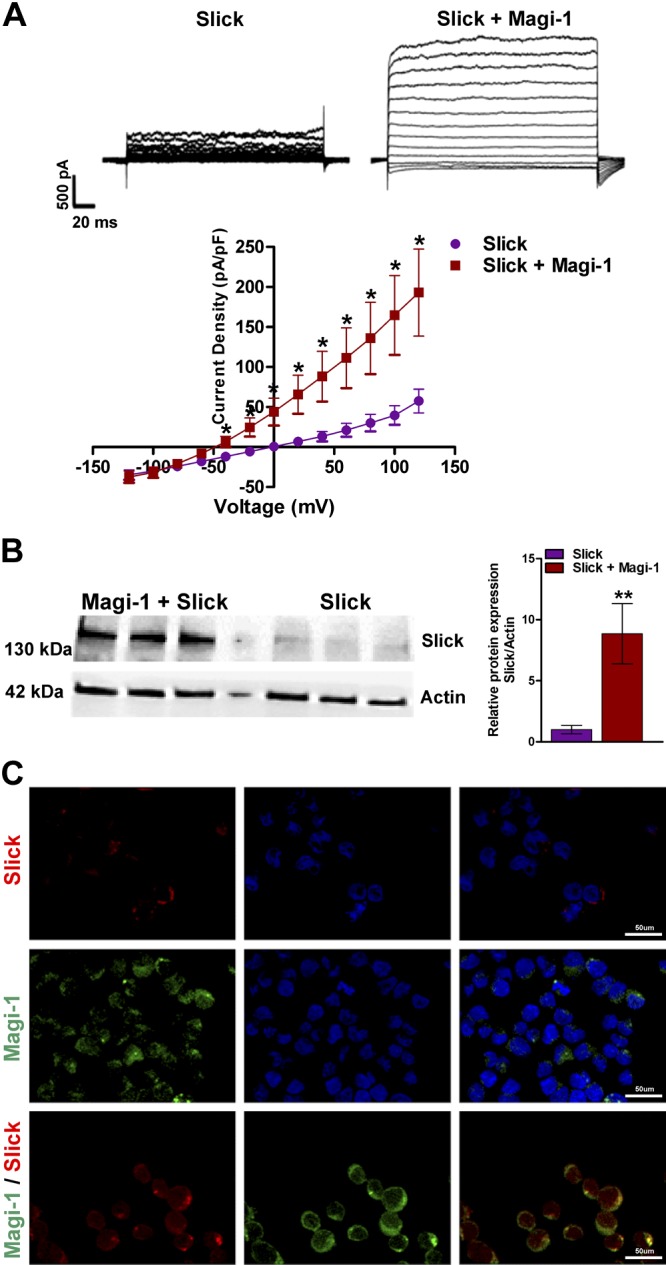
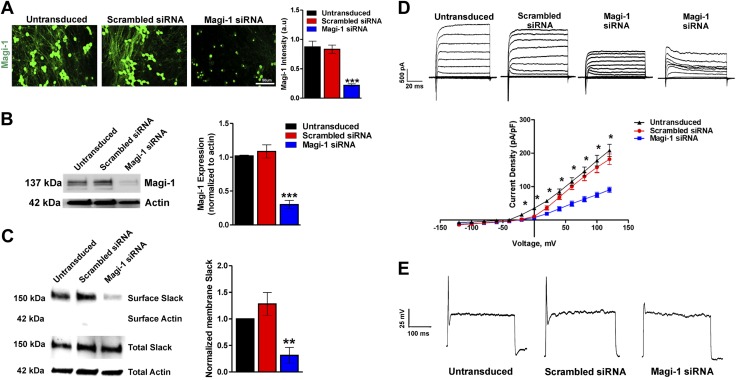
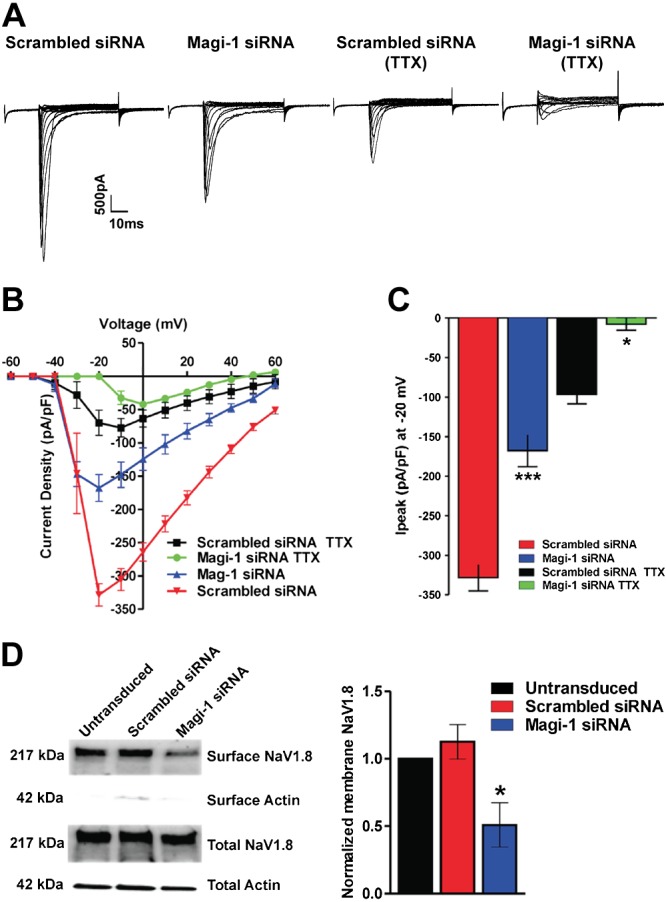
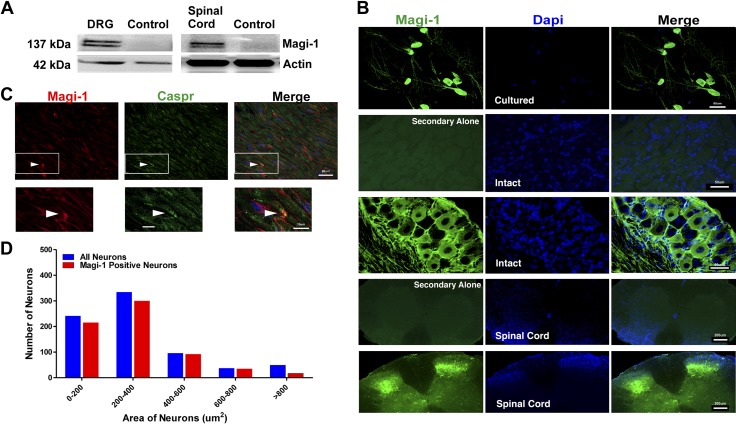
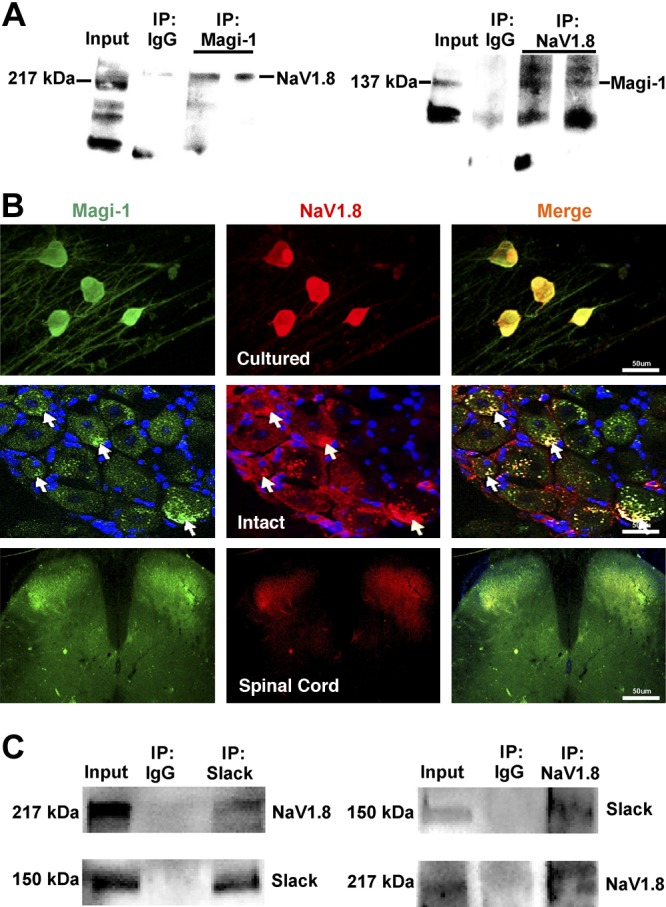
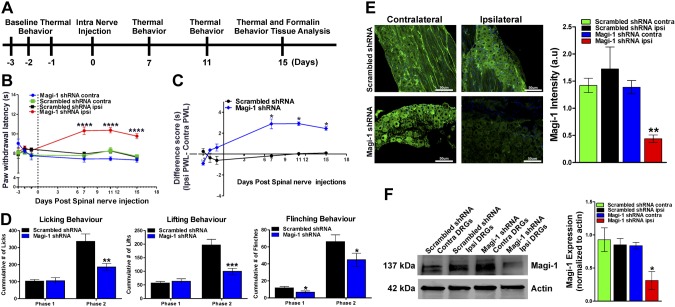
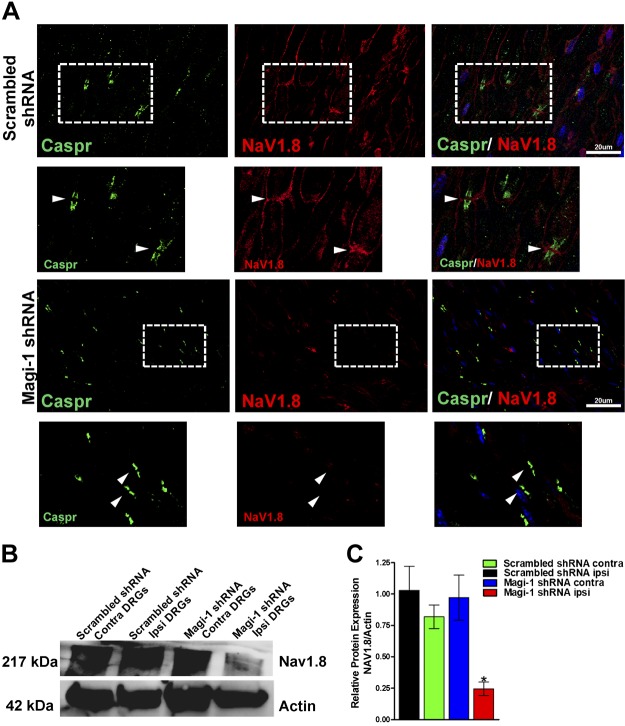
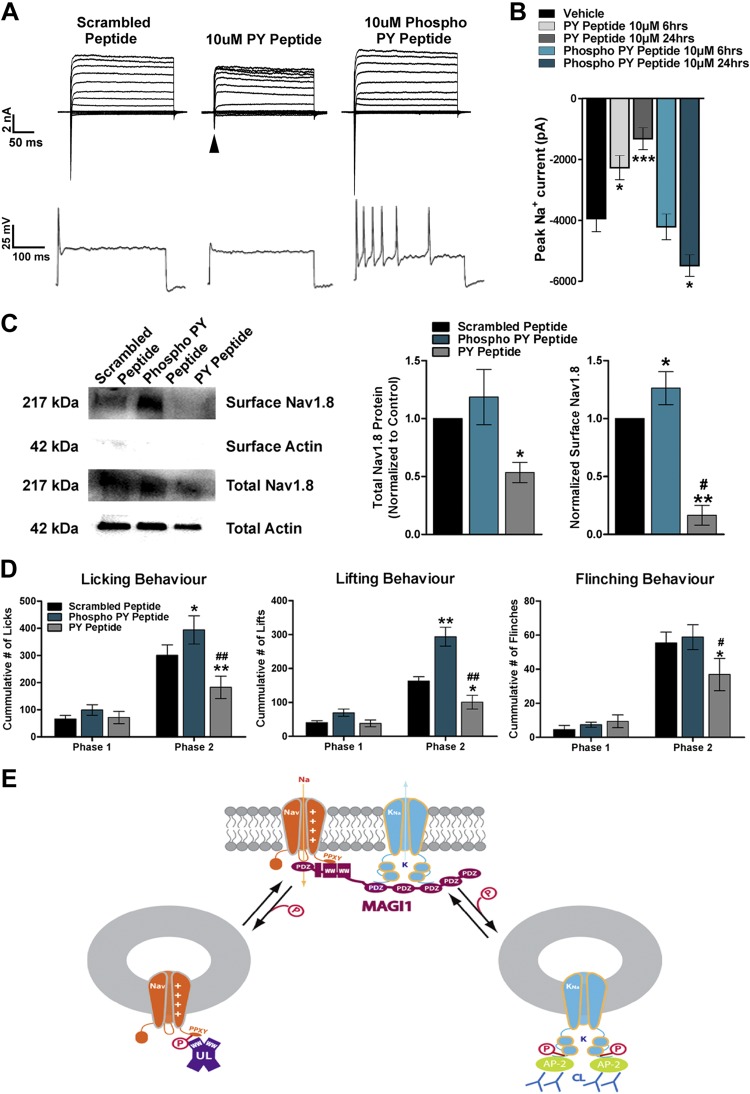
Voltage-dependent sodium (NaV) 1.8 channels regulate action potential generation in nociceptive neurons, identifying them as putative analgesic targets. Here, we show that NaV1.8 channel plasma membrane localization, retention, and stability occur through a direct interaction with the postsynaptic density-95/discs large/zonula occludens-1-and WW domain-containing scaffold protein called membrane-associated guanylate kinase with inverted orientation (Magi)-1. The neurophysiological roles of Magi-1 are largely unknown, but we found that dorsal root ganglion (DRG)-specific knockdown of Magi-1 attenuated thermal nociception and acute inflammatory pain and produced deficits in NaV1.8 protein expression. A competing cell-penetrating peptide mimetic derived from the NaV1.8 WW binding motif decreased sodium currents, reduced NaV1.8 protein expression, and produced hypoexcitability. Remarkably, a phosphorylated variant of the very same peptide caused an opposing increase in NaV1.8 surface expression and repetitive firing. Likewise, in vivo, the peptides produced diverging effects on nocifensive behavior. Additionally, we found that Magi-1 bound to sequence like a calcium-activated potassium channel sodium-activated (Slack) potassium channels, demonstrating macrocomplexing with NaV1.8 channels. Taken together, these findings emphasize Magi-1 as an essential scaffold for ion transport in DRG neurons and a central player in pain.-Pryce, K. D., Powell, R., Agwa, D., Evely, K. M., Sheehan, G. D., Nip, A., Tomasello, D. L., Gururaj, S., Bhattacharjee, A. Magi-1 scaffolds NaV1.8 and Slack KNa channels in dorsal root ganglion neurons regulating excitability and pain.
Keywords: nociception; peptidomimetics; potassium channels; sodium channels; trafficking.
Conflict of interest statement
The authors thank undergraduate students Kimberly Nguyen (State University of New York at Buffalo) and Morgan Paladino (University of Notre Dame, Notre Dame, ID, USA) for scoring the formalin behavior. The authors thank Dr. Wade Sigurdson (Jacobs School of Medicine and Biomedical Sciences, State University of New York at Buffalo) for assistance with microscopy for the immunofluorescence experiments. The authors thank Dr. Elsa Daurignac (Jacobs School of Medicine and Biomedical Research, State University of New York at Buffalo) for critical reading of this manuscript. D.A., K.M.E., D.L.T., and A.B. are also affiliated with the Program for Neuroscience at The State University of New York at Buffalo. This work was supported by the U.S. National Institutes of Health (NIH), National Institute of Neurological Disorders and Stroke Grant NS078184 (to A.B.). The authors declare no conflicts of interest.
Figures
References
-
- Akopian A. N., Souslova V., England S., Okuse K., Ogata N., Ure J., Smith A., Kerr B. J., McMahon S. B., Boyce S., Hill R., Stanfa L. C., Dickenson A. H., Wood J. N. (1999) The tetrodotoxin-resistant sodium channel SNS has a specialized function in pain pathways. Nat. Neurosci. 2, 541–548 - PubMed
-
- Tibbs G. R., Posson D. J., Goldstein P. A. (2016) Voltage-gated ion channels in the PNS: novel therapies for neuropathic pain? Trends Pharmacol. Sci. 37, 522–542 - PubMed
-
- Vijayaragavan K., Boutjdir M., Chahine M. (2004) Modulation of Nav1.7 and Nav1.8 peripheral nerve sodium channels by protein kinase A and protein kinase C. J. Neurophysiol. 91, 1556–1569 - PubMed
-
- Liu C., Li Q., Su Y., Bao L. (2010) Prostaglandin E2 promotes Na1.8 trafficking via its intracellular RRR motif through the protein kinase A pathway. Traffic 11, 405–417 - PubMed
Publication types
MeSH terms
Substances
Grants and funding
LinkOut - more resources
Full Text Sources
Other Literature Sources
Molecular Biology Databases
