


The face of postural tachycardia syndrome - insights from a large cross-sectional online community-based survey
- PMID: 30861229
- PMCID: PMC6790699
- DOI: 10.1111/joim.12895
The face of postural tachycardia syndrome - insights from a large cross-sectional online community-based survey
Abstract
Background: Patients with postural tachycardia syndrome (POTS) experience chronic symptoms of orthostatic intolerance. There are minimal data detailing the demographics, clinical features and clinical course of this condition. This online, community-based survey highlights patients' experience with POTS. It consists of the largest sample of POTS patients reported to date.
Objectives: To describe the demographics, past medical history, medications, treatments and diagnostic journey for patients living with POTS.
Methods: Postural tachycardia syndrome patients completed an online, community-based, cross-sectional survey. Participants were excluded if they had not received a diagnosis of POTS from a physician. The questions focused on the patient experience and journey, rather than physiological responses.
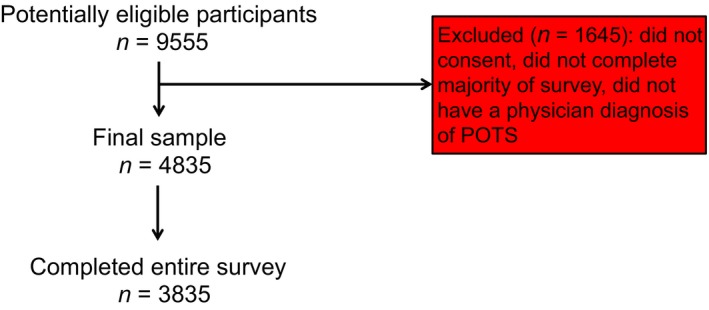
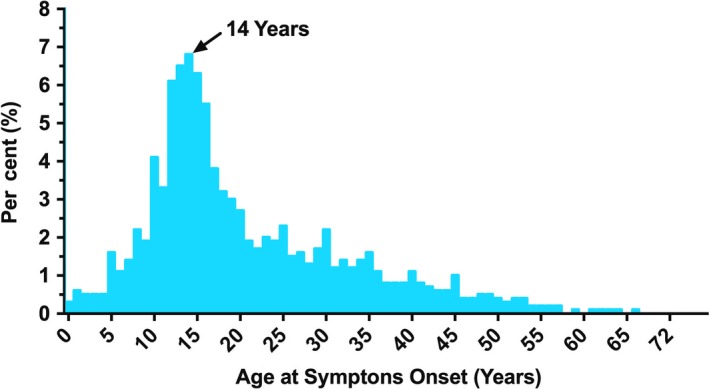
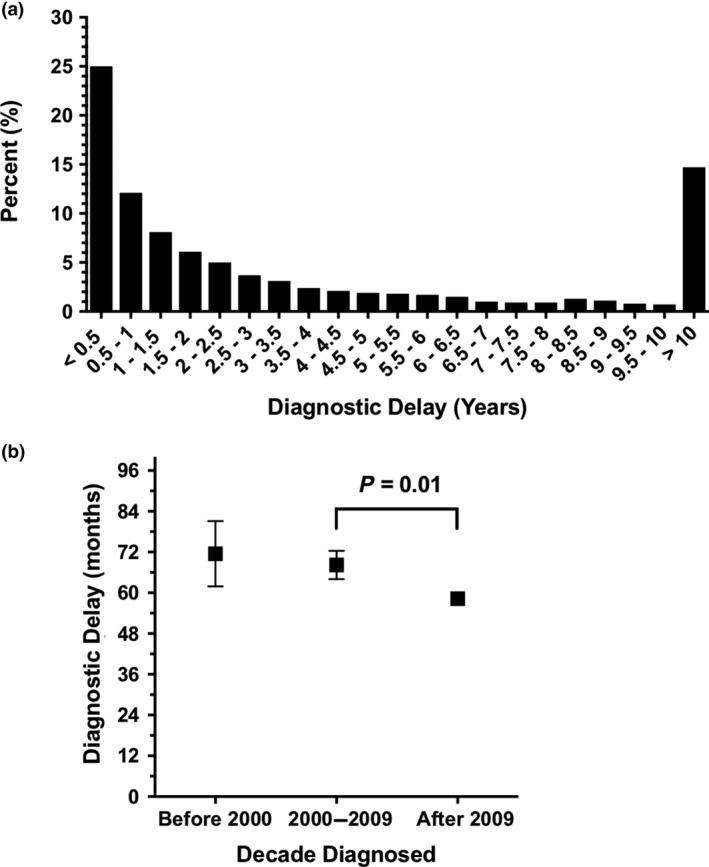
Results: The final analysis included 4835 participants. POTS predominantly affects white (93%) females (94%) of childbearing age, with approximately half developing symptoms in adolescence (mode 14 years). POTS is a chronic multisystem disorder involving a broad array of symptoms, with many patients diagnosed with comorbidities in addition to POTS. POTS patients often experience lengthy delays [median (interquartile range) 24 (6-72) months] and misdiagnosis, but the diagnostic delay is improving. POTS patients can present with a myriad of symptoms most commonly including lightheadedness (99%), tachycardia (97%), presyncope (94%), headache (94%) and difficulty concentrating (94%).
Conclusions: These data provide important insights into the background, clinical features and diagnostic journey of patients suffering from POTS. These data should serve as an essential step for moving forward with future studies aimed at early and accurate diagnoses of these patients leading to appropriate treatments for their symptoms.
Keywords: autonomic nervous system; orthostatic intolerance.
© 2019 The Authors. Journal of Internal Medicine published by John Wiley & Sons Ltd on behalf of Association for Publication of The Journal of Internal Medicine.
Conflict of interest statement
This work was supported in part by the National Heart, Lung, And Blood Institute of the National Institutes of Health under Award Number P01 HL056693, by the National Center for Advancing Translational Sciences Award UL1 TR000445. SRR receives research support from the Canadian Institutes of Health Research (CIHR; Ottawa, ON, Canada) grant MOP142426 and the Cardiac Arrhythmia Network of Canada (CANet; London, ON, Canada) grants SRG‐15‐P01‐001 and SRG‐17‐P27‐001.
Figures
Comment in
-
Unmasking the true face of postural orthostatic tachycardia syndrome.J Intern Med. 2019 Oct;286(4):481-483. doi: 10.1111/joim.12917. Epub 2019 May 7. J Intern Med. 2019. PMID: 30968485 No abstract available.
References
-
- Shen WK, Sheldon RS, Benditt DG et al 2017 ACC/AHA/HRS Guideline for the Evaluation and Management of Patients With Syncope: Executive Summary: A Report of the American College of Cardiology/American Heart Association Task Force on Clinical Practice Guidelines and the Heart Rhythm Society. J Am Coll Cardiol 2017; 70: 620–63. - PubMed
-
- Brignole M, Moya A, de Lange FJ et al 2018 ESC Guidelines for the diagnosis and management of syncope. Eur Heart J 2018; 39: 1883–948. - PubMed
-
- Freeman R, Wieling W, Axelrod FB et al Consensus statement on the definition of orthostatic hypotension, neurally mediated syncope and the postural tachycardia syndrome. Clin Auton Res 2011; 21: 69–72. - PubMed
-
- Fedorowski A. Postural Orthostatic Tachycardia Syndrome: clinical presentation, aetiology, and management. J Intern Med 2019; 285: 352–66. - PubMed
Publication types
MeSH terms
Grants and funding
LinkOut - more resources
Full Text Sources
Medical
Miscellaneous
