


Neuropathological lesions in the very old: results from a large Brazilian autopsy study
- PMID: 30861605
- PMCID: PMC6742578
- DOI: 10.1111/bpa.12719
Neuropathological lesions in the very old: results from a large Brazilian autopsy study
Abstract
Objective: To compare neuropathological correlates of cognitive impairment between very old and younger individuals from a Brazilian clinicopathological study.
Methods: We assessed the frequency of neuropathological lesions and their association with cognitive impairment (Clinical Dementia Rating scale ≥0.5) in the 80 or over age group compared to younger participants, using logistic regression models adjusted for sex, race and education.
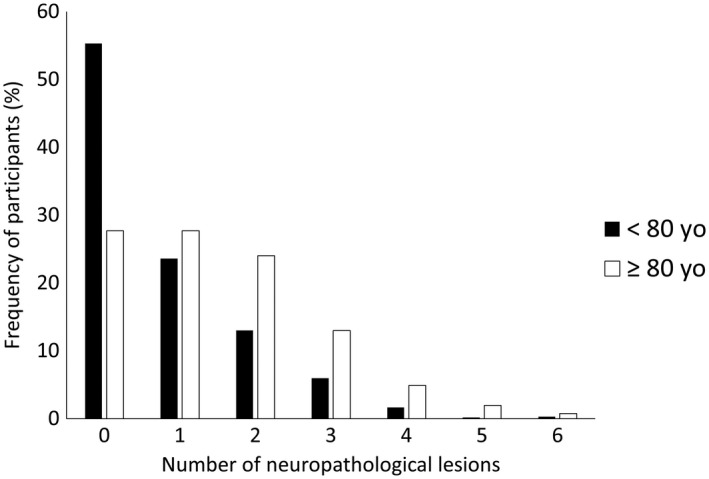
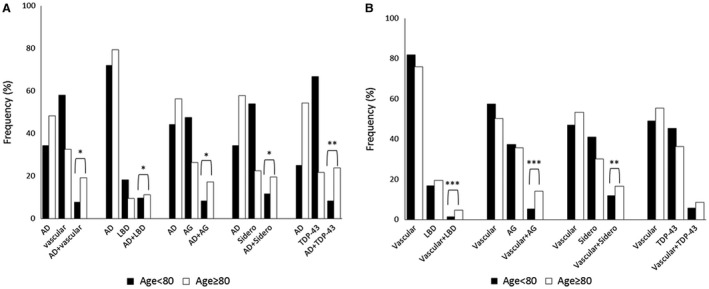
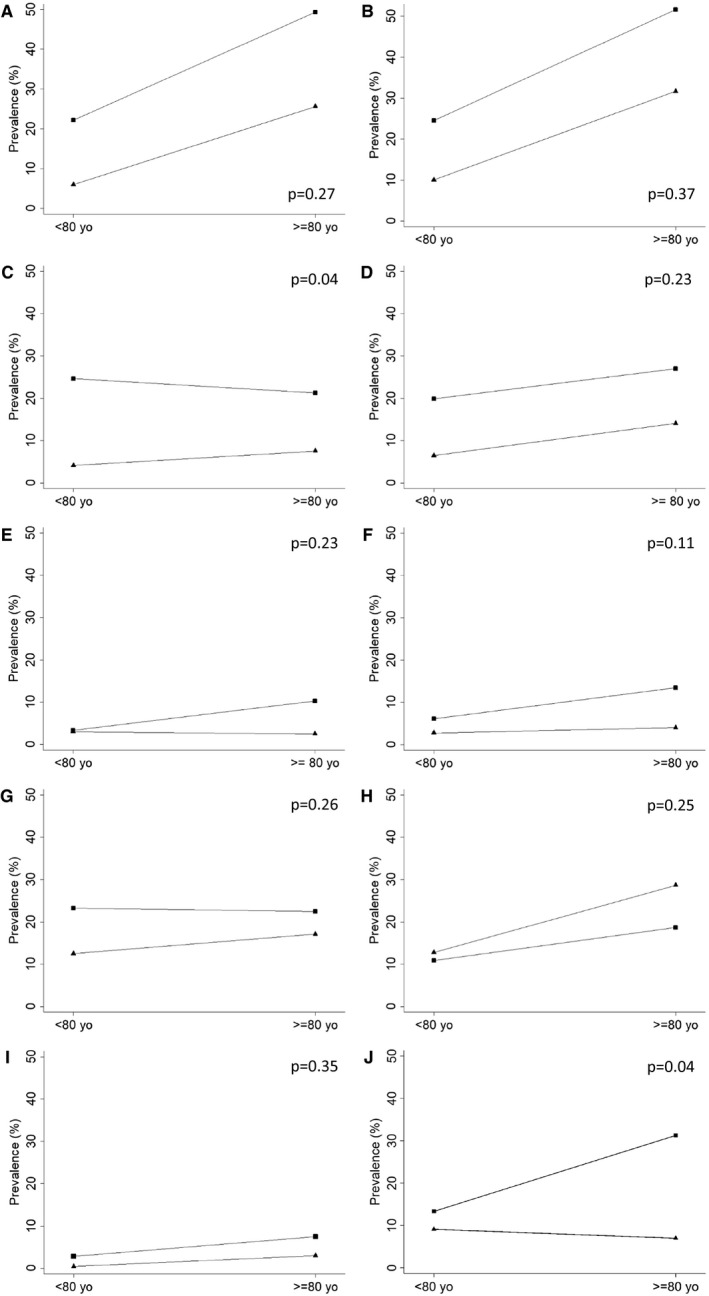
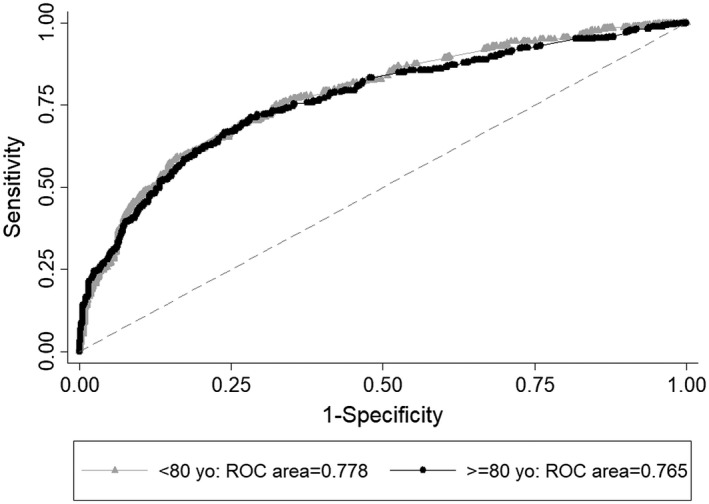
Results: Except for infarcts and siderocalcinosis, all neuropathological lesions were more common in the 80 or over age group (n = 412) compared to 50-79 year olds (n = 677). Very old participants had more than twice the likelihood of having ≥2 neuropathological diagnoses than younger participants (OR = 2.66, 95% CI = 2.03-3.50). Neurofibrillary tangles, infarcts and hyaline arteriolosclerosis were associated with cognitive impairment in the two age groups. Siderocalcinosis was associated with cognitive impairment in the younger participants only, while Lewy body disease was associated with cognitive impairment in the very old only. In addition, we found that the association of infarcts and multiple pathologies with cognitive impairment was attenuated in very old adults (Infarcts: P for interaction = 0.04; and multiple pathologies: P = 0.05). However, the predictive value for the aggregate model with all neuropathological lesions showed similar discrimination in both age groups [Area under Receiver Operating Characteristic curve (AUROC) = 0.778 in younger participants and AUROC = 0.765 in the very old].
Conclusion and relevance: Despite a higher frequency of neuropathological findings in the very old group, as found in studies with high-income populations, we found attenuation of the effect of infarcts rather than neurofibrillary tangles and plaques as reported previously.
Keywords: 80 and over; Alzheimer’s disease; aged; dementia; neuropathology; vascular dementia; very old.
© 2019 International Society of Neuropathology.
Conflict of interest statement
None
Figures
Comment in
-
Anthropometric rather than ethnic factors may explain differences in the incidence of Alzheimer-type neurodegenerative changes.Brain Pathol. 2020 Jan;30(1):203. doi: 10.1111/bpa.12796. Brain Pathol. 2020. PMID: 31593322 Free PMC article. No abstract available.
-
Response letter: neuropathological lesions in the very old.Brain Pathol. 2020 Jan;30(1):204. doi: 10.1111/bpa.12795. Brain Pathol. 2020. PMID: 31596998 Free PMC article. No abstract available.
References
-
- Alzheimer's Association (2017) 2017 Alzheimer's disease facts and figures. Alzheimer's Dementia 13:325–373.
-
- Braak H, Braak E (1989) Cortical and subcortical argyrophilic grains characterize a disease associated with adult onset dementia. Neuropathol Appl Neurobiol 15:13–26. - PubMed
-
- Braak H, Braak E (1991) Neuropathological staging of Alzheimer‐related changes. Acta Neuropathologica 82:239–259. - PubMed
-
- Braak H, Del Tredici K, Rub U, de Vos RA, Jansen Steur EN, Braak E (2003) Staging of brain pathology related to sporadic Parkinson's disease. Neurobiol Aging 24:197–211. - PubMed
