Clinical Pharmacology of Antibiotics
- PMID: 30862698
- PMCID: PMC6625637
- DOI: 10.2215/CJN.08140718
Clinical Pharmacology of Antibiotics
Abstract
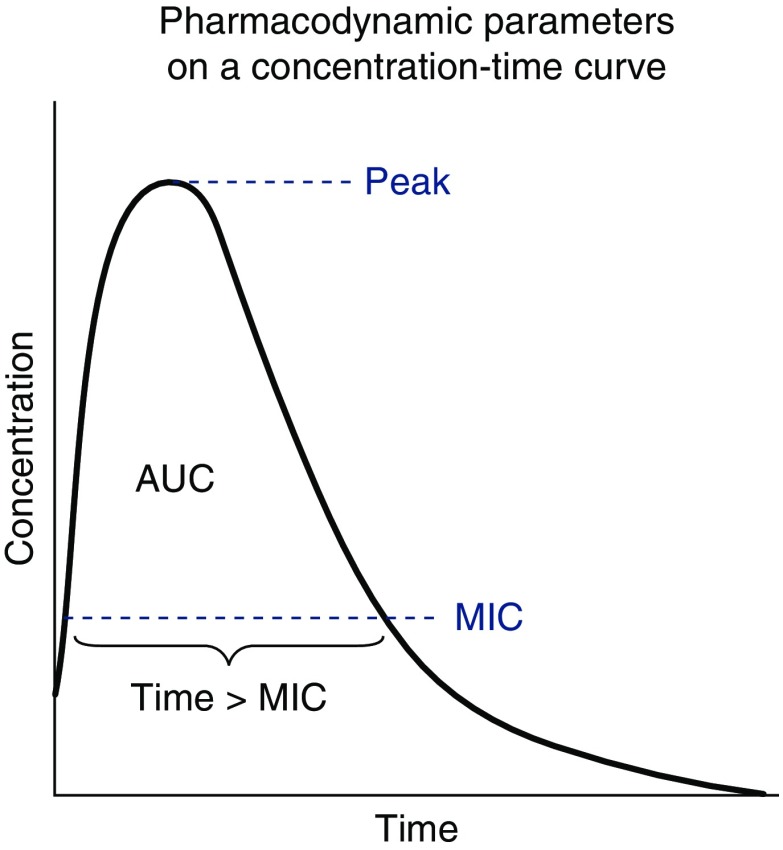
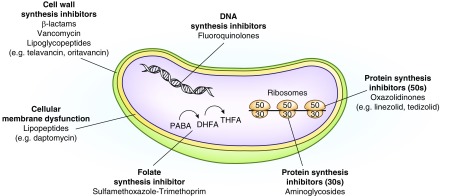
Antimicrobial pharmacology and its effect on prescribing is quite complex. Selecting an antibiotic that will optimally treat an infection while minimizing adverse effects and the development of resistance is only the first step, as one must also consider the patient's individual pharmacokinetic alterations and the pharmacodynamic properties of the drug when prescribing it as well. Patients with CKD may have alterations in their protein binding, volumes of distribution, kidney clearance, and nonrenal clearance that necessitates antibiotic dose adjustments to prevent the development of toxicity. Knowledge of a drug's pharmacodynamics, defined as the relationship between drug exposure and antibacterial efficacy, provides some guidance regarding the optimal way to make dose adjustments. Different pharmacodynamic goals, such as maximizing the time that free (unbound) drug concentrations spend above the minimum inhibitory concentration (MIC) for time dependent drugs (e.g., β-lactams) or maximizing the free peak-to-MIC ratio for concentration-dependent antibiotics (e.g., aminoglycosides), require different adjustment strategies; for instance, decreasing the dose while maintaining normal dosing frequency or giving normal (or even larger) doses less frequently, respectively. Patients receiving hemodialysis have other important prescribing considerations as well. The nephrologist or patient may prefer to receive antibiotics that can be administered intravenously toward the end of a dialysis session. Additionally, newer dialysis technologies and filters can increase drug removal more than originally reported. This review will discuss the place in therapy, mechanism of action, pharmacokinetic, pharmacodynamic, and other pharmacologic considerations encountered when prescribing commonly used antibiotics in patients with chronic kidney disease or ESKD.
Keywords: Aminoglycosides; Anti-Bacterial Agents; Anti-Infective Agents; Kidney Failure, Chronic; Lactams; Metabolic Clearance Rate; Microbial Sensitivity Tests; Protein Binding; Renal Insufficiency, Chronic; antibiotics; chronic renal disease; end-stage renal disease; hemodialysis; pharmacodynamics; pharmacokinetics; pharmacology; renal dialysis.
Copyright © 2019 by the American Society of Nephrology.
Figures
References
-
- Chavers BM, Solid CA, Gilbertson DT, Collins AJ: Infection-related hospitalization rates in pediatric versus adult patients with end-stage renal disease in the United States. J Am Soc Nephrol 18: 952–959, 2007 - PubMed
-
- Eyler RF, Mueller BA: Antibiotic pharmacokinetic and pharmacodynamic considerations in patients with kidney disease. Adv Chronic Kidney Dis 17: 392–403, 2010 - PubMed
Publication types
MeSH terms
Substances
LinkOut - more resources
Full Text Sources
Medical