


Resveratrol attenuates hydrogen peroxide-induced aging through upregulation of autophagy in human umbilical vein endothelial cells
- PMID: 30863014
- PMCID: PMC6391141
- DOI: 10.2147/DDDT.S179894
Resveratrol attenuates hydrogen peroxide-induced aging through upregulation of autophagy in human umbilical vein endothelial cells
Abstract
Purpose: Resveratrol (RESV; trans-3,5,4'-trihydroxystilbene) has emerged as a potential new therapeutic for age-related atherosclerotic diseases. However, the effect of RESV on cellular aging and its underlying mechanisms remain unknown. Therefore, the aim of this study was to examine whether RESV can delay cellular aging through upregulation of autophagy.
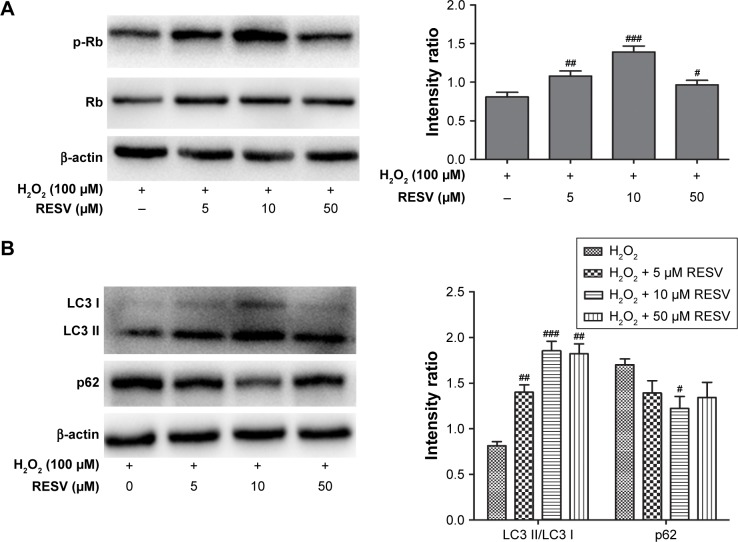
Materials and methods: Human umbilical endothelial vein cells (HUVECs) were divided into four groups: the control group, and the hydrogen peroxide (H2O2) alone, H2O2 + RESV pretreatment, and H2O2 + 3-methyladenine (3-MA) + RESV pretreatment intervention groups. The cell viability was evaluated by a cell counting kit-8 assay. Superoxide dismutase (SOD) activity and intracellular reactive oxygen species (ROS) levels were tested using commercial kits. Senescence-related β-galactosidase activities were detected by immunohistochemical staining. The expression levels of aging-related and autophagy-related markers, including phosphorylated Rb (p-Rb), LC3, and p62, with or without RESV were measured by Western blotting.
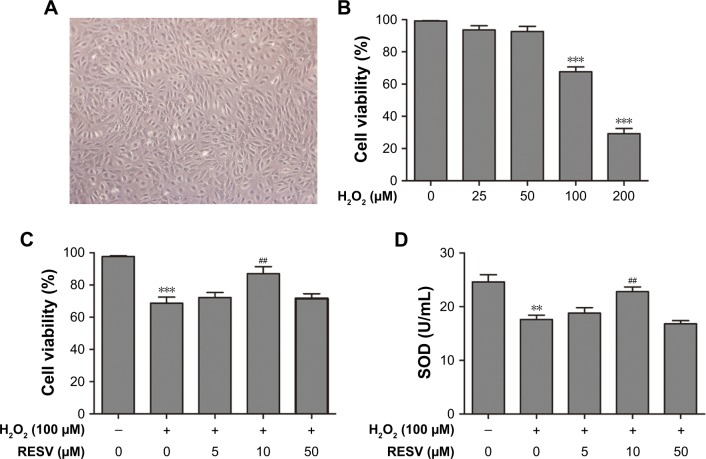
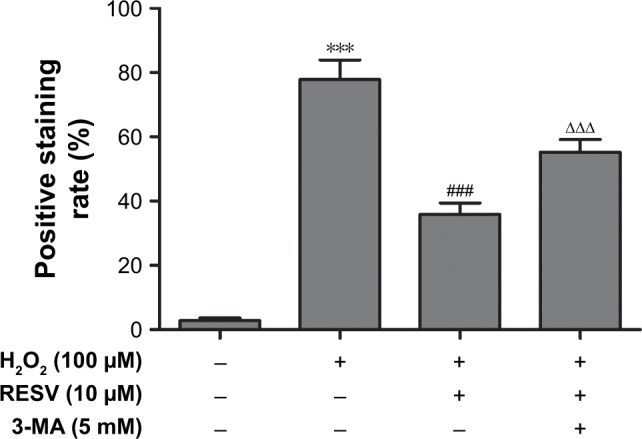
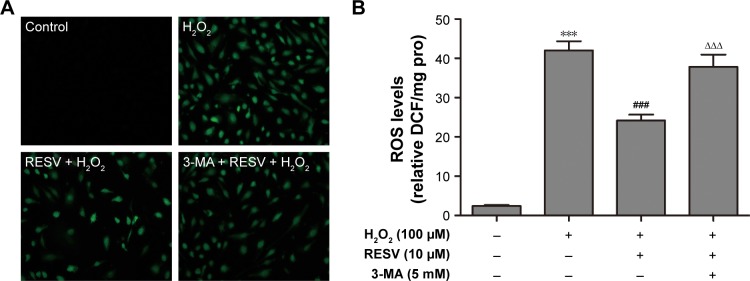
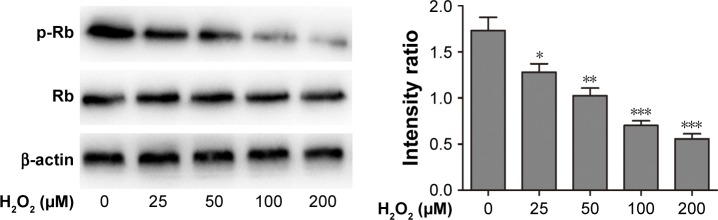
Results: Pretreatment with 10 µM RESV increased the cell viability and SOD levels. The remarkably higher positive rate of senescence-associated β-galactosidase and increased intracellular ROS levels in the H2O2 treatment group were reversed by treatment with 10 µM RESV. As compared to the H2O2 treatment group, 10 µM RESV could upregulate autophagy through the regulation of p-Rb, LC3, and p62 levels. The anti-aging effect of RESV via an autophagy regulation mechanism was further confirmed by the suppression of these effects with 3-MA treatment.
Conclusion: RESV may reverse and delay the aging process of HUVECs via upregulation of autophagy and could be a candidate therapeutic for age-related atherosclerotic diseases.
Keywords: LC3; oxidative stress; p-Rb; p62; senescence.
Conflict of interest statement
Disclosure The authors report no conflict of interest in this work.
Figures

References
-
- Niemann J, Johne C, Schröder S, et al. An mtDNA mutation accelerates liver aging by interfering with the ROS response and mitochondrial life cycle. Free Radic Biol Med. 2017;102:174–187. - PubMed
MeSH terms
Substances
LinkOut - more resources
Full Text Sources
Research Materials
