


Mechanisms of Ferroptosis and Relations With Regulated Cell Death: A Review
- PMID: 30863316
- PMCID: PMC6399426
- DOI: 10.3389/fphys.2019.00139
Mechanisms of Ferroptosis and Relations With Regulated Cell Death: A Review
Abstract
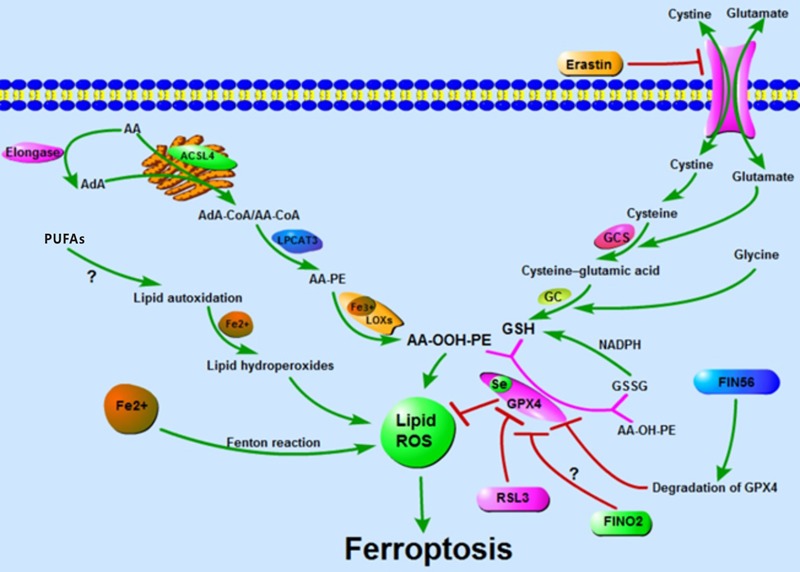
Ferroptosis is a newly identified form of nonapoptotic regulated cell death (RCD) characterized by iron-dependent accumulation of lipid peroxides. It is morphologically and biochemically different from known types of cell death. Ferroptosis plays a vital role in the treatment of tumors, renal failure, and ischemia reperfusion injury (IRI). Inhibition of glutathione peroxidase 4 (GPX4), starvation of cysteine, and peroxidation of arachidonoyl (AA) trigger ferroptosis in the cells. Iron chelators, lipophilic antioxidants, and specific inhibitor prevent ferroptosis. Although massive researches have demonstrated the importance of ferroptosis in human, its mechanism is not really clear. In this review, we distanced ourselves from this confusion by dividing the mechanisms of ferroptosis into two aspects: processes that facilitate the formation of lipid peroxides and processes that suppress the reduction of lipid peroxides. At the same time, we summarize the relations between ferroptosis and several types of cell death.
Keywords: GPX4; RCD; ferroptosis; iron; lipid autoxidation; lipid peroxides.
Figures
References
-
- Arrigo A. P., Virot S., Chaufour S., Firdaus W., Kretz-Remy C., Diaz-Latoud C. (2005). Hsp27 consolidates intracellular redox homeostasis by upholding glutathione in its reduced form and by decreasing iron intracellular levels. Antioxid. Redox Signal. 7 414–422. 10.1089/ars.2005.7.414 - DOI - PubMed
Publication types
LinkOut - more resources
Full Text Sources
Other Literature Sources
