


" Every Newborn-BIRTH" protocol: observational study validating indicators for coverage and quality of maternal and newborn health care in Bangladesh, Nepal and Tanzania
- PMID: 30863542
- PMCID: PMC6406050
- DOI: 10.7189/jogh.09.010902
" Every Newborn-BIRTH" protocol: observational study validating indicators for coverage and quality of maternal and newborn health care in Bangladesh, Nepal and Tanzania
Abstract
Background: To achieve Sustainable Development Goals and Universal Health Coverage, programmatic data are essential. The Every Newborn Action Plan, agreed by all United Nations member states and >80 development partners, includes an ambitious Measurement Improvement Roadmap. Quality of care at birth is prioritised by both Every Newborn and Ending Preventable Maternal Mortality strategies, hence metrics need to advance from health service contact alone, to content of care. As facility births increase, monitoring using routine facility data in DHIS2 has potential, yet validation research has mainly focussed on maternal recall surveys. The Every Newborn - Birth Indicators Research Tracking in Hospitals (EN-BIRTH) study aims to validate selected newborn and maternal indicators for routine tracking of coverage and quality of facility-based care for use at district, national and global levels.
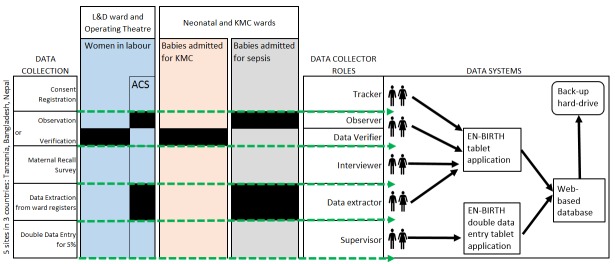
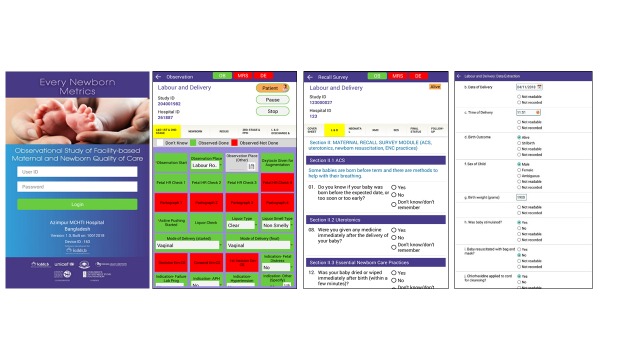
Methods: EN-BIRTH is an observational study including >20 000 facility births in three countries (Tanzania, Bangladesh and Nepal) to validate selected indicators. Direct clinical observation will be compared with facility register data and a pre-discharge maternal recall survey for indicators including: uterotonic administration, immediate newborn care, neonatal resuscitation and Kangaroo mother care. Indicators including neonatal infection management and antenatal corticosteroid administration, which cannot be easily observed, will be validated using inpatient records. Trained clinical observers in Labour/Delivery ward, Operation theatre, and Kangaroo mother care ward/areas will collect data using a tablet-based customised data capturing application. Sensitivity will be calculated for numerators of all indicators and specificity for those numerators with adequate information. Other objectives include comparison of denominator options (ie, true target population or surrogates) and quality of care analyses, especially regarding intervention timing. Barriers and enablers to routine recording and data usage will be assessed by data flow assessments, quantitative and qualitative analyses.
Conclusions: To our knowledge, this is the first large, multi-country study validating facility-based routine data compared to direct observation for maternal and newborn care, designed to provide evidence to inform selection of a core list of indicators recommended for inclusion in national DHIS2. Availability and use of such data are fundamental to drive progress towards ending the annual 5.5 million preventable stillbirths, maternal and newborn deaths.
Conflict of interest statement
Competing interests: The authors completed the Unified Competing Interest form at www.icmje.org/coi_disclosure.pdf (available upon request from the corresponding author), and declare no conflicts of interest.
Figures
References
-
- United Nations. Sustainable Development Goals. 2016. Available: http://www.un.org/sustainabledevelopment/health/. Accessed: 5 April 2018.
-
- United Nations. Global Strategy for Women's, Children's and Adolescents' Health, 2016-2030. New York: United Nations; 2015.
-
- UN IGME. Levels and Trends in Child Mortality Report 2018. Estimates developed by United Nations inter-agency group for child mortality estimation (UN IGME). New York: United Nations Children's Fund: 2018.
-
- World Health Organization, UNFPA, World Bank Group, United Nations Population Division. Trends in maternal mortality: 1990 to 2015: estimates by WHO, UNICEF, UNFPA, World Bank Group and the United Nations Population Division. Available: http://www.who.int/reproductivehealth/publications/monitoring/maternal-m.... Accessed: 4 December 2018.
Publication types
MeSH terms
Grants and funding
LinkOut - more resources
Full Text Sources
Molecular Biology Databases
Research Materials