Potential of oxygen and nitrogen reactive intermediates to disperse Listeria monocytogenes from biofilms
- PMID: 30864077
- PMCID: PMC6863260
- DOI: 10.1007/s42770-019-00069-3
Potential of oxygen and nitrogen reactive intermediates to disperse Listeria monocytogenes from biofilms
Abstract
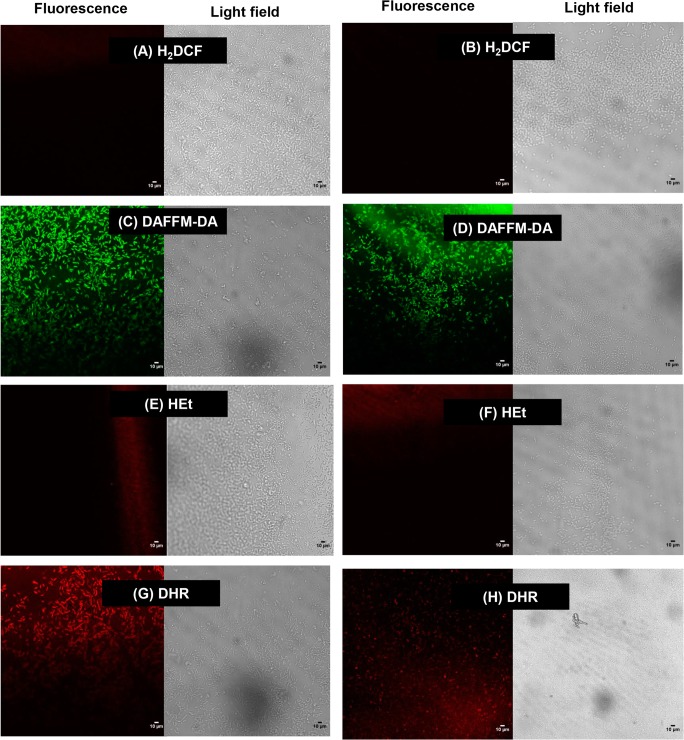
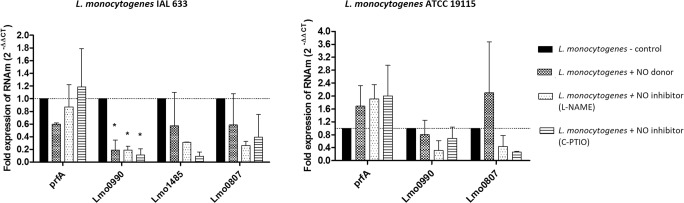
Studying biofilm dispersal is important to prevent Listeria monocytogenes persistence in food processing plants and to avoid finished product contamination. Reactive oxygen and nitrogen intermediates (ROI and RNI, respectively) may trigger cell detachment from many bacterial species biofilms, but their roles in L. monocytogenes biofilms have not been fully investigated. This study reports on ROI and RNI quantification in Listeria monocytogenes biofilms formed on stainless steel and glass surfaces; bacterial culture and microscopy combined with fluorescent staining were employed. Nitric oxide (NO) donor and inhibitor putative effects on L. monocytogenes dispersal from biofilms were evaluated, and transcription of genes (prfA, lmo 0990, lmo 0807, and lmo1485) involved in ROI and RNI stress responses were quantified by real-time PCR (qPCR). Microscopy detected the reactive intermediates NO, peroxynitrite, H2O2, and superoxide in L. monocytogenes biofilms. Neither NO donor nor inhibitors interfered in L. monocytogenes growth and gene expression, except for lmo0990, which was downregulated. In conclusion, ROI and RNI did not exert dispersive effects on L. monocytogenes biofilms, indicating that this pathogen has a tight control for protection against oxidative and nitrosative stresses.
Keywords: Dispersal; RNI; ROI; Reactive nitrogen intermediate; Reactive oxygen intermediate.
Conflict of interest statement
The authors declare that they have no conflict of interest.
Figures
References
MeSH terms
Substances
LinkOut - more resources
Full Text Sources