Comparative Study
. 2019 Mar 12;20(1):205.
doi: 10.1186/s12864-019-5554-z.

Epigenomics in an extraterrestrial environment: organ-specific alteration of DNA methylation and gene expression elicited by spaceflight in Arabidopsis thaliana

Affiliations
Comparative Study

Epigenomics in an extraterrestrial environment: organ-specific alteration of DNA methylation and gene expression elicited by spaceflight in Arabidopsis thaliana

Mingqi Zhou et al. BMC Genomics. .

Abstract

Background: Plants adapted to diverse environments on Earth throughout their evolutionary history, and developed mechanisms to thrive in a variety of terrestrial habitats. When plants are grown in the novel environment of spaceflight aboard the International Space Station (ISS), an environment completely outside their evolutionary history, they respond with unique alterations to their gene expression profile. Identifying the genes important for physiological adaptation to spaceflight and dissecting the biological processes and pathways engaged by plants during spaceflight has helped reveal spaceflight adaptation, and has furthered understanding of terrestrial growth processes. However, the underlying regulatory mechanisms responsible for these changes in gene expression patterns are just beginning to be explored. Epigenetic modifications, such as DNA methylation at position five in cytosine, has been shown to play a role in the physiological adaptation to adverse terrestrial environments, and may play a role in spaceflight as well.

Results: Whole Genome Bisulfite Sequencing of DNA of Arabidopsis grown on the ISS from seed revealed organ-specific patterns of differential methylation compared to ground controls. The overall levels of methylation in CG, CHG, and CHH contexts were similar between flight and ground DNA, however, thousands of specifically differentially methylated cytosines were discovered, and there were clear organ-specific differences in methylation patterns. Spaceflight leaves had higher methylation levels in CHG and CHH contexts within protein-coding genes in spaceflight; about a fifth of the leaf genes were also differentially regulated in spaceflight, almost half of which were associated with reactive oxygen signaling.

Conclusions: The physiological adaptation of plants to spaceflight is likely nuanced by epigenomic modification. This is the first examination of differential genomic methylation from plants grown completely in the spaceflight environment of the ISS in plant growth hardware developed for informing exploration life support strategies. Yet even in this optimized plant habitat, plants respond as if stressed. These data suggest that gene expression associated with physiological adaptation to spaceflight is regulated in part by methylation strategies similar to those engaged with familiar terrestrial stress responses. The differential methylation maps generated here provide a useful reference for elucidating the layers of regulation of spaceflight responses.

Keywords: Arabidopsis; DNA methylation; Epigenetic; Epigenome; ISS; Microgravity; Spaceflight; Transcriptome; Veggie.


Conflict of interest statement

Ethics approval and consent to participate

Not applicable.

Consent for publication

Not applicable.

Competing interests

The authors declare that they have no competing interests.

Publisher’s Note

Springer Nature remains neutral with regard to jurisdictional claims in published maps and institutional affiliations.

Figures
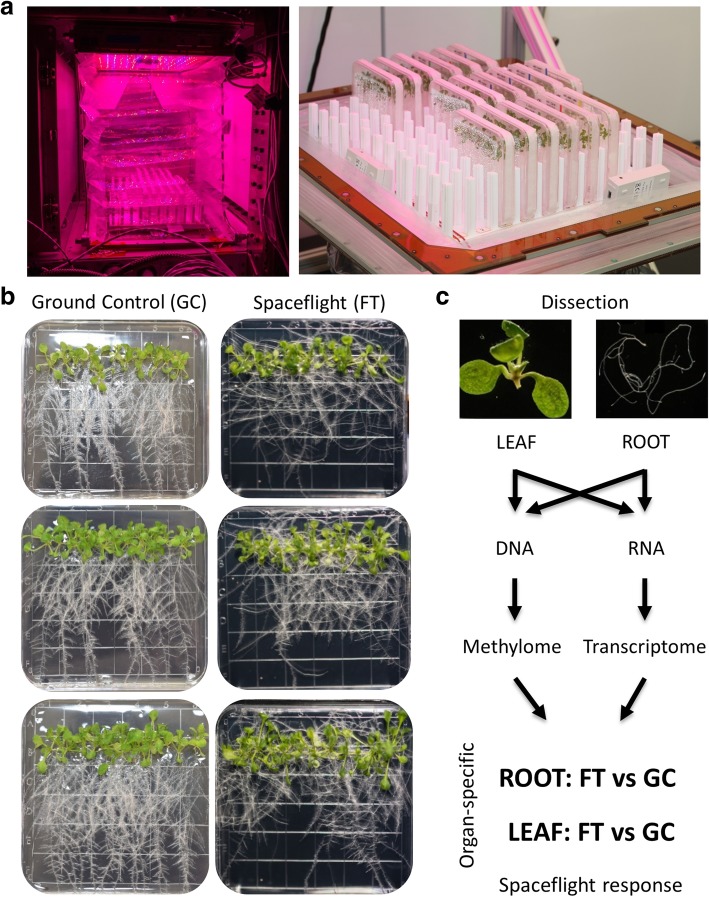
Fig. 1
Fig. 1
The phenotype of Arabidopsis seedlings grown on the ISS and on the ground. a A view of the APEX03–2 experiment growing inside Veggie on the ISS (left) and a view of plates installed in the ground Veggie unit to illustrate the configuration of plates installed vertically in racks. b Arabidopsis thaliana (WS) seedlings were grown under constant LED light conditions in the Vegetable Production System (VPS/Veggie) hardware on the Columbus Module of the ISS for 11 days. Corresponding ground control plants were grown in the Veggie hardware within the ISS Environmental Simulation (ISSES) chamber at Kennedy Space Center for 11 days. Each plate was considered a biological replicate and a total of 6 plates were used in this experiment. All three biological replicates for both spaceflight and ground control are represented. c The workflow of transcriptome and DNA methylome analysis. Plant materials harvested in RNAlater were dissected into root and leaf tissues. Total RNA & DNA were isolated separately, and the differential analyses were conducted in an organ-specific manner comparing the effects of spaceflight (FT) vs ground control (GC) in the roots and leaves
Fig. 2
Fig. 2
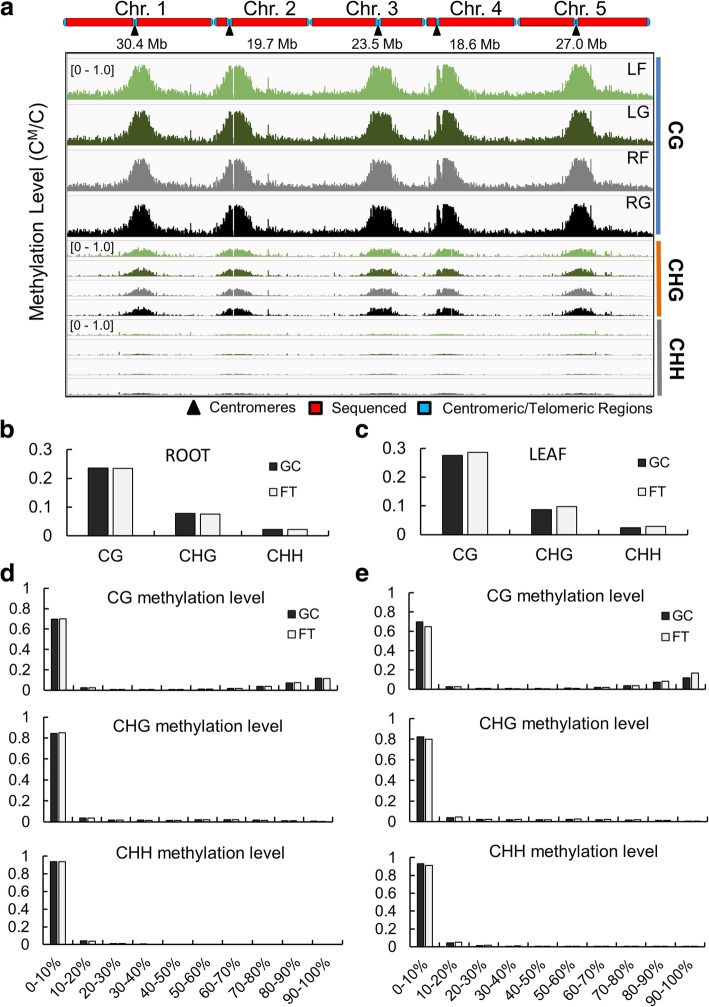
Overview of genome wide DNA methylation levels. a Methylation level of CG, CHG and CHH contexts across chromosomes 1–5 in roots and leaves grown in spaceflight (RF and LF) and roots and leaves grown on the ground (RG and LG) were visualized using Integrative Genomics Viewer (IGV) (http://software.broadinstitute.org/software/igv/). Average methylation level of whole genome in root (b) and leaf (c) samples are shown. The proportion of CG, CHG and CHH contexts in ten individual bins corresponding to different methylation levels are listed for root (d) and leaf (e) samples
Fig. 3
Fig. 3
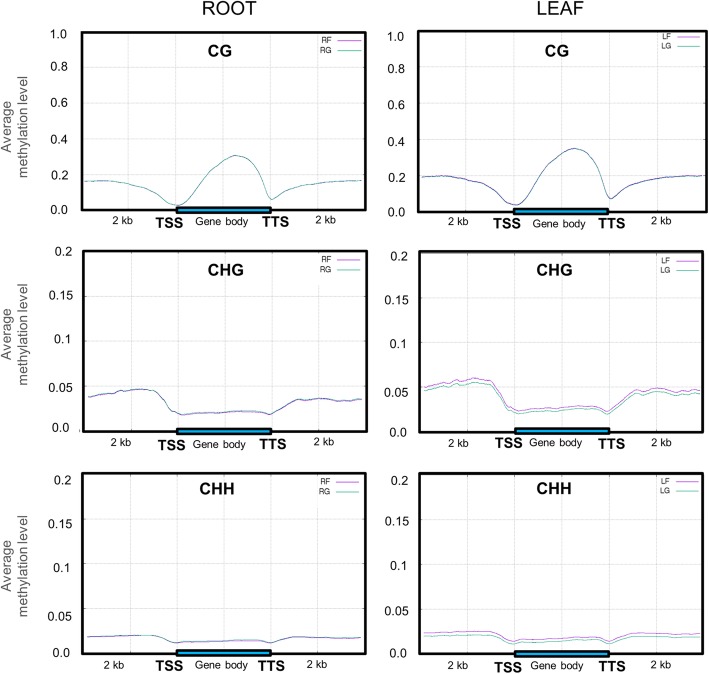
Average methylation levels across protein-coding genes in CG, CHG and CHH contexts. Gene bodies (highlighted by blue bar) as well as flanking regions 2 kb upstream from transcription start site (TSS) and 2 kb downstream from transcription termination site (TTS) are shown in the plots. Roots and leaves grown on the ISS (RF and LF) are indicated by magenta lines, whereas roots and leaves grown on the ground (RG and LG) are indicated by teal lines
Fig. 4
Fig. 4
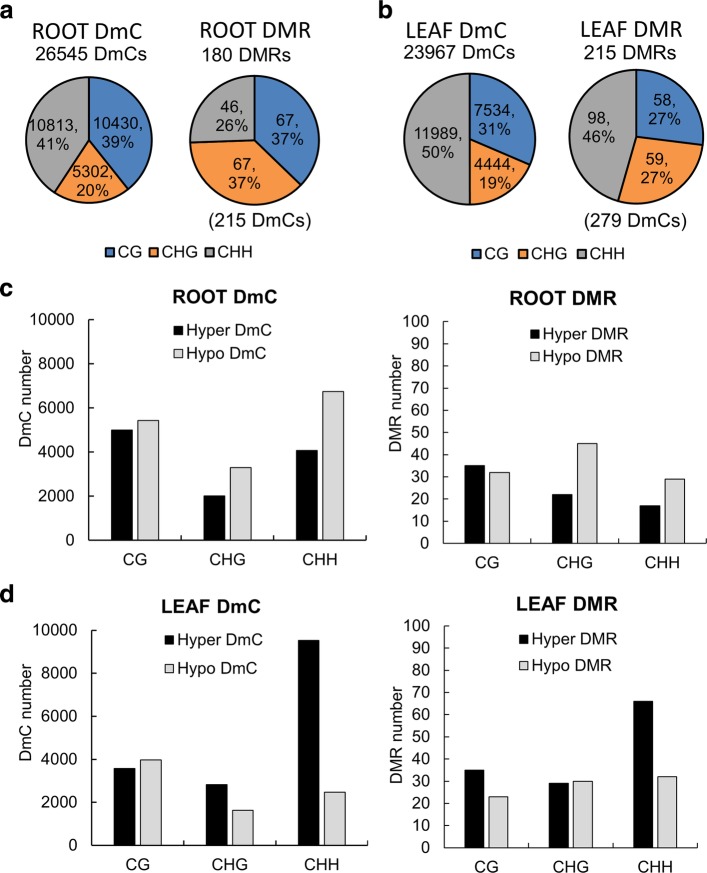
Global analysis of DmCs and DMRs in roots and leaves. Total number of differentially methylated cytosine sites (DmCs), differentially methylated regions (DMRs), number of DmCs within DMRs, and percentage of differential methylation in CG, CHG and CHH contexts of DmCs and DMRs in roots (a) and leaves (b). Context breakdown of the number of hyper−/hypo- DmCs and DMRs in roots (c) and leaves (d)
Fig. 5
Fig. 5
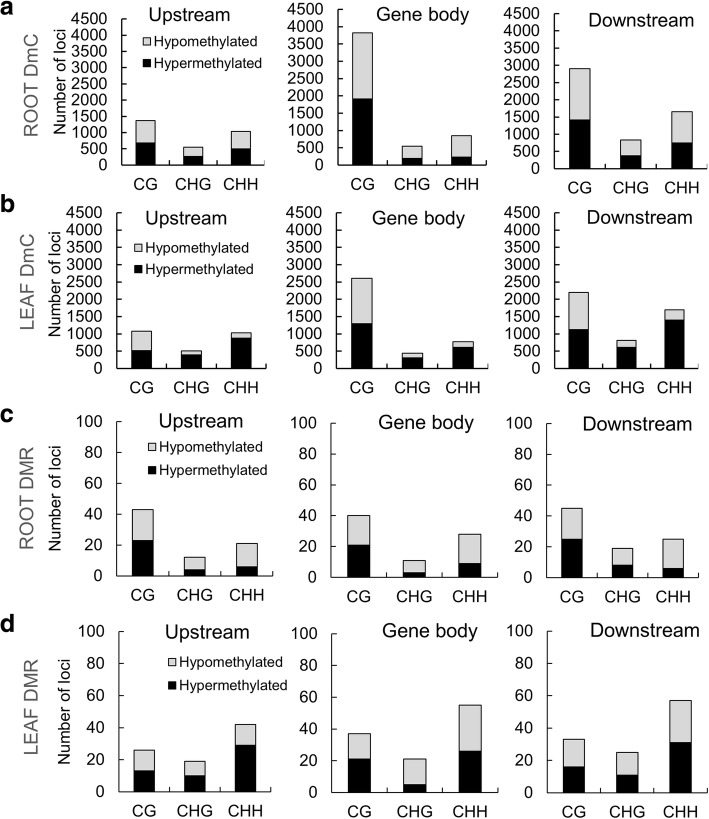
Context breakdown of gene-related DmCs and DMRs. a-b Numbers of gene loci affected by hyper- and hypo-DmC in gene bodies, 2 kb upstream from transcription start site, and 2 kb downstream from transcription termination site in response to spaceflight. c-d Numbers of gene loci affected by hyper and hypo-DMRs are mapped to the gene-associated regions described above
Fig. 6
Fig. 6
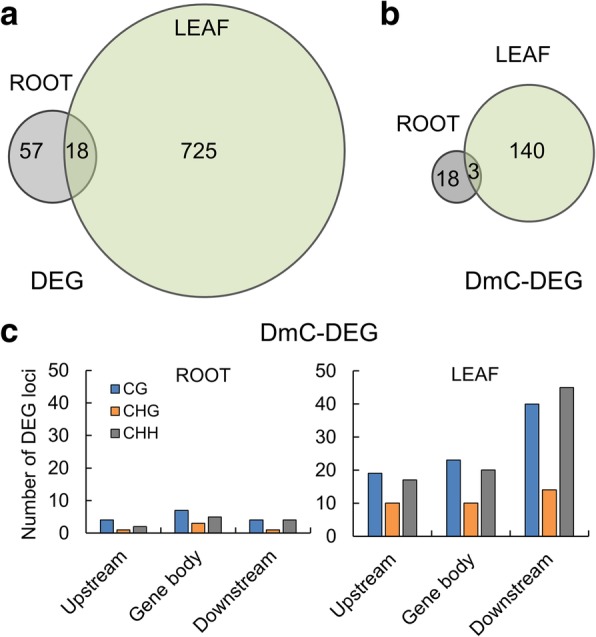
Relationship between DEGs and gene-related DmCs. a Venn diagram of differentially expressed genes (DEGs) overlapped in roots and leaves. Eight hundred DEGs in roots or leaves between spaceflight and ground control had statistical significance (FDR < 0.05) with a fold-change of at least 2. b Venn diagram of the number DEGs mapped with DmCs in roots and leaves. c Numbers of DEGs in root and leaf that mapped with DmC in each methylation context of the various gene structures (2 kb upstream of TSS, gene body, and 2 kb downstream of TTS)
Fig. 7
Fig. 7
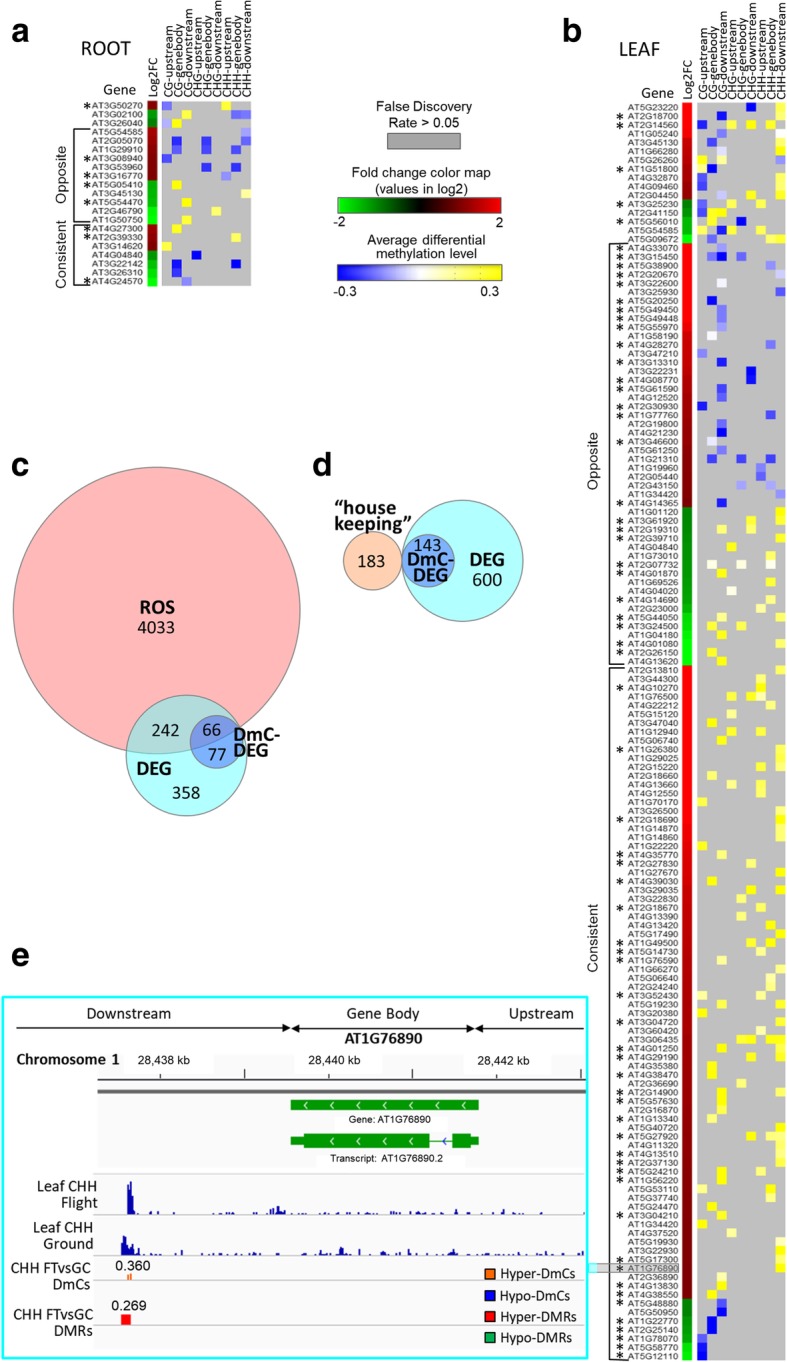
Correlation of differential gene expression and DNA methylation in roots and leaves show ROS association. Heatmap representation of differential gene expression (Log2 fold-change) and differential DNA methylation (average level in area indicated; Gene body: TSS to TTS, upstream: 2 kb from TSS, downstream: 2 kb from TTS) of 21 genes in roots (a) and 143 genes in leaves (b). Opposite trends are indicative of upregulated genes with hypomethylated DmCs or downregulated genes with hypermethylated DmCs whereas a consistent trend shows the converse relationship. ROS associated genes are indicated with an asterisk. c Venn diagram shows a visual representation of spaceflight DEGs and DmC-associated DEGs that overlap with ROS genes. d Venn diagram shows a visual representation of spaceflight DEGs and DmC-associated DEGs that overlap with housekeeping genes. e Visualization of the methylation data using the Integrative Genomics Viewer (IGV) (http://software.broadinstitute.org/software/igv/). The full–genome methylome profiling in the CHH context of spaceflight (Flight) and ground control (Ground) leaf sample along with DmC and DMR data in the corresponding region

References

    1. Wolverton C, Kiss JZ. An update on plant space biology. Gravitational Space Biol. 2009;22:13–20.
    1. Vandenbrink JP, Kiss JZ. Space, the final frontier: a critical review of recent experiments performed in microgravity. Plant Sci. 2016;243:115–119. - PMC - PubMed
    1. Edwards W, Moles A. Re-contemplate an entangled bank: the power of movement in plants revisited. Bot J Linn Soc. 2009;160:111–118.
    1. Wyatt SE, Kiss JZ. Plant tropisms: from Darwin to the international Space Station. Am J Bot. 2013;100(1):1–3. - PubMed
    1. Salmi ML, Bushart TJ, Roux SJ. Autonomous gravity perception and responses of single plant cells. Gravitational Space Biol. 2011;25(1):6–13.

Publication types

Substances