


Relationships between orthostatic hypotension, frailty, falling and mortality in elderly care home residents
- PMID: 30866845
- PMCID: PMC6415493
- DOI: 10.1186/s12877-019-1082-6
Relationships between orthostatic hypotension, frailty, falling and mortality in elderly care home residents
Abstract
Background: Orthostatic hypotension (OH; profound falls in blood pressure when upright) is a common deficit that increases in incidence with age, and may be associated with falling risk. Deficit accumulation results in frailty, regarded as enhanced vulnerability to adverse outcomes. We aimed to evaluate the relationships between OH, frailty, falling and mortality in elderly care home residents.
Methods: From the Minimum Data Set (MDS) document, a frailty index (FI-MDS) was generated from a list of 58 deficits, ranging from 0 (no deficits) to 1.0 (58 deficits). OH was evaluated from beat-to-beat blood pressure and heart rate (finger plethysmography) collected during a 15-min supine-seated orthostatic stress test. Retrospective and prospective falling rates (falls/year) were extracted from facility falls incident reports. All-cause 3-year mortality was determined. Data are reported as mean ± standard error.
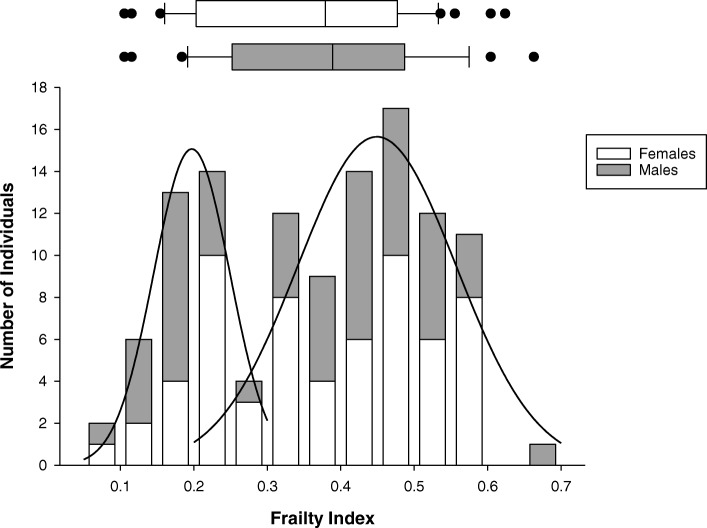
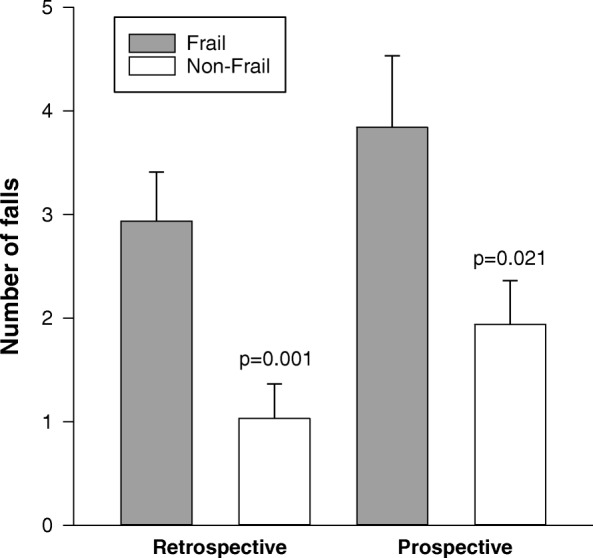
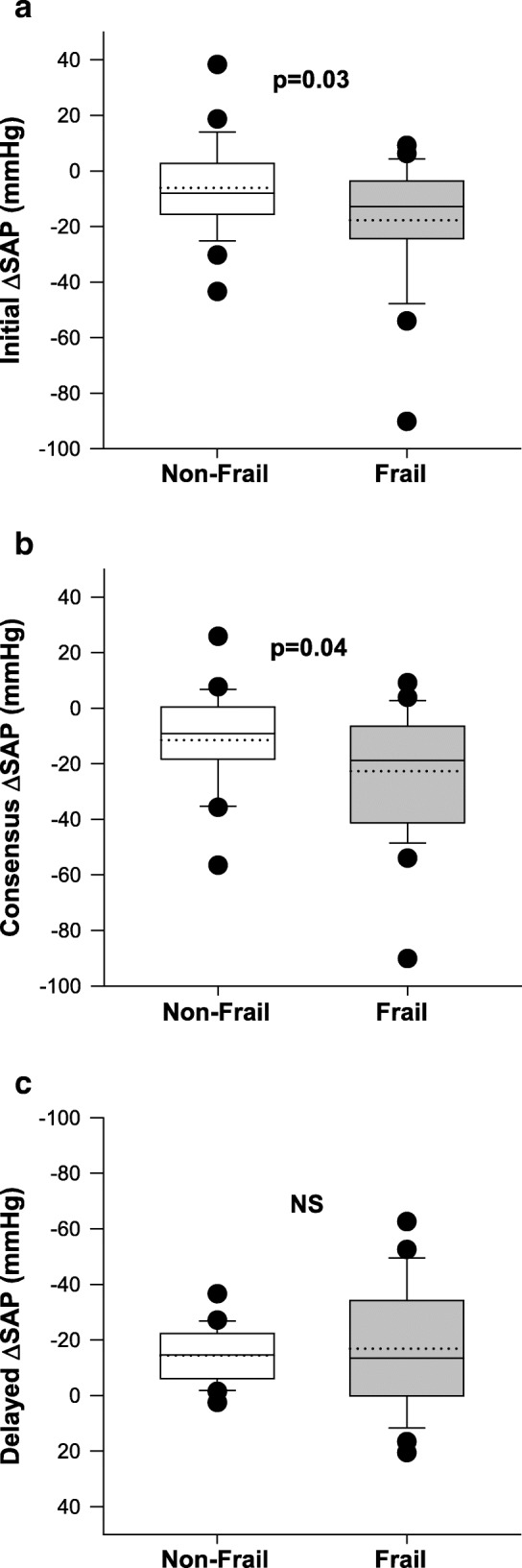
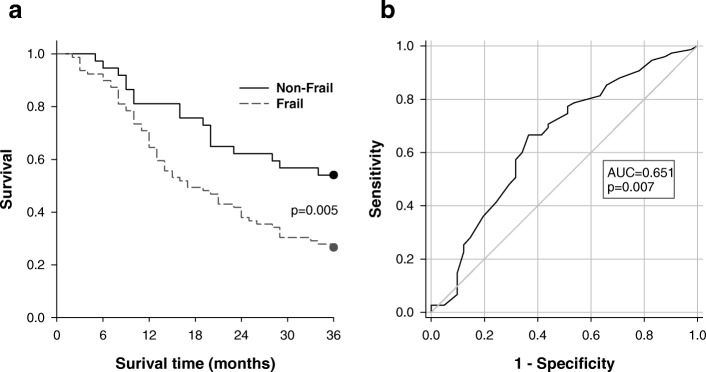
Results: Data were obtained from 116 older adults (aged 84.2 ± 0.9 years; 44% males) living in two long term care facilities. The mean FI-MDS was 0.36 ± 0.01; FI-MDS was correlated with age (r = 0.277; p = 0.003). Those who were frail (FI ≥ 0.27) had larger Initial (- 17.8 ± 4.2 vs - 6.1 ± 3.3 mmHg, p = 0.03) and Consensus (- 22.7 ± 4.3 vs - 11.5 ± 3.3 mmHg, p = 0.04) orthostatic reductions in systolic arterial pressure. Frail individuals had higher prospective and retrospective falling rates and higher 3-year mortality. Receiver operating characteristic curves evaluated the ability of FI-MDS alone to predict prospective falls (sensitivity 72%, specificity 36%), Consensus OH (sensitivity 68%, specificity 60%) and 3-year mortality (sensitivity 77%, specificity 49%). Kaplan Meier survival analyses showed significantly higher 3-year mortality in those who were frail compared to the non-frail (p = 0.005).
Conclusions: Frailty can be captured using a frailty index based on MDS data in elderly individuals living in long term care, and is related to susceptibility to orthostatic hypotension, falling risk and 3-year mortality. Use of the MDS to generate a frailty index may represent a simple and convenient risk assessment tool for older adults living in long term care. Older adults who are both frail and have impaired orthostatic blood pressure control have a particularly high risk of falling and should receive tailored management to mitigate this risk.
Keywords: Falling; Frailty; Older adults; Orthostatic hypotension.
Conflict of interest statement
Ethics approval and consent to participate
This study received ethical approval from the Department of Research Ethics at Simon Fraser University and conforms to the principles outlined in the Declaration of Helsinki. Written informed consent was obtained prior to participation from the participants or their legal designate (with verbal assent). Participants were recruited from two long-term care facilities in British Columbia (Delta View and New Vista Society) and were eligible to participate if they had resided in the facility for at least two years, were aged ≥65 years, and it was possible to obtain access to their MDS.
Consent for publication
Not applicable.
Competing interests
The authors declare that they have no competing interests.
Publisher’s Note
Springer Nature remains neutral with regard to jurisdictional claims in published maps and institutional affiliations.
Figures
References
-
- Rockwood K, Mitnitski A. Frailty in relation to the accumulation of deficits. J Gerontol - Ser A Biol Sci Med Sci. 2007;62(7):722–727. - PubMed
-
- Fried LP, Ferrucci L, Darer J, Williamson JD, Anderson G. Untangling the concepts of disability, frailty, and comorbidity: implications for improved targeting and care. J Gerontol Ser A Biol Sci Med Sci [Internet] 2004;59(3):M255–M263. - PubMed
-
- Gobbens RJ, Luijkx KG, Wijnen-Sponselee MT, Schols JM. Toward a conceptual definition of frail community dwelling older people. Nurs Outlook [Internet] 2010;58(2):76–86. - PubMed
Publication types
MeSH terms
Grants and funding
LinkOut - more resources
Full Text Sources
Medical
Research Materials
Miscellaneous
