


First dengue virus seroprevalence study on Madeira Island after the 2012 outbreak indicates unreported dengue circulation
- PMID: 30867031
- PMCID: PMC6417143
- DOI: 10.1186/s13071-019-3357-3
First dengue virus seroprevalence study on Madeira Island after the 2012 outbreak indicates unreported dengue circulation
Abstract
Background: In 2012, the first dengue virus outbreak was reported on the Portuguese island of Madeira with 1080 confirmed cases. Dengue virus of serotype 1 (DENV-1), probably imported from Venezuela, caused this outbreak with autochthonous transmission by invasive Aedes aegypti mosquitoes.
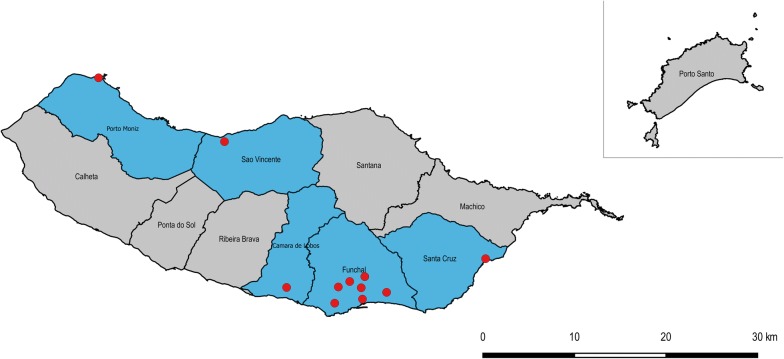
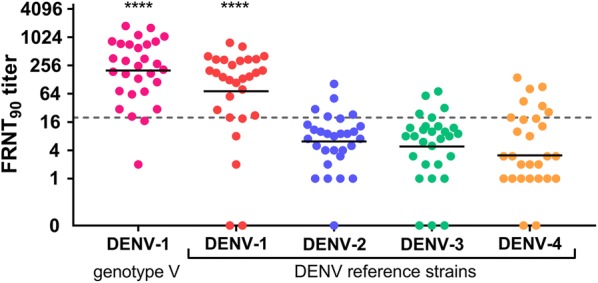
Results: We investigated the seroprevalence among the population on Madeira Island four years after the outbreak. Study participants (n = 358), representative of the island population regarding their age and gender, were enrolled in 2012 in a cross-sectional study. Dengue antibodies were detected with an in-house enzyme-linked immunosorbent assay (ELISA) using the dimer of domain III (ED3) of the DENV-1 envelope protein as well as commercial Panbio indirect and capture IgG ELISAs. Positive ELISA results were validated with a neutralization test. The overall seroprevalence was found to be 7.8% (28/358) with the in-house ELISA, whereas the commercial DENV indirect ELISA detected IgG antibodies in 8.9% of the individuals (32/358). The results of the foci reduction neutralization test confirmed DENV-1 imported from South America as the causative agent of the 2012 epidemic. Additionally, we found a higher seroprevalence in study participants with an age above 60 years old and probable secondary DENV infected individuals indicating unreported dengue circulation before or after 2012 on Madeira Island.
Conclusions: This study revealed that the number of infections might have been much higher than estimated from only confirmed cases in 2012/2013. These mainly DENV-1 immune individuals are not protected from a secondary DENV infection and the majority of the population of Madeira Island is still naïve for DENV. Surveillance of mosquitoes and arboviruses should be continued on Madeira Island as well as in other European areas where invasive vector mosquitoes are present.
Keywords: Dengue virus; Madeira Island; Seroprevalence; Serotype.
Conflict of interest statement
The authors declare that they have no competing interests.
Figures
References
MeSH terms
Substances
Grants and funding
LinkOut - more resources
Full Text Sources
Medical
