


Women's autonomy and utilisation of maternal healthcare services in 31 Sub-Saharan African countries: results from the demographic and health surveys, 2010-2016
- PMID: 30867200
- PMCID: PMC6429737
- DOI: 10.1136/bmjopen-2018-023128
Women's autonomy and utilisation of maternal healthcare services in 31 Sub-Saharan African countries: results from the demographic and health surveys, 2010-2016
Abstract
Objectives: To examine the association between women's autonomy and the utilisation of maternal healthcare services across 31 Sub-Saharan African countries.
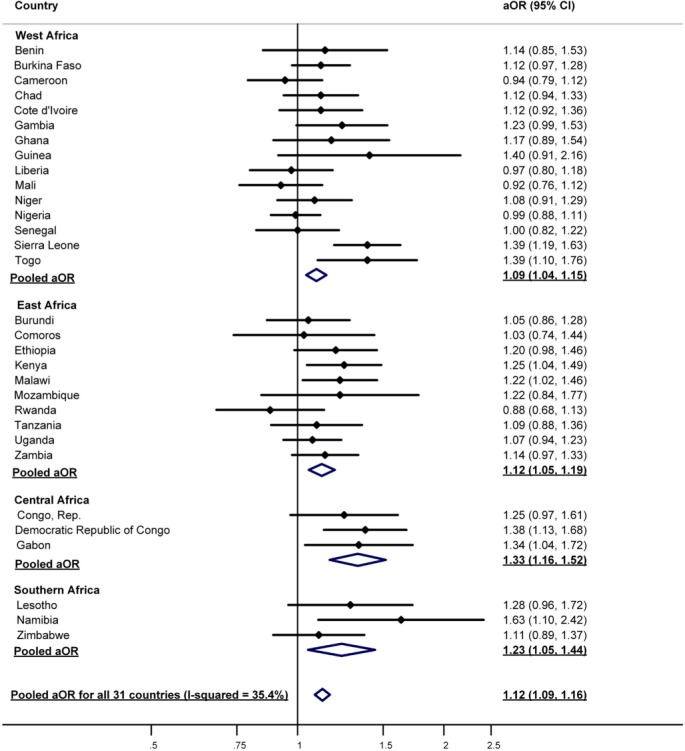
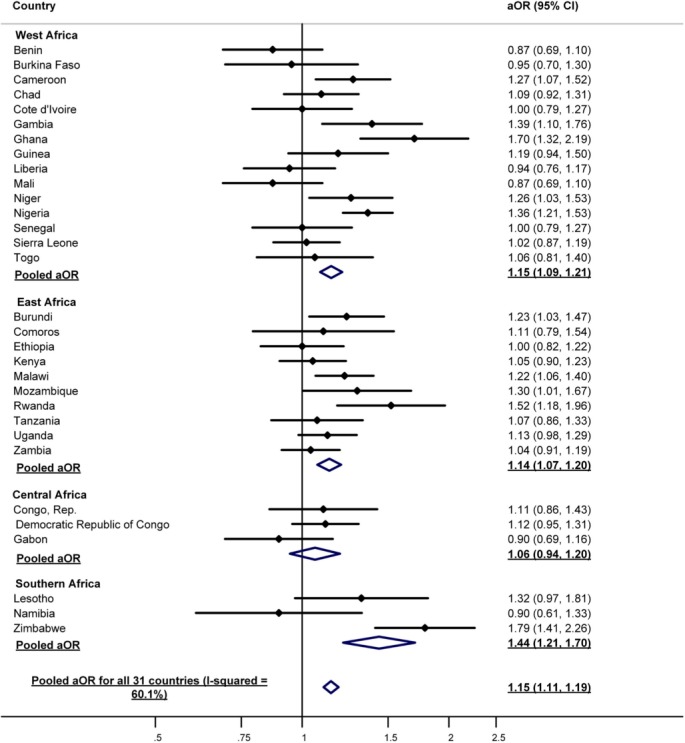
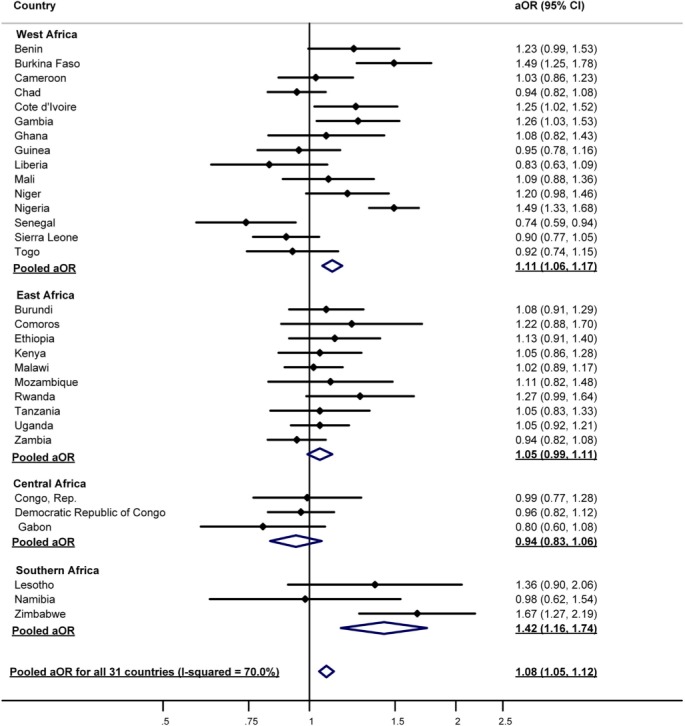
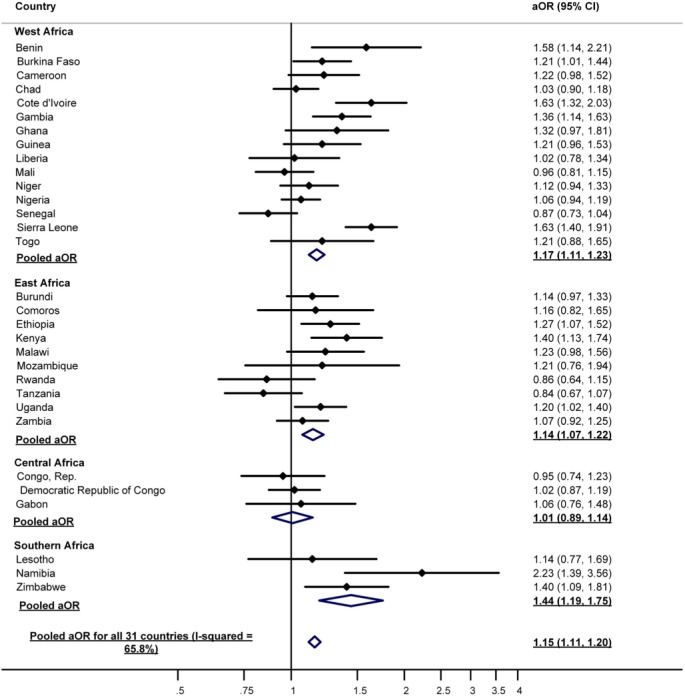
Design, setting and participants: We analysed the Demographic and Health Survey (DHS) (2010-2016) data collected from married women aged 15-49 years. We used four DHS measures related to women's autonomy: attitude towards domestic violence, attitude towards sexual violence, decision making on spending of household income made by the women solely or jointly with husbands and decision making on major household purchases made by the women solely or jointly with husbands. We used multiple logistic regression analyses to examine the association between women's autonomy and the utilisation of maternal healthcare services adjusted for five potential confounders: place of residence, age at birth of the last child, household wealth, educational attainment and working status. Adjusted ORs (aORs) and 95% CI were used to produce the forest plots.
Outcome measures: The primary outcome measures were the utilisation of ≥4 antenatal care visits and delivery by skilled birth attendants (SBA).
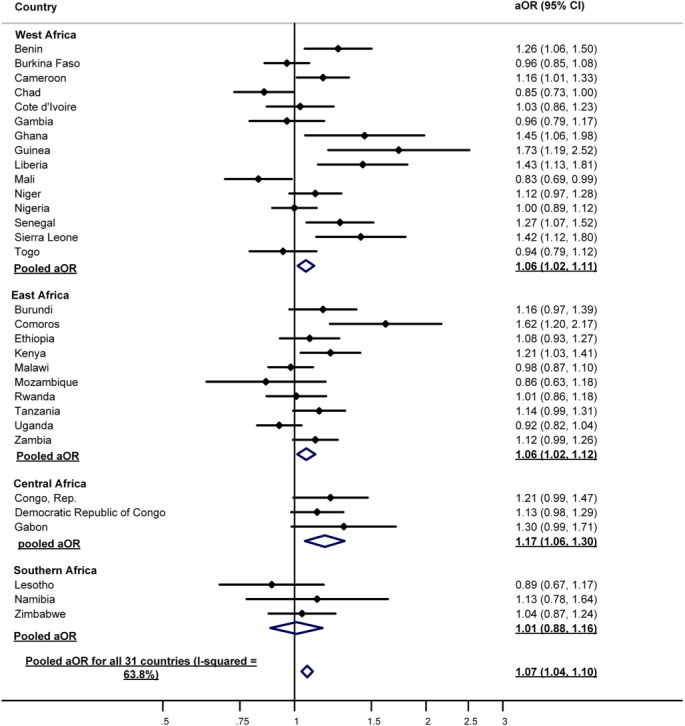
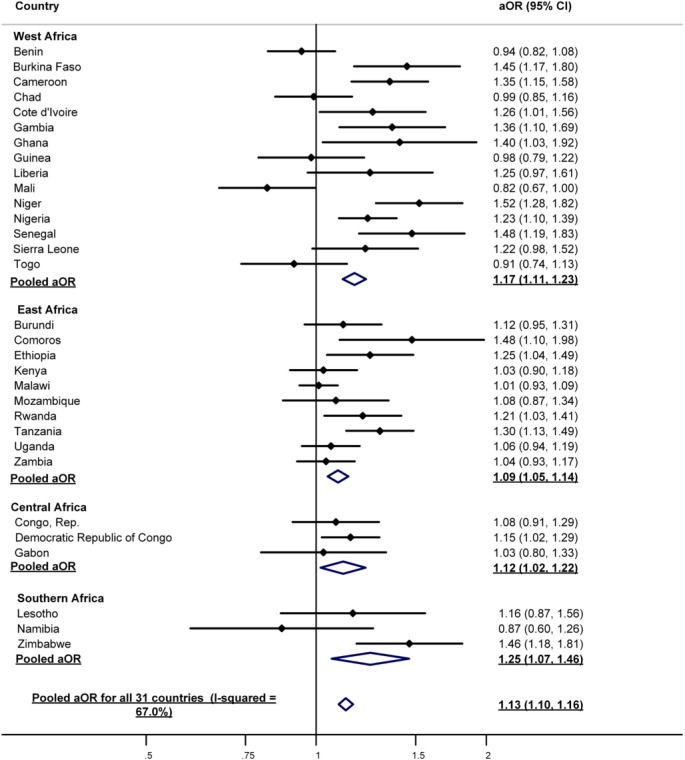
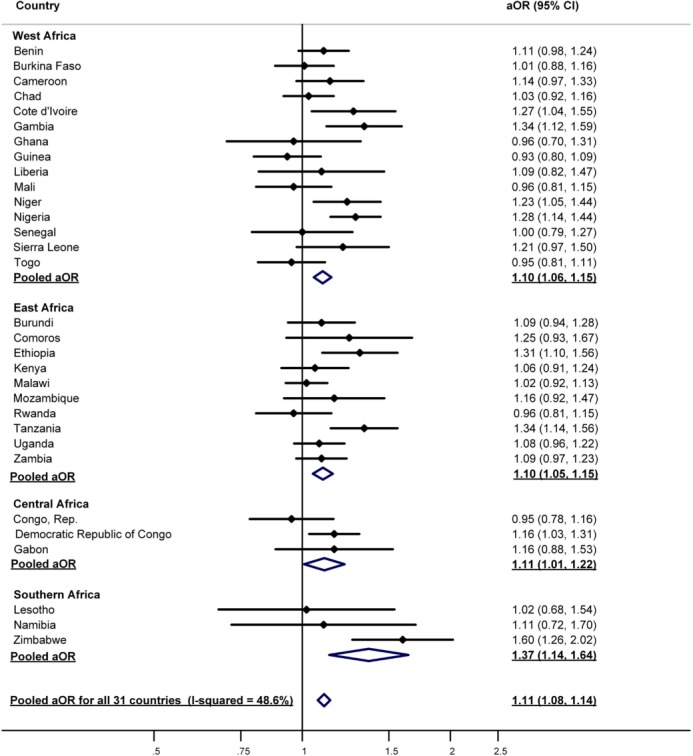
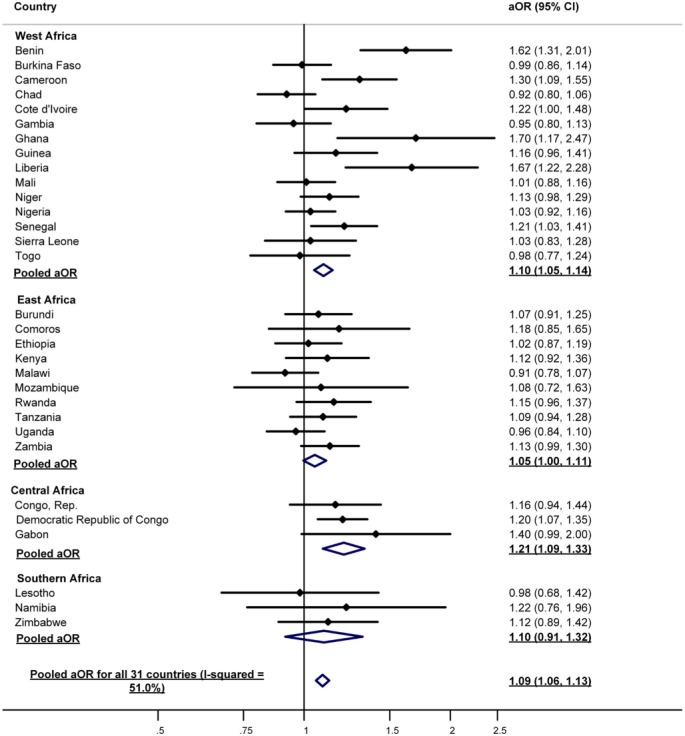
Results: Pooled results for all 31 countries (194 883 women) combined showed weak statistically significant associations between all four measures of women's autonomy and utilisation of maternal healthcare services (aORs ranged from 1.07 to 1.15). The strongest associations were in the Southern African region. For example, the aOR for women who made decisions on household income solely or jointly with husbands in relation to the use of SBAs in the Southern African region was 1.44 (95% CI 1.21 to 1.70). Paradoxically, there were three countries where women with higher autonomy on some measures were less likely to use maternal healthcare services. For example, the aOR in Senegal for women who made decisions on major household purchases solely or jointly with husbands in relation to the use of SBAs (aOR=0.74 95% CI 0.59 to 0.94).
Conclusion: Our results revealed a weak relationship between women's autonomy and the utilisation of maternal healthcare services. More research is needed to understand why these associations are not stronger.
Keywords: antenatal care; autonomy; empowerment; maternal health services; skilled birth attendants; sub-Saharan Africa.
© Author(s) (or their employer(s)) 2019. Re-use permitted under CC BY-NC. No commercial re-use. See rights and permissions. Published by BMJ.
Conflict of interest statement
Competing interests: None declared.
Figures
References
-
- UNFPA. Maternal health thematic fund annual report 2014: Surging towards the 2015 deadline. Washington DC: UNFPA, 2015. http://www.unfpa.org/sites/default/files/pub-pdf/MHTF%20annual%20report%... (accessed 11 Oct 2015).
-
- WHO. Antenatal care. Geneva: WHO int, 2016. http://www.who.int/pmnch/media/publications/aonsectionIII_2.pdf (accessed 7 July 2016).
MeSH terms
LinkOut - more resources
Full Text Sources
Medical
