Spatial and Temporal Analysis of the Stomach and Small-Intestinal Microbiota in Fasted Healthy Humans
- PMID: 30867328
- PMCID: PMC6416366
- DOI: 10.1128/mSphere.00126-19
Spatial and Temporal Analysis of the Stomach and Small-Intestinal Microbiota in Fasted Healthy Humans
Abstract
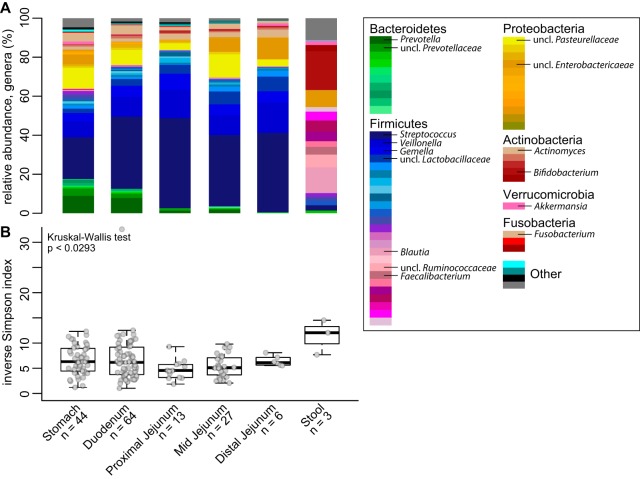
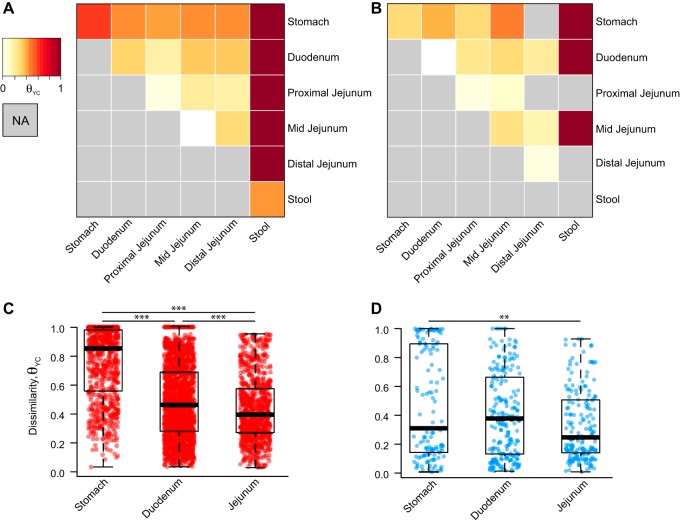
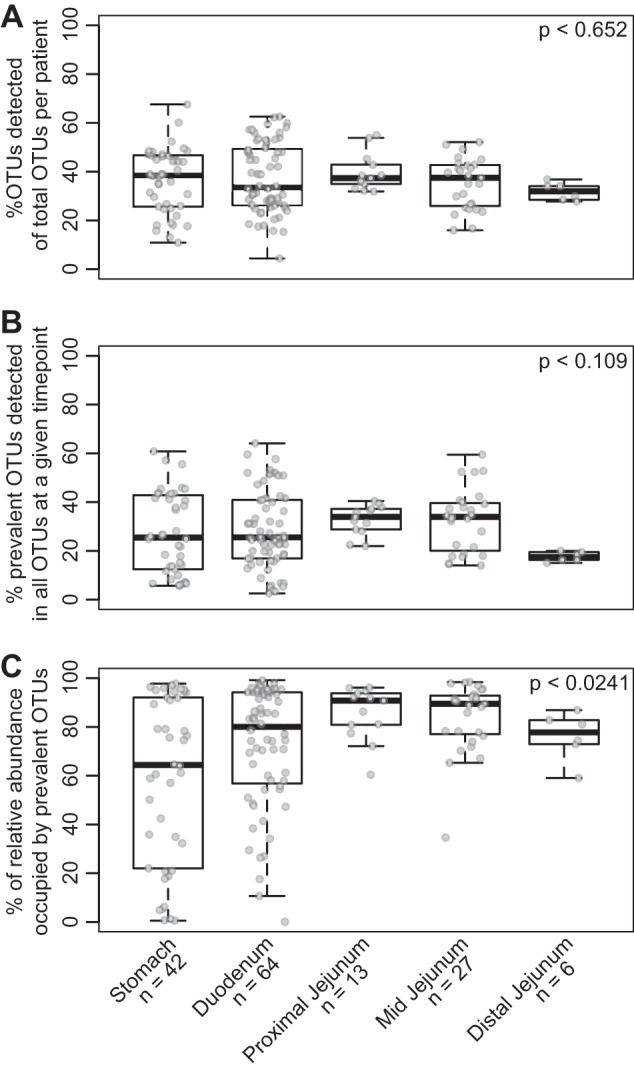
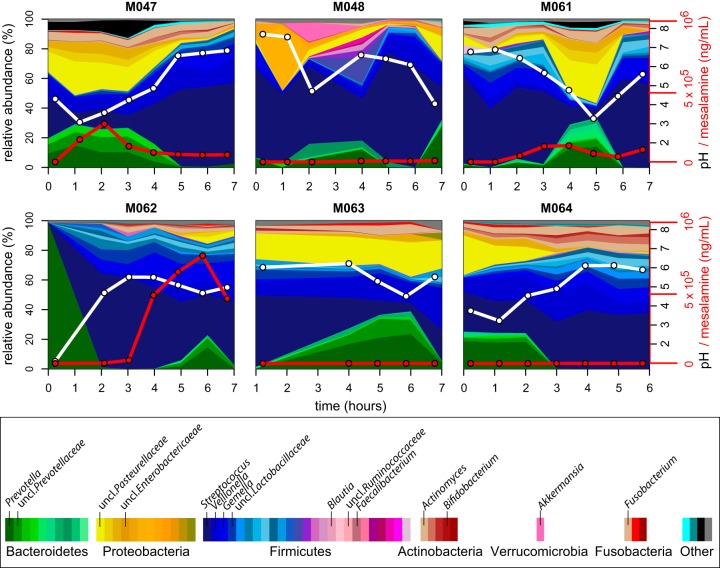
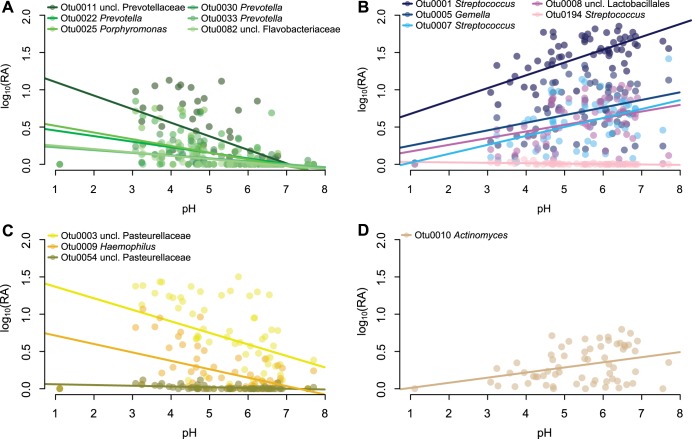
Although the microbiota in the proximal gastrointestinal (GI) tract have been implicated in health and disease, much about these microbes remains understudied compared to those in the distal GI tract. This study characterized the microbiota across multiple proximal GI sites over time in healthy individuals. As part of a study of the pharmacokinetics of oral mesalamine administration, healthy, fasted volunteers (n = 8; 10 observation periods total) were orally intubated with a four-lumen catheter with multiple aspiration ports. Samples were taken from stomach, duodenal, and multiple jejunal sites, sampling hourly (≤7 h) to measure mesalamine (administered at t = 0), pH, and 16S rRNA gene-based composition. We observed a predominance of Firmicutes across proximal GI sites, with significant variation compared to stool. The microbiota was more similar within individuals over time than between subjects, with the fecal microbiota being unique from that of the small intestine. The stomach and duodenal microbiota displayed highest intraindividual variability compared to jejunal sites, which were more stable across time. We observed significant correlations in the duodenal microbial composition with changes in pH; linear mixed models identified positive correlations with multiple Streptococcus operational taxonomic units (OTUs) and negative correlations with multiple Prevotella and Pasteurellaceae OTUs. Few OTUs correlated with mesalamine concentration. The stomach and duodenal microbiota exhibited greater compositional dynamics than the jejunum. Short-term fluctuations in the duodenal microbiota were correlated with pH. Given the unique characteristics and dynamics of the proximal GI tract microbiota, it is important to consider these local environments in health and disease states.IMPORTANCE The gut microbiota are linked to a variety of gastrointestinal diseases, including inflammatory bowel disease. Despite this importance, microbiota dynamics in the upper gastrointestinal tract are understudied. Our article seeks to understand what factors impact microbiota dynamics in the healthy human upper gut. We found that the upper gastrointestinal tract contains consistently prevalent bacterial OTUs that dominate the overall community. Microbiota variability is highest in the stomach and duodenum and correlates with pH.
Keywords: mesalamine; microbiota; pH; small intestine; stomach.
Copyright © 2019 Seekatz et al.
Figures
References
-
- Poulakos L, Kent TH. 1973. Gastric emptying and small intestinal propulsion in fed and fasted rats. Gastroenterology 64:962–967. - PubMed
-
- Martinez-Guryn K, Hubert N, Frazier K, Urlass S, Musch MW, Ojeda P, Pierre JF, Miyoshi J, Sontag TJ, Cham CM, Reardon CA, Leone V, Chang EB. 2018. Small intestine microbiota regulate host digestive and absorptive adaptive responses to dietary lipids. Cell Host Microbe 23:458–469.e5. doi: 10.1016/j.chom.2018.03.011. - DOI - PMC - PubMed
Publication types
MeSH terms
Substances
Grants and funding
LinkOut - more resources
Full Text Sources
Other Literature Sources
Research Materials