


A genome-wide association study of sodium levels and drug metabolism in an epilepsy cohort treated with carbamazepine and oxcarbazepine
- PMID: 30868120
- PMCID: PMC6398103
- DOI: 10.1002/epi4.12297
A genome-wide association study of sodium levels and drug metabolism in an epilepsy cohort treated with carbamazepine and oxcarbazepine
Abstract
Objective: To ascertain the clinical and genetic factors contributing to carbamazepine- and oxcarbazepine-induced hyponatremia (COIH), and to carbamazepine (CBZ) metabolism, in a retrospectively collected, cross-sectional cohort of people with epilepsy.
Methods: We collected data on serum sodium levels and antiepileptic drug levels in people with epilepsy attending a tertiary epilepsy center while on treatment with CBZ or OXC. We defined hyponatremia as Na+ ≤134 mEq/L. We estimated the CBZ metabolic ratio defined as the log transformation of the ratio of metabolite CBZ-diol to unchanged drug precursor substrate as measured in serum.
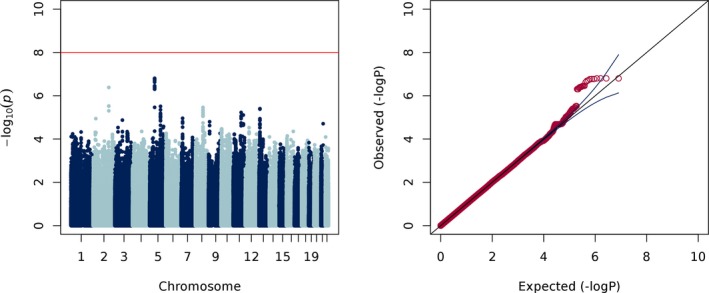
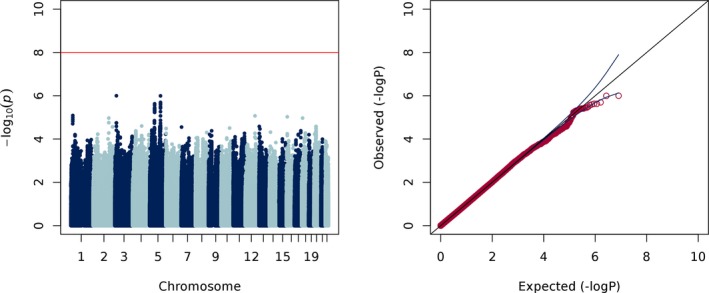
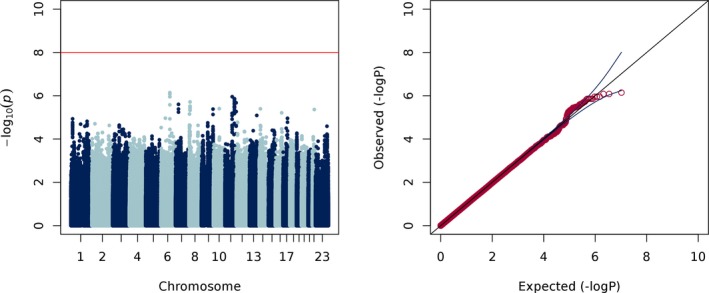
Results: Clinical and genetic data relating to carbamazepine and oxcarbazepine trials were collected in 1141 patients. We did not observe any genome-wide significant associations with sodium level in a linear trend or hyponatremia as a dichotomous trait. Age, sex, number of comedications, phenytoin use, phenobarbital use, and sodium valproate use were significant predictors of CBZ metabolic ratio. No genome-wide significant associations with CBZ metabolic ratio were found.
Significance: Although we did not detect a genetic predictor of hyponatremia or CBZ metabolism in our cohort, our findings suggest that the determinants of CBZ metabolism are multifactorial.
Keywords: EpiPGX Consortium; GWAS; adverse effects; antiepileptic drugs; hyponatremia.
Figures
References
-
- Chung W‐H, Hung S‐I, Hong H‐S, et al. Medical genetics: a marker for Stevens–Johnson syndrome. Nature. 2004;428:486. - PubMed
-
- Ozeki T, Mushiroda T, Yowang A, et al. Genome‐wide association study identifies HLA‐A*3101 allele as a genetic risk factor for carbamazepine‐induced cutaneous adverse drug reactions in Japanese population. Hum Mol Genet. 2011;20:1034–41. - PubMed
-
- Berghuis B, de Haan GJ, van den Broek MPH, et al. Epidemiology, pathophysiology and putative genetic basis of carbamazepine‐ and oxcarbazepine‐induced hyponatremia. Eur J Neurol. 2016;23:1393–9. - PubMed
