


Perspectives on Directions and Priorities for Future Preclinical Studies in Regenerative Medicine
- PMID: 30870121
- PMCID: PMC6442739
- DOI: 10.1161/CIRCRESAHA.118.313795
Perspectives on Directions and Priorities for Future Preclinical Studies in Regenerative Medicine
Abstract
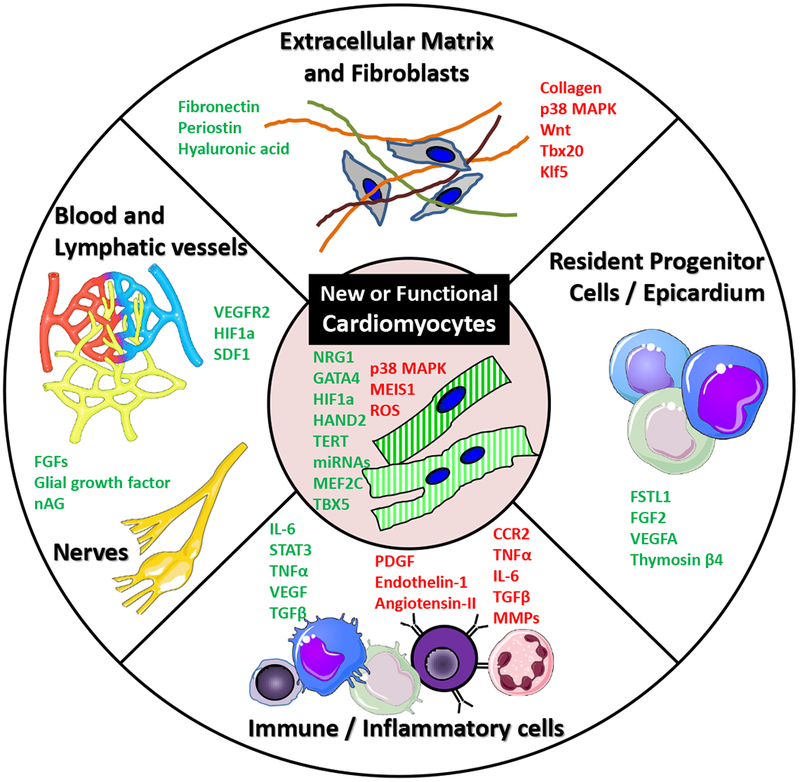
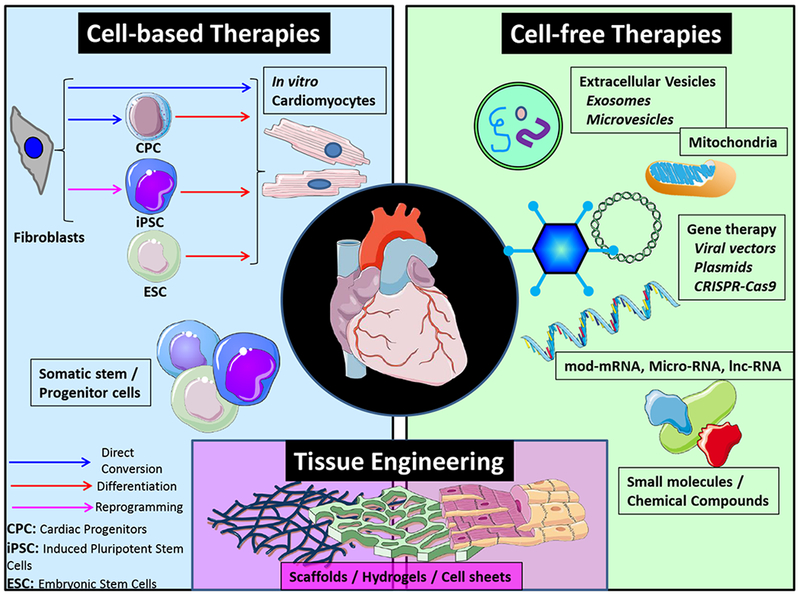
The myocardium consists of numerous cell types embedded in organized layers of ECM (extracellular matrix) and requires an intricate network of blood and lymphatic vessels and nerves to provide nutrients and electrical coupling to the cells. Although much of the focus has been on cardiomyocytes, these cells make up <40% of cells within a healthy adult heart. Therefore, repairing or regenerating cardiac tissue by merely reconstituting cardiomyocytes is a simplistic and ineffective approach. In fact, when an injury occurs, cardiac tissue organization is disrupted at the level of the cells, the tissue architecture, and the coordinated interaction among the cells. Thus, reconstitution of a functional tissue must reestablish electrical and mechanical communication between cardiomyocytes and restore their surrounding environment. It is also essential to restore distinctive myocardial features, such as vascular patency and pump function. In this article, we review the current status, challenges, and future priorities in cardiac regenerative or reparative medicine. In the first part, we provide an overview of our current understanding of heart repair and comment on the main contributors and mechanisms involved in innate regeneration. A brief section is dedicated to the novel concept of rejuvenation or regeneration, which we think may impact future development in the field. The last section describes regenerative therapies, where the most advanced and disruptive strategies used for myocardial repair are discussed. Our recommendations for priority areas in studies of cardiac regeneration or repair are summarized in Tables 1 and 2 .
Keywords: preclinical research; regeneration; rejuvenation; repair.
Figures
References
-
- Hagège AA, Vilquin JT, Bruneval P, Menasché P. Regeneration of the myocardium: a new role in the treatment of ischemic heart disease? Hypertension 2001;38:1413–5. - PubMed
-
- Taylor DA, Atkins BZ, Hungspreugs P, Jones TR, Reedy MC, Hutcheson KA, Glower DD, Kraus WE. Regenerating functional myocardium: improved performance after skeletal myoblast transplantation. Nat Med 1998;4:929–33. - PubMed
-
- Fernández-Avilés F, Sanz-Ruiz R, Climent AM, Badimon L, Bolli R, Charron D, Fuster V, Janssens S, Kastrup J, Kim HS, Lüscher TF, Martin JF, Menasché P, Simari RD, Stone GW, Terzic A, Willerson JT, Wu JC; TACTICS (Transnational Alliance for Regenerative Therapies in Cardiovascular Syndromes). Global position paper on cardiovascular regenerative medicine. Eur Heart J 2017;38:2532–2546. - PMC - PubMed
Publication types
MeSH terms
Grants and funding
LinkOut - more resources
Full Text Sources
