


A national study of Veterans with major upper limb amputation: Survey methods, participants, and summary findings
- PMID: 30870496
- PMCID: PMC6417699
- DOI: 10.1371/journal.pone.0213578
A national study of Veterans with major upper limb amputation: Survey methods, participants, and summary findings
Abstract
Introduction: A comprehensive study to assess quality and outcomes of care for Veterans with upper limb amputation is needed. This paper presents methods and summary findings from a national survey of Veterans with upper limb amputation.
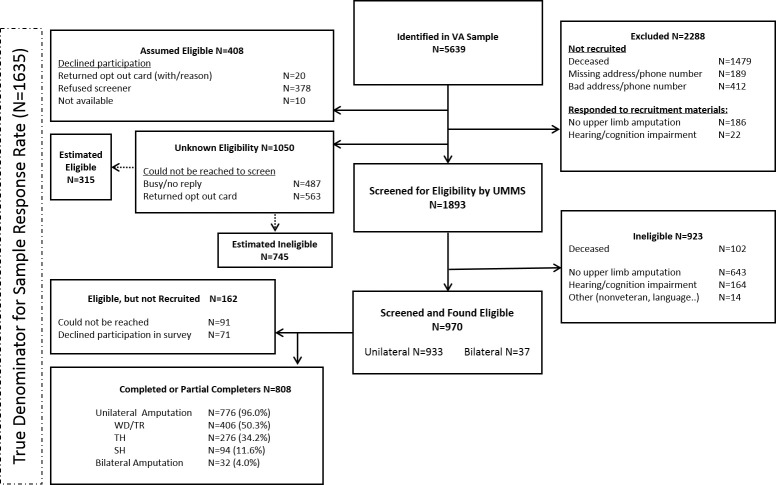
Methods: After completion of a pilot study to develop and refine methods, computer-assisted telephone interviews were conducted with 808 Veterans with upper limb amputation (response rate = 47.7%; cooperation rate = 63.3%).
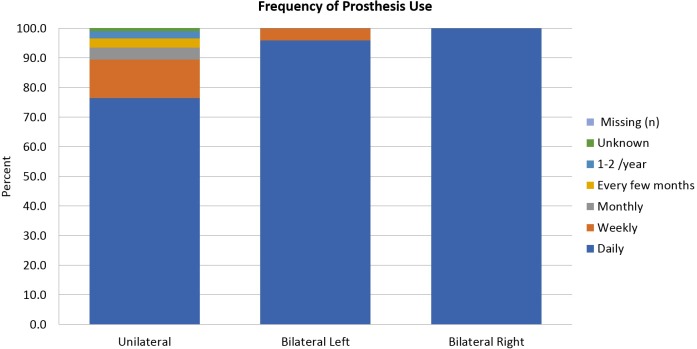
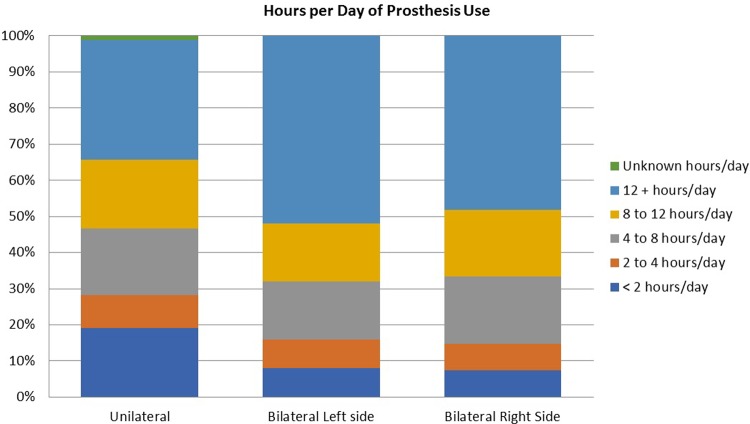
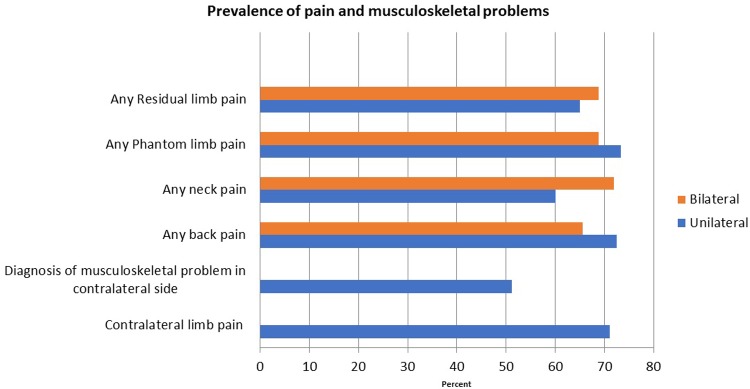
Results: Respondents were 776 unilateral and 32 bilateral amputees, 97.5% male, mean age 63.3 (sd 14.1). Prostheses were used by 60% unilateral and 91% bilateral, the majority used body powered devices. Prostheses were used ≥8 hours/day by 52% unilateral and 76% bilateral. Prosthetic training was received by 71% unilateral and 59% bilateral. Mean prosthetic satisfaction was 3.9 (sd 0.6) and 3.8 (sd 0.7) as measured by TAPES; and 25.0 (sd 5.1) and 25.7 (sd 4.5) as measured by OPUS CSD for unilateral and bilateral respectively. Mean perceived disability (measured by QuickDASH) scores were 49.5 (sd 20.7) for unilateral and 34.7 (sd 22.0) for bilateral. VR-12 PCS scores were below population norms. The majority reported contralateral limb pain, musculoskeletal conditions, back and neck pain. Phantom limb pain was reported in 83.4% of unilateral and 68.8% of bilateral, and residual limb pain in 65.1% of unilateral and 68.8% of bilateral. Most, (81.8% unilateral, 84.4% bilateral) had been to a Veterans Affairs medical center (VA) for amputation care, while 57% of unilateral and 81.3% of bilateral had been to a VA amputation clinic.
Discussion/conclusion: Veterans with upper limb amputation have moderately impaired physical functioning. Prosthesis use rates were lower than previously reported. Although satisfied with their prostheses, nearly half used them ≤8 hours/day. Rates of musculoskeletal problems, phantom and residual limb pain were higher than previously reported. A substantial proportion never received prosthetic training, or VA amputation care.
Conflict of interest statement
Opinions, interpretations, conclusions and recommendations are those of the author and not necessarily endorsed by the Department of Defense. The authors have declared that no competing interests exist.
Figures
References
-
- Matsen SL, Malchow D, Matsen FA 3rd. Correlations with patients' perspectives of the result of lower-extremity amputation. J Bone Joint Surg Am. 2000;82-A(8):1089–95. Epub 2000/08/23. . - PubMed
-
- Rock Gambrell C. Overuse Syndrome and the Unilateral Upper Limb Amputee: Consequences and Prevention. Journal of Prosthetics & Orthotics (JPO). 2008;20(3):126–32. .
-
- Atkins DJ, Heard DC, Donovan WH. Epidemiologic Overview of lndividuals with Upper-Limb Loss and Their Reported Research Priorities. Journal of Prosthetics & Orthotics. 1996;8(1):0.
Publication types
MeSH terms
Grants and funding
LinkOut - more resources
Full Text Sources
Medical
Molecular Biology Databases
