


CIDE Proteins in Human Health and Disease
- PMID: 30871156
- PMCID: PMC6468517
- DOI: 10.3390/cells8030238
CIDE Proteins in Human Health and Disease
Abstract
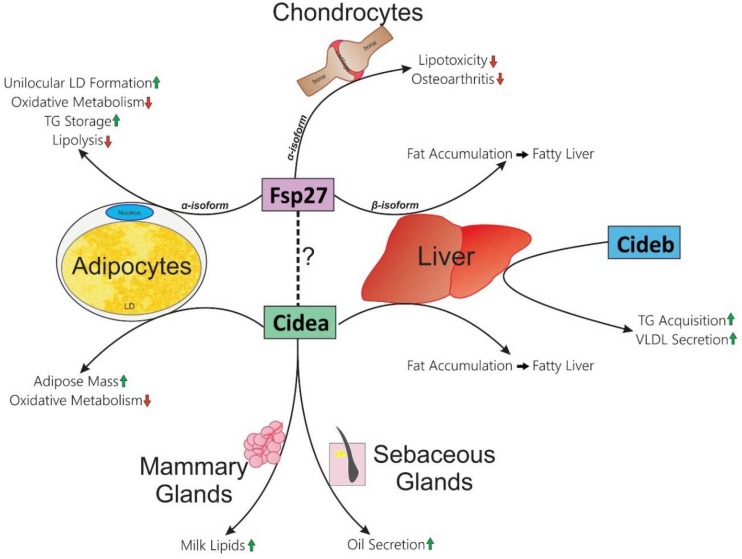
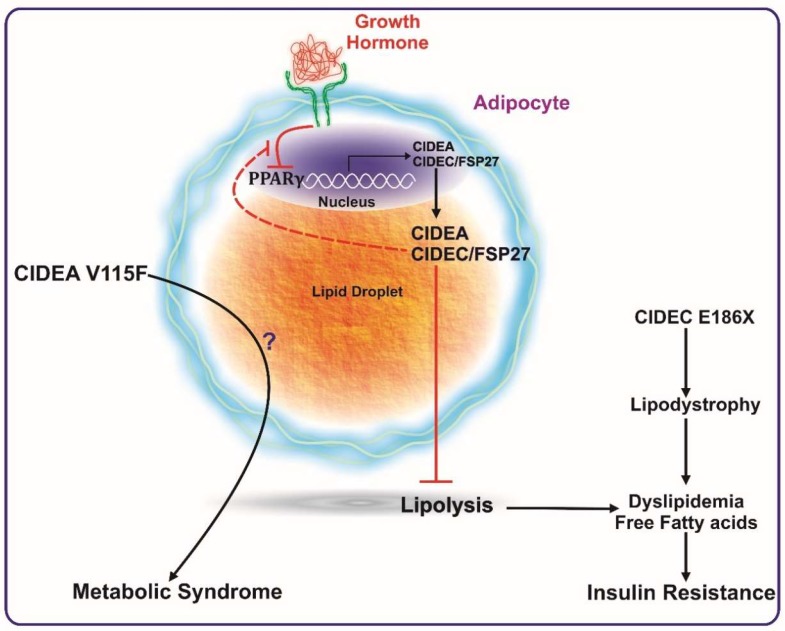
Cell death-Inducing DNA Fragmentation Factor Alpha (DFFA)-like Effector (CIDE) proteins have emerged as lipid droplet-associated proteins that regulate fat metabolism. There are three members in the CIDE protein family-CIDEA, CIDEB, and CIDEC (also known as fat-specific protein 27 (FSP27)). CIDEA and FSP27 are primarily expressed in adipose tissue, while CIDEB is expressed in the liver. Originally, based upon their homology with DNA fragmentation factors, these proteins were identified as apoptotic proteins. However, recent studies have changed the perception of these proteins, redefining them as regulators of lipid droplet dynamics and fat metabolism, which contribute to a healthy metabolic phenotype in humans. Despite various studies in humans and gene-targeting studies in mice, the physiological roles of CIDE proteins remains elusive. This review will summarize the known physiological role and metabolic pathways regulated by the CIDE proteins in human health and disease.
Keywords: CIDEA; CIDEB; FSP27; adipose; fat metabolism; lipid droplets; liver.
Conflict of interest statement
The authors declare no conflict of interest.
Figures
References
-
- Nordström E.A., Rydén M., Backlund E.C., Dahlman I., Kaaman M., Blomqvist L., Cannon B., Nedergaard J., Arner P. A Human-Specific Role of Cell Death-Inducing DFFA (DNA Fragmentation Factor-α)-Like Effector A (CIDEA) in Adipocyte Lipolysis and Obesity. Diabetes. 2005;54:1726–1734. doi: 10.2337/diabetes.54.6.1726. - DOI - PubMed
Publication types
MeSH terms
Substances
LinkOut - more resources
Full Text Sources
