


A Multivariate Analysis on the Effect of No Closed Suction Drain on the Length of Hospital Stay in Total Knee Arthroplasty
- PMID: 30871289
- PMCID: PMC6425893
- DOI: 10.5792/ksrr.18.013
A Multivariate Analysis on the Effect of No Closed Suction Drain on the Length of Hospital Stay in Total Knee Arthroplasty
Abstract
Purpose: Despite the long history of drain use in total knee arthroplasty (TKA), no drain has been gaining popularity. The purpose of this study was to investigate whether drainage is related to the length of hospital stay.
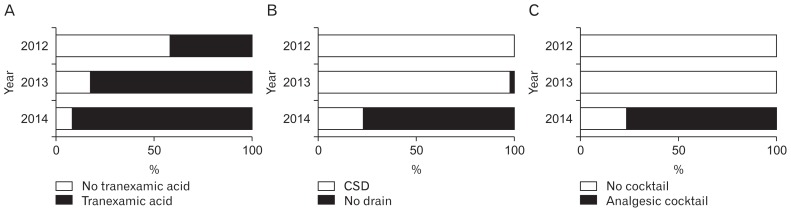
Materials and methods: A total of 166 consecutive unilateral TKAs performed on 135 patients with osteoarthritis were retrospectively reviewed. Closed suction drainage was used in 111 cases (67%). Length of hospital stay after surgery was recorded, and a multivariate linear regression analysis was performed to evaluate various variables (patient factors, surgical factors, and post-surgical factors) and to investigate whether drainage was an independent variable.
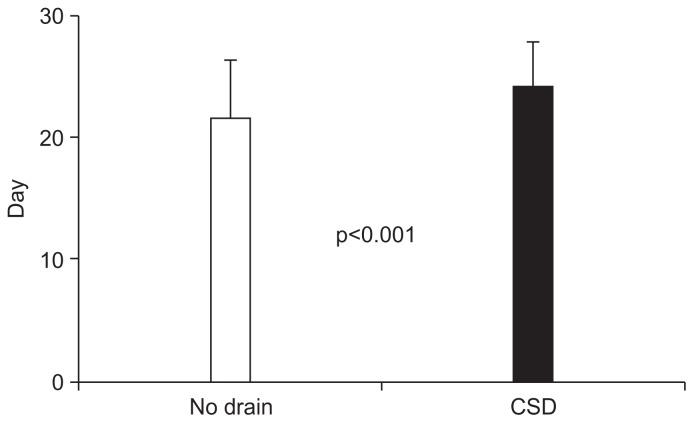
Results: Hospital stay was shorter in no drain cases (21.7±4.8 days) than in drain cases (24.2±3.7 days, p<0.001). The multivariate analysis showed that older age (β=0.12, p=0.02), drain use (β=2.81, p=0.03), and occurrence of comorbidity (β=1.46, p=0.04) were the independent variables associated with the extended hospital stay. There was no difference in comorbidity between drain cases (39.6%) and no drain cases (27.2%, p=0.13).
Conclusions: The drain use, age, and occurrence of comorbidity were related to the length of hospital stay. TKA without drain is an effective procedure both medically and economically.
Keywords: Arthroplasty; Drain; Hospitalization; Knee; Recovery.
Conflict of interest statement
No potential conflict of interest relevant to this article was reported.
Figures
References
LinkOut - more resources
Full Text Sources
Medical
