


Monitoring of the field application of Metarhizium anisopliae in Brazil revealed high molecular diversity of Metarhizium spp in insects, soil and sugarcane roots
- PMID: 30872601
- PMCID: PMC6418095
- DOI: 10.1038/s41598-019-38594-8
Monitoring of the field application of Metarhizium anisopliae in Brazil revealed high molecular diversity of Metarhizium spp in insects, soil and sugarcane roots
Abstract
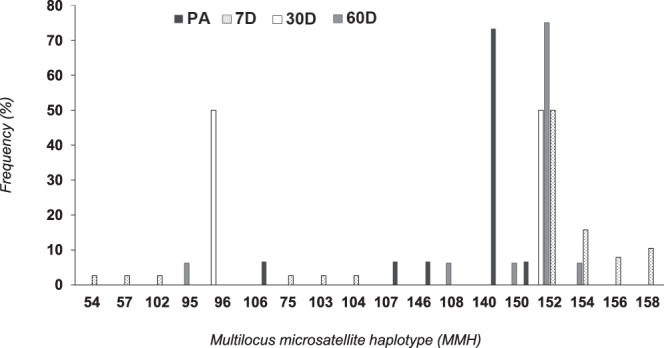
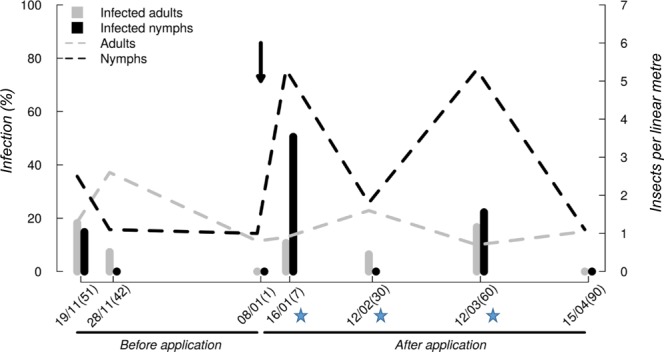
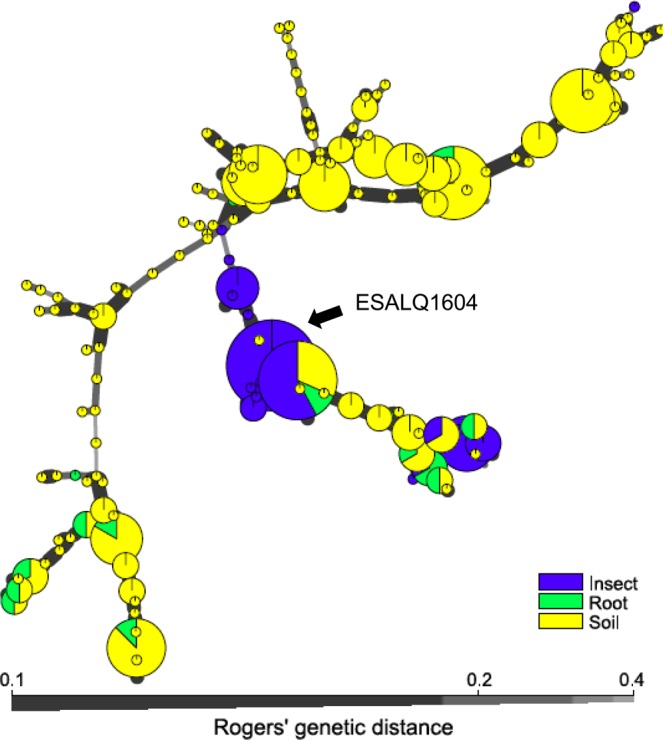
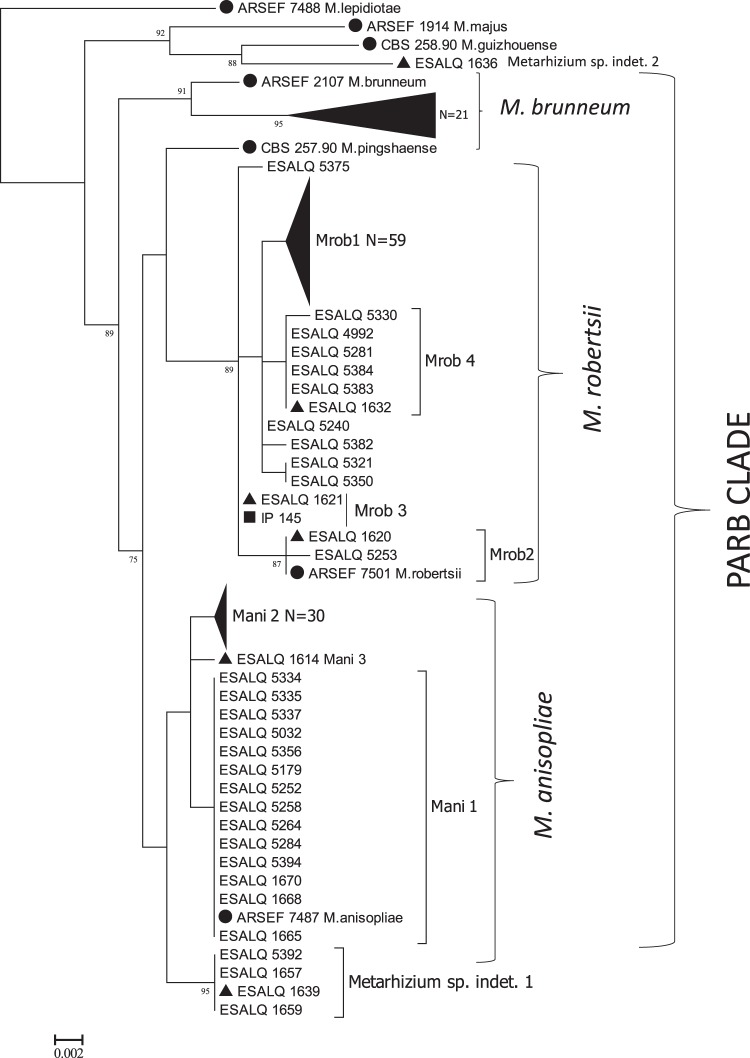
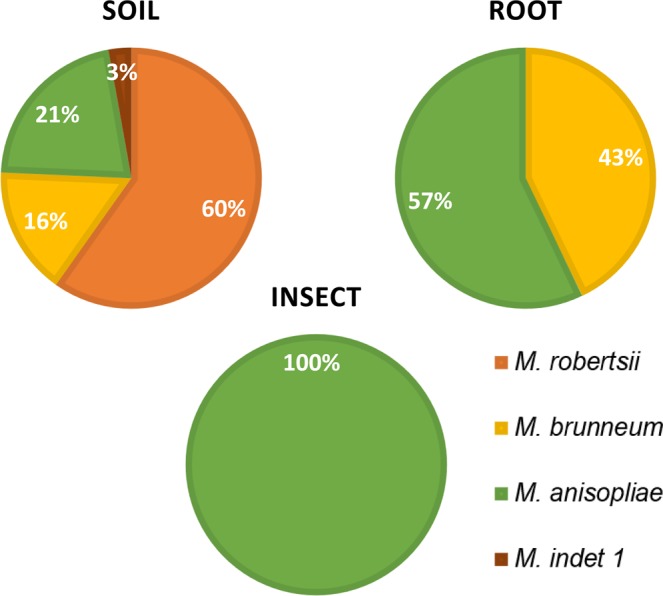
The use of Metarhizium against sugarcane spittlebugs in Brazil is one of the most successful and long lasting biological control programs using entomopathogenic fungus in the world. However, studies to monitor the fate of this fungus on the sugarcane agroecosystem are rare, especially with respect to its persistence, efficacy in pest control and impact on the local populations of Metarhizium. The present study aimed at documenting the efficacy and persistence of M. anisopliae strain ESALQ1604 in a sugarcane field by using microsatellite molecular markers. The species diversity of Metarhizium was characterized in insects, soil and sugarcane roots in a sprayed and an unsprayed plot. Although the infection rates were not very high (≤ 50%), the applied strain was recovered from spittlebugs after 7, 30 and 60 days' post-application, but accounted for only 50%, 50% and 70.5% of all insects killed by M. anisopliae, respectively. All haplotypes from spittlebug were associated with a single subclade of M. anisopliae. The highest haplotype diversity was found in soil (h = 0.989) and in the smallest in spittlebug (h = 0.779). Metarhizium robertsii, M. anisopliae, M. brunneum; one taxonomically unassigned lineage was found in soil and only M. brunneum and M. anisopliae were isolated from roots. This study revealed the great diversity of Metarhizium spp. in the sugarcane agroecosystem and the importance of the local population of M. anisopliae on spittlebugs management.
Conflict of interest statement
The authors declare no competing interests.
Figures
References
-
- Uniao da industria de cana-de-acucar, http://www.unica.com.br/noticia/871626920312979436/liderancas-do-setor-s... (2012).
-
- Conab. Acompanhamento da Safra Brasileira de Cana-de-Açúcar – Quarto Levantamento da safra, http://www.conab.gov.br/OlalaCMS/uploads/arquivos/15_04_13_08_45_51_bole... (2015)
-
- Goldemberg J, Mello FFC, Cerri CEP, Davies CA, Cerri CC. Meeting the global demand for biofuels in 2021 through sustainable land use change policy. Energy Policy. 2014;69:14–18. doi: 10.1016/j.enpol.2014.02.008. - DOI
-
- Silva ATBD, Spers RG, Wright JTC, Costa PRD. Cenários prospectivos para o comércio internacional de etanol em 2020. Rev. Adm. 2013;48:727–738.
Publication types
MeSH terms
Substances
LinkOut - more resources
Full Text Sources
Miscellaneous
