Review
. 2019 Jul;58(7):484-499.
doi: 10.1002/gcc.22731. Epub 2019 Mar 15.

Higher order genomic organization and epigenetic control maintain cellular identity and prevent breast cancer

Affiliations
Review

Higher order genomic organization and epigenetic control maintain cellular identity and prevent breast cancer

A J Fritz et al. Genes Chromosomes Cancer. 2019 Jul.

Abstract

Cells establish and sustain structural and functional integrity of the genome to support cellular identity and prevent malignant transformation. In this review, we present a strategic overview of epigenetic regulatory mechanisms including histone modifications and higher order chromatin organization (HCO) that are perturbed in breast cancer onset and progression. Implications for dysfunctions that occur in hormone regulation, cell cycle control, and mitotic bookmarking in breast cancer are considered, with an emphasis on epithelial-to-mesenchymal transition and cancer stem cell activities. The architectural organization of regulatory machinery is addressed within the contexts of translating cancer-compromised genomic organization to advances in breast cancer risk assessment, diagnosis, prognosis, and identification of novel therapeutic targets with high specificity and minimal off target effects.

Keywords: RUNX; breast cancer; cancer stem cells; epithelial to mesenchymal transition; higher order chromatin organization; hormone regulation; mitotic bookmarking.


Figures

Figure 1.
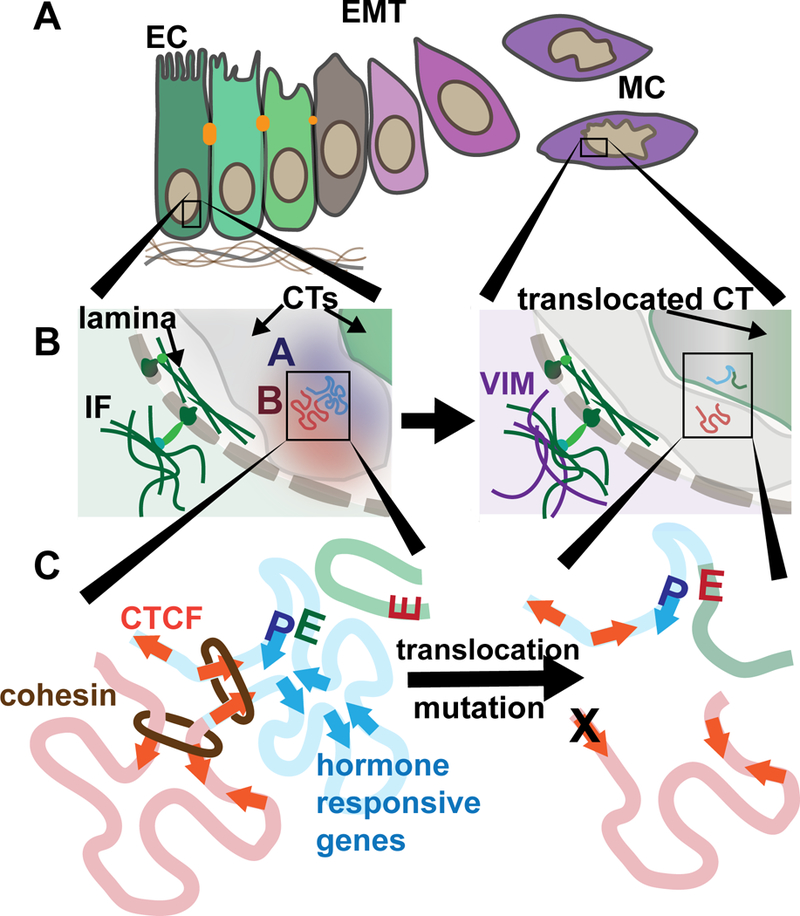
Figure 1.. Cancer-compromised higher order chromatin organization.
A.) An epithelial-to-mesenchymal transition (EMT) occurs during breast cancer progression during which cells relinquish their epithelial cell (EC) tight junctions and polarity while acquiring mesenchymal cell (MC) characteristics that include migration and invasiveness. B.) An inset of a portion of the nucleus is shown. The nucleo-cytoplasmic link is illustrated wherein forces from within the cytoplasm can be transferred into the nucleus. The intermediate filament (IF) protein, vimentin (VIM), is increased in expression during EMT. Portions of two chromosome territories (CTs) are shown (grey and green). Compartments within one CT are shown. An open, euchromatic, A compartment is blue and closed, heterochromatic, B compartment is red. C) In the loop extrusion model, cohesin extrudes DNA until two convergent CTCF motifs are encountered. Genes that are responsive to a stimulus (e.g. hormones) are enriched to reside within the same TADs. Alterations in the genome that occur within cancer nuclei such as translocations, deletions, and inversions may result in the disruption of proper enhancer (E)- promoter (P) interactions and result in aberrant regulation. Mutation of CTCF binding sites are frequent in cancers and mutation of these sites has been shown to disrupt looping.
Figure 2.
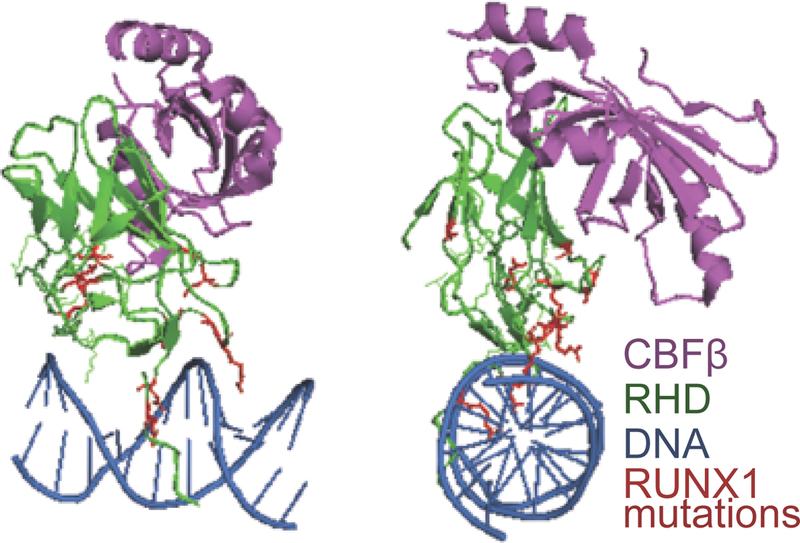
Figure 2.. Mutations in the DNA binding- Runt homology domain of RUNX1 in breast cancer.
The structure of RUNX1’s Runt homology domain (RHD; rendered based on the Protein Data Bank code 1H9D is shown in two orientations rotated 90 degrees relative to each other (front and side). CBF‐β is shown in purple, DNA binding-RHD is in green, and DNA is in blue. Mutations found in the RHD in breast tumor patient samples (red) suggests a loss of RUNX1 function in breast cancer.
Figure 3.
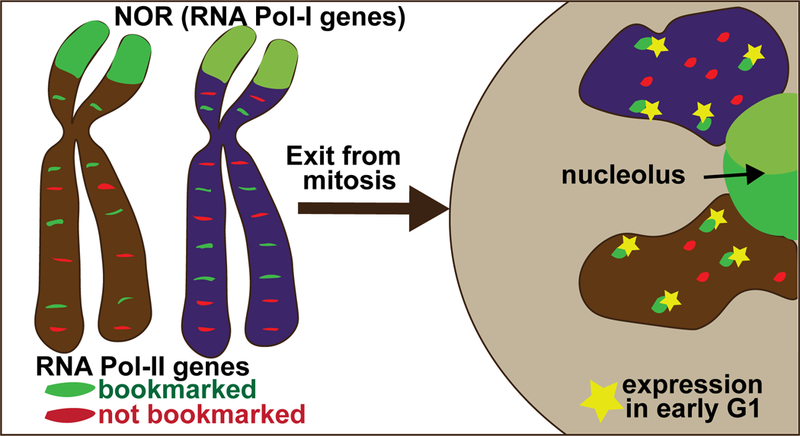
Figure 3.. Mitotic bookmarking maintains nuclear organization, cellular identity and genome regulation in daughter cells.
Bookmarking is the retention of transcription factors and epigenetic modifications on mitotic chromosomes. Genes that are bookmarked (green) are active in early G1 compared with genes that are not bookmarked during mitosis (red). Bookmarking of the nucleolar organizer regions (NORs) is key to the biogenesis of nucleoli upon exit from mitosis.

References

    1. Zaidi SK, Young DW, Choi JY, et al. The dynamic organization of gene-regulatory machinery in nuclear microenvironments. EMBO Rep. 2005;6(2):128–133. - PMC - PubMed
    1. Kadauke S, Blobel GA. Chromatin loops in gene regulation. Biochim Biophys Acta. 2009;1789(1):17–25. - PMC - PubMed
    1. Krivega I, Dean A. Enhancer and promoter interactions-long distance calls. Curr Opin Genet Dev. 2012;22(2):79–85. - PMC - PubMed
    1. Levantini E, Lee S, Radomska HS, et al. RUNX1 regulates the CD34 gene in haematopoietic stem cells by mediating interactions with a distal regulatory element. EMBO J. 2011;30(19):4059–4070. - PMC - PubMed
    1. Fritz AJ, Barutcu AR, Martin-Buley L, et al. Chromosomes at Work: Organization of Chromosome Territories in the Interphase Nucleus. J Cell Biochem. 2016;117(1):9–19. - PMC - PubMed

Publication types