


Circadian rhythms: a regulator of gastrointestinal health and dysfunction
- PMID: 30874451
- PMCID: PMC6533073
- DOI: 10.1080/17474124.2019.1595588
Circadian rhythms: a regulator of gastrointestinal health and dysfunction
Abstract
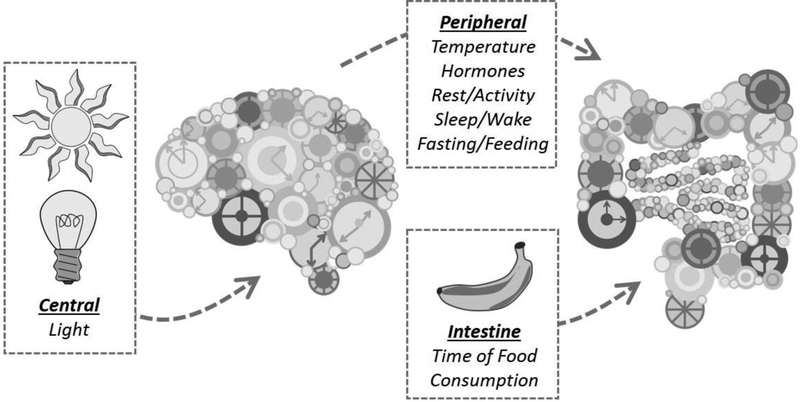
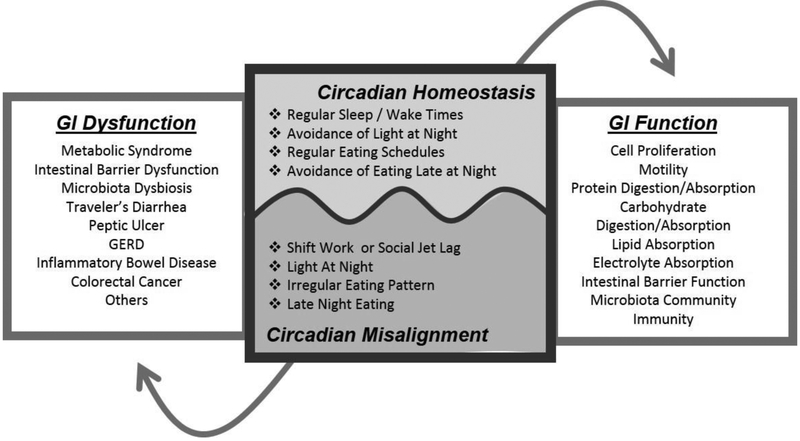
Circadian rhythms regulate much of gastrointestinal physiology including cell proliferation, motility, digestion, absorption, and electrolyte balance. Disruption of circadian rhythms can have adverse consequences including the promotion of and/or exacerbation of a wide variety of gastrointestinal disorders and diseases. Areas covered: In this review, we evaluate some of the many gastrointestinal functions that are regulated by circadian rhythms and how dysregulation of these functions may contribute to disease. This review also discusses some common gastrointestinal disorders that are known to be influenced by circadian rhythms as well as speculation about the mechanisms by which circadian rhythm disruption promotes dysfunction and disease pathogenesis. We discuss how knowledge of circadian rhythms and the advent of chrono-nutrition, chrono-pharmacology, and chrono-therapeutics might influence clinical practice. Expert opinion: As our knowledge of circadian biology increases, it may be possible to incorporate strategies that take advantage of circadian rhythms and chronotherapy to prevent and/or treat disease.
Keywords: Circadian rhythm; chronotype; circadian rhythm disruption; clock genes; diurnal fluctuation; gastrointestinal disease; gastrointestinal tract; intestine; shift work; social jet lag.
Conflict of interest statement
Declaration of interest
The authors have no relevant affiliations or financial involvement with any organization or entity with a financial interest in or financial conflict with the subject matter or materials discussed in the manuscript. This includes employment, consultancies, honoraria, stock ownership or options, expert testimony, grants or patents received or pending, or royalties.
Figures

References
-
- Konturek PC, Brzozowski T, Konturek SJ. Gut clock: Implication of circadian rhythms in the gastrointestinal tract J. Physiol Pharmacol 62 (2), 139–50 (2011). - PubMed
-
- Hoogerwerf WA. Role of biological rhythms in gastrointestinal health and disease Rev. Endocr. Metab Disord 10 (4), 293–300 (2009). - PubMed
-
- Roenneberg T, Allebrandt KV, Merrow M, Vetter C Social jetlag and obesity Curr. Biol 22 (10), 939–43 (2012). - PubMed
Publication types
MeSH terms
Substances
Grants and funding
LinkOut - more resources
Full Text Sources
Medical
Research Materials
