


Theoretical Food and Nutrient Composition of Whole-Food Plant-Based and Vegan Diets Compared to Current Dietary Recommendations
- PMID: 30875784
- PMCID: PMC6471973
- DOI: 10.3390/nu11030625
Theoretical Food and Nutrient Composition of Whole-Food Plant-Based and Vegan Diets Compared to Current Dietary Recommendations
Abstract
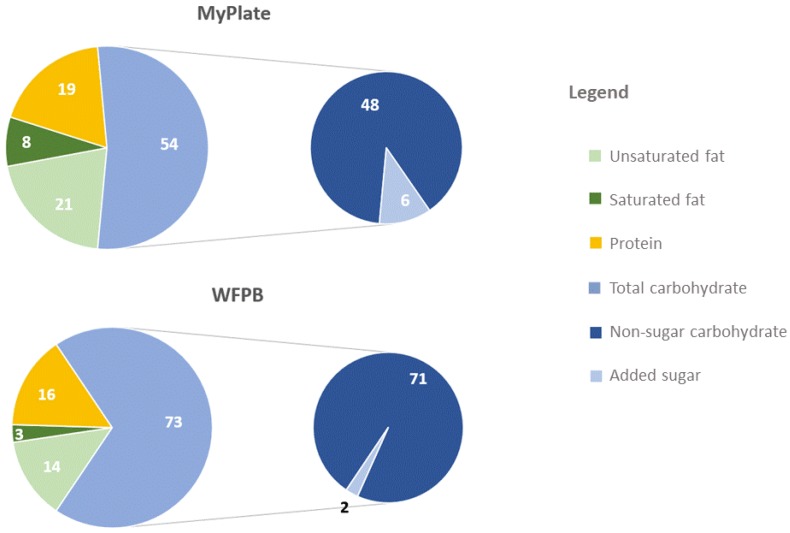
Public interest in popular diets is increasing, in particular whole-food plant-based (WFPB) and vegan diets. Whether these diets, as theoretically implemented, meet current food-based and nutrient-based recommendations has not been evaluated in detail. Self-identified WFPB and vegan diet followers in the Adhering to Dietary Approaches for Personal Taste (ADAPT) Feasibility Survey reported their most frequently used sources of information on nutrition and cooking. Thirty representative days of meal plans were created for each diet. Weighted mean food group and nutrient levels were calculated using the Nutrition Data System for Research (NDSR) and data were compared to DRIs and/or USDA Dietary Guidelines/MyPlate meal plan recommendations. The calculated HEI-2015 scores were 88 out of 100 for both WFPB and vegan meal plans. Because of similar nutrient composition, only WFPB results are presented. In comparison to MyPlate, WFPB meal plans provide more total vegetables (180%), green leafy vegetables (238%), legumes (460%), whole fruit (100%), whole grains (132%), and less refined grains (-74%). Fiber level exceeds the adequate intakes (AI) across all age groups. WFPB meal plans failed to meet the Recommended Dietary Allowances (RDA)s for vitamin B12 and D without supplementation, as well as the RDA for calcium for women aged 51⁻70. Individuals who adhere to WFBP meal plans would have higher overall dietary quality as defined by the HEI-2015 score as compared to typical US intakes with the exceptions of calcium for older women and vitamins B12 and D without supplementation. Future research should compare actual self-reported dietary intakes to theoretical targets.
Keywords: HEI-2015; Healthy Eating Index; MyPlate; nutrient composition; vegan; whole food plant-based.
Conflict of interest statement
M.C.K. has received speakers’ honoraria and consulting payments from the Plantrician Project. All other co-authors declare no conflict of interest. The funders had no role in the design of the study; in the collection, analyses, or interpretation of data; in the writing of the manuscript, or in the decision to publish the results.
Figures
References
-
- Campbell T.C., Campbell T.M., II . The China Study: Revised and Expanded Edition: The Most Comprehensive Study of Nutrition Ever Conducted and the Startling Implications for Diet, Weight Loss, and Long-Term Health. BenBella Books, Inc.; Dallas, TX, USA: 2016.
-
- McDougall J. Dr. McDougall’s Health and Wellness Center. [(accessed on 24 February 2019)]; Available online: https://www.drmcdougall.com/
-
- Campbell T.C., Esselstyn C.B. Forks over Knives: The Plant-Based Way to Health. The Experiment; New York, NY, USA: 2011.
-
- Greger M. NutritionFacts.org. [(accessed on 20 February 2019)]; Available online: https://nutritionfacts.org/
-
- Physicians Committee for Responsible Medicine. [(accessed on 24 February 2019)]; Available online: http://www.pcrm.org/
MeSH terms
Grants and funding
LinkOut - more resources
Full Text Sources
Medical
